That's according to research from analysts at Standard & Poor's, the credit rating agency. It argues that the health of the oil exporting GCC (Gulf Cooperation Council) economies is better now than in 2008/09 at the height of the global credit crunch even though the sovereign debt crisis in Europe continues to rage on.
So although oil prices may have fallen USD 10 from their recent peaks, there needn't be any panic that oil is going to crash, according to the research. This is all due to the outperformance of emerging markets relative to developed economies. Although we have seen China's economy slow down and its imports drop this doesn't change the overall structure of energy demand in emerging markets. Although countries in the developed world are actively pursuing policies designed to try and reduce energy consumption, the growing middle classes in the emerging world and their voracious appetite for cars should keep global energy demand growing at approx. 1.75% per year for the next decade. However, production is only expected to grow by 1% per year, which leaves a sizable deficit. This should ensure an elevated oil price for the foreseeable future, according to S&P research.
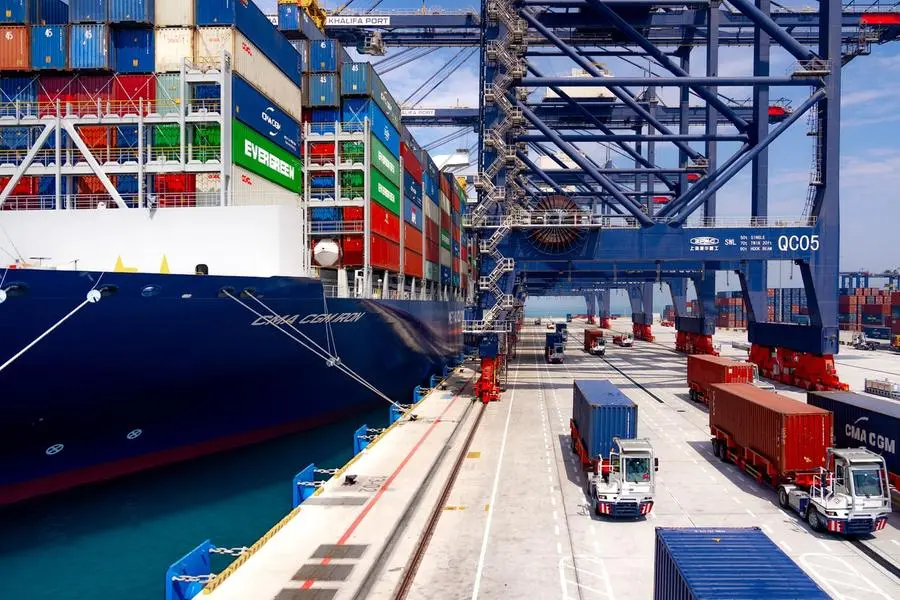
Luckily for the GCC it is particularly well placed to benefit from the shift in oil demand from the west to the east as nearly 70% of its crude exports go to Japan and developing Asia.
This is important to the GCC in a couple of ways. Firstly, for its internal economic and social dynamics. We have already seen some countries in the region argue for a floor in the oil price to help fund social welfare systems in the wake of the Arab Spring.
Secondly, the health of the GCC has important implications for the rest of the world. As the developed world is trying to wean itself off of unsustainable borrowing habits, its export sector needs to grow. The UK, for example, saw its exports to the Middle East and North Africa expand by 25% in 2011. Thus, continued strong oil revenues in the GCC is good news for exporters from the West.
However, S&P analysts don't paint an entirely bright picture for the GCC. It strikes a note of warning about the needs of the rapid population growth in the region. Currently 55% of the population are under the age of 30, and the labour force has expanded at an annual 3% rate over the last decade. While the hydrocarbon industry can mop up the excess labour demand now, it may not be able to do so in the future. This is why it is important for economies in the region to diversify their revenue bases.
Added to that, S&P says that the region needs to nurture its private sector. The oil industry tends to be government-owned and a vast number of GCC nationals tend to work in the public sector - 90% in the UAE and 55% in Saudi Arabia - where wages and benefits tend to be higher than in the private sector. However, for the GCC to avoid the fate of some Eurozone countries it should plan now for a rainy day when oil revenues may dry up. S&P urges Saudi Arabia to stick to its plan to boost the private sector as a share of its economy from 70% now to more than 80%, and Kuwait's 5-year development plan wants to see the private sector grow from 45% of the economy today to more than 60% by 2014.
These are ambitious targets, but the Gulf can see what is going on in Europe and the perils of an unsustainable public sector. It is better to try and bring about economic change when the back drop is strong as it is currently in the GCC, rather than during a crisis as Greece is finding out.
A drop in the oil price isn't the most concerning thing for the Gulf right now; a lack of meaningful economic change is much scarier in the long-term.
Disclaimer: The information and opinions in this report are for general information use only and are not intended as an offer or solicitation with respect to the purchase or sale of any currency or CFD contract. All opinions and information contained in this report are subject to change without notice. This report has been prepared without regard to the specific investment objectives, financial situation and needs of any particular recipient. Any references to historical price movements or levels is informational based on our analysis and we do not represent or warranty that any such movements or levels are likely to reoccur in the future. While the information contained herein was obtained from sources believed to be reliable, author does not guarantee its accuracy or completeness, nor does author assume any liability for any direct, indirect or consequential loss that may result from the reliance by any person upon any such information or opinions.
Foreign Exchange and other leveraged products involve significant risk of loss and are not suitable for all investors. Increasing leverage increases risk. Spot Gold and Silver contracts are not subject to regulation under the U.S. Commodity Exchange Act. Contracts for Difference (CFDs) are not available for US residents. Before deciding to trade forex, you should carefully consider your financial objectives, level of experience and risk appetite. Any opinions, news, research, analyses, prices or other information contained herein is intended as general information about the subject matter covered and is provided with the understanding that FOREX.com is not rendering investment, legal, or tax advice. You should consult with appropriate counsel or other advisors on all investment, legal, or tax matters. FOREX.com is regulated by the Commodity Futures Trading Commission (CFTC) in the US, by the Financial Services Authority (FSA) in the UK, the Australian Securities and Investment Commission (ASIC) in Australia, and the Financial Services Agency (FSA) in Japan.
© Forex.com 2012