PHOTO
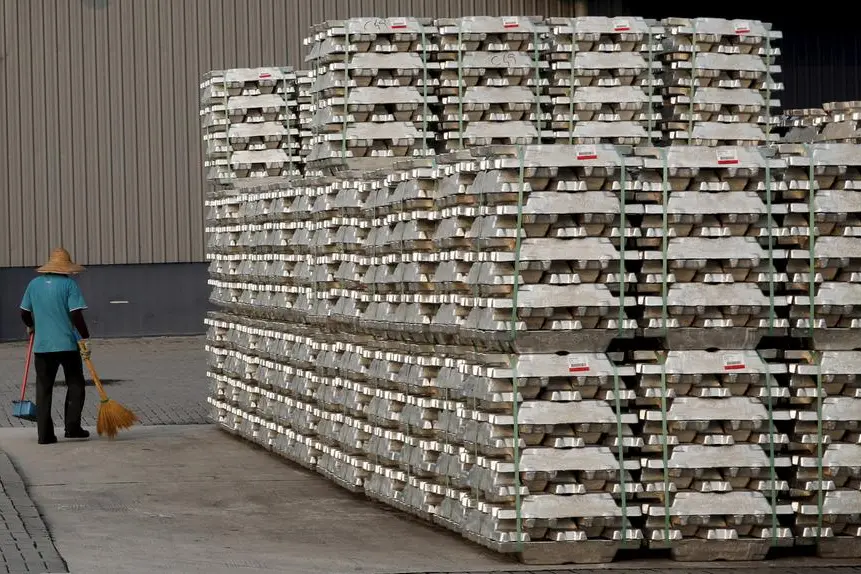
Aluminium prices slipped on Monday as fears eased that weekend tit-for-tat strikes between the U.S. and Iran would escalate into a wider conflict and disrupt Middle East shipments, traders said.
Benchmark aluminium on the London Metal Exchange was down 0.5% at $3,163 a metric ton at 0954 GMT.
Talks regarding Washington and Tehran's dispute over the Strait of Hormuz, a key shipping channel, will resume on Tuesday in Qatar.
"The situation is still fluid and any renewed disruption could quickly tighten availability for ... aluminium," Britannia Global Markets said in a note.
"The aluminium market suffered significant disruption by the suspension of trade through the strait."
The Middle East accounts for 9% of global aluminium smelting capacity. Disrupted supplies pushed prices to $3,787.50 earlier this month, the highest since March 2022. Since then, prices of the metal used in transport, construction and packaging have dropped 16%.
As supply worries have receded, the premium for the cash aluminium contract on the LME has flipped from a 19-year high over the three-month forward to a discount .
On the technical front, support for aluminium stands at the 200-day moving average, currently around $3,160. Resistance on the upside is at the 100-day moving average around $3,410.
Elsewhere, metals markets are focused on the higher U.S. currency which makes dollar-priced metals more expensive for holders of other currencies.
The dollar is heading for its largest monthly gain in a year, boosted by growing chances of rate rises in the United States due to inflationary pressures.
"A hawkish U.S. rates backdrop having initially driven the sell off across the energies and precious space before the industrial metals suite came under pressure last week," said Alastair Munro, senior base metals strategist at broker Marex.
Three-month copper eased 0.2% to $13,335 a ton, zinc slipped 0.2% to $3,466, lead gained 0.2% to $1,907, tin climbed 0.3% to $50,720 and nickel lost 0.3% to $16,635.
Clues to demand for industrial metals will come this week from top consumer China, with the release of manufacturing PMIs.
(Reporting by Pratima Desai. Editing by Mark Potter)