PHOTO
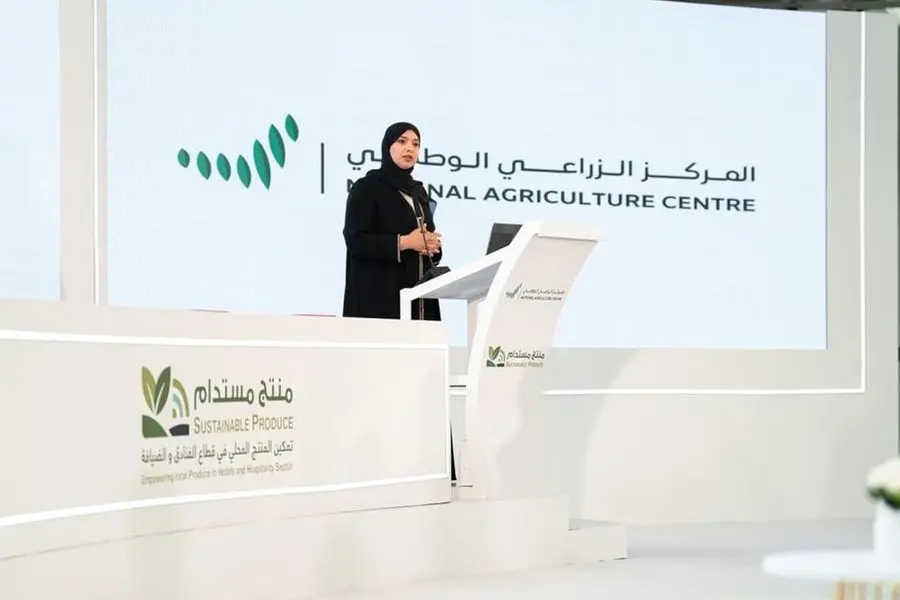
DUBAI - Dr. Amna bint Abdullah Al Dahak, Minister of Climate Change and Environment and Chairman of the Board of Directors of the National Agriculture Centre, has launched the Sustainable Product initiative, aimed at increasing the share of locally sourced agricultural and animal products used across the UAE’s restaurant and hotel sector to 25 percent.
The launch was announced duَring her participation in the signing ceremony of six strategic Memoranda of Understanding by the National Agriculture Centre with leading hospitality and industry players in the UAE. The agreements form part of the initiative’s first executive framework, establishing a clear and commercially sustainable pathway for integrating produce from UAE farms into the supply chains of major tourism and hospitality establishments.
The announcement was made at an event held at Emirates Towers in Dubai, attended by Sultan Salem Al Shamsi, Director of the National Agriculture Centre, along with representatives of the signatory entities, which include: Abu Dhabi National Hotels Company PJSC, Luxury Hotels Management MEA Limited, Legacy Hotels Holding Co. Ltd, Dusit Thani Abu Dhabi, Barakat Vegetables & Fruits Co. LLC, and SAFCO International General Trading LLC.
Dr. Al Dahak emphasised that strengthening sustainable food security and the agricultural ecosystem are key priorities within the UAE’s future vision. She noted that the country’s agricultural sector has evolved beyond its traditional role to become a strategic driver of technology and innovation, with Emirati farmers serving as a pillar of national food production.
She said the Sustainable Product initiative represents a major shift in the UAE’s approach to food security, moving beyond supporting production to strengthening consumption and creating market demand. She noted that this will give Emirati farmers greater confidence and economic sustainability to expand their agricultural investments.
She added that connecting farm output with the needs of the tourism sector and other key industries will help ensure the continuity of production and agricultural development in line with the highest international standards.
Dr. Al Dahak said that the signing of the MoUs with leading hospitality institutions is a practical step towards establishing a sustainable market for local produce and bridging the marketing gap faced by farmers. She further emphasised that the inclusion of Emirati products on the menus of the country’s leading hotels and hospitality establishments is a testament to their quality and competitiveness, and a clear vote of confidence for the safety of national food production, and an invitation for the private sector to serve as a development partner rather than merely as a consumer.
She also invited all partners and stakeholders to participate in the second edition of the Emirates Agriculture Conference and Exhibition (EACE), scheduled for late April. The event will focus on strengthening linkages across the entire food value chain, from farm to table, and on opening new horizons for agricultural investment and entrepreneurship. It will emphasise supporting local farmers and reinforcing the UAE’s position as a global centre for agricultural innovation.
The strategic importance of the initiative lies in its establishment of an integrated economic model that creates a direct and sustainable link between the production of national farms and the requirements of the luxury hospitality sector. By targeting a defined percentage of local procurement, the initiative contributes to the creation of stable and long-term demand for local products, thereby encouraging farmers to expand production and adopt advanced agricultural technologies.
The initiative also serves as a key pillar in achieving national objectives related to increasing local production and reducing reliance on food imports, in line with the goals of the National Food Security Strategy 2051.
The six MoUs signed under this framework mark a new phase of economic cooperation, with a direct focus on supporting Emirati agricultural products and ensuring the consistent supply of fresh local vegetables and crops to the supply chains of leading hotels and restaurants in the UAE. This step reflects the efforts of the Ministry of Climate Change and Environment, through the National Agriculture Centre, to expand institutional partnerships and strengthen integration between the public and private sectors.
Sultan Salem Al Shamsi explained that the Centre operates under a strategic vision to build an integrated and sustainable national agricultural ecosystem that empowers Emirati farmers and positions them as key partners in advancing the UAE’s food security. This is achieved by providing a supportive and productive environment that adopts the latest agricultural technologies and aligns the output of local farms with the growing market demand.
Regarding the Sustainable Product initiative and the MoUs signed with six leading hospitality entities, Al Shamsi said that it embodies a model of effective strategic partnership with the private sector, aimed at establishing sustainable marketing channels for locally grown crops. This ensures reliable sales outlets for farmers, encourages the expansion of agricultural activity, and guarantees a steady supply of fresh local produce to the market.
Al Shamsi added that the National Agriculture Centre will continue to pursue partnerships and forge agreements that support domestic production and reduce the nation’s reliance on imports. He said that ongoing efforts are focused on enhancing the entire agricultural supply chain and ensuring that products meet the highest international standards to cater to the needs of the hospitality sector and other industries across the UAE.
Lulwa Al Marzouqi, Head of the Innovation Team – UAE Government Leaders Programme, said that the initiative and MoUs are a call to advance modern, climate-smart agricultural solutions, describing them as an optimal pathway for overcoming natural challenges such as water scarcity and limited arable land.
Al Marzouqi added that the National Agriculture Centre’s vision goes beyond marketing, focusing instead on deploying innovative solutions and precise data to boost local production of essential crops in line with rising market demand. She emphasised that integrating artificial intelligence and robotics into the agricultural system will directly enhance supply-chain efficiency, reduce waste, and elevate the quality of produce.