PHOTO
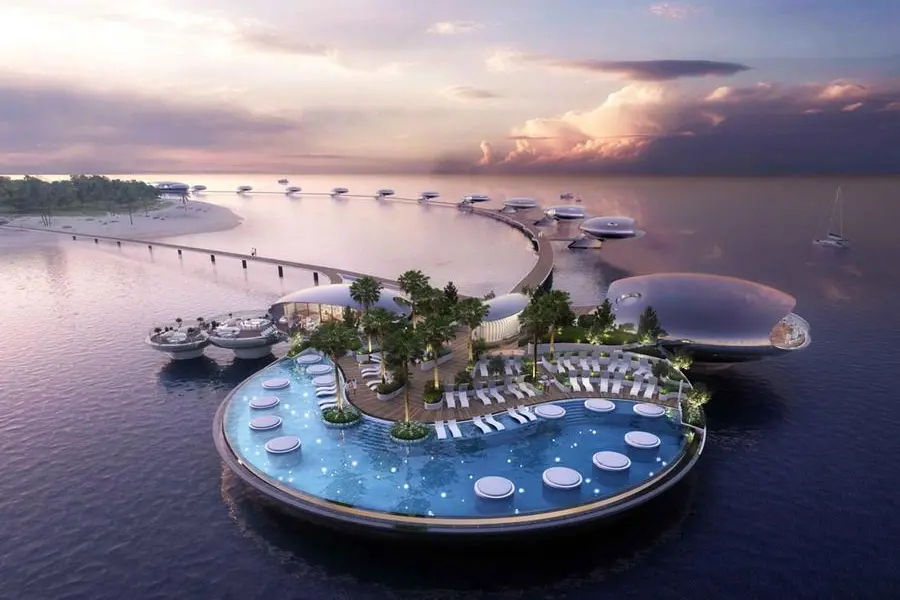
In an industry long criticised for taking more from nature than it gives back, Saudi Arabia’s giga-project developer Red Sea Global has thrown down an ambitious marker: tourism that leaves the environment better than it found it.
The company behind The Red Sea and AMAALA has unveiled, for the first time, the detailed science-based model it says will deliver a 30 per cent net conservation gain across its destinations by 2040 — and is making the blueprint publicly available for others to adopt. In a sector where sustainability pledges often stop at carbon neutrality, the move signals a shift from mitigation to measurable regeneration.
“From the beginning, we set out to make tourism better for people and planet. Today, for the first time, we are revealing in detail how we will achieve a 30% net conservation gain at The Red Sea and AMAALA. In addition, we are sharing our science-based model so that others can replicate our approach and help ensure a better environment for future generations,” said John Pagano, Group CEO of Red Sea Global.
Proprietary model
At the core of RSG’s regenerative approach is its proprietary SIIG Model, which follows four interconnected and iterative steps:
* Survey: Establishing robust biodiversity baselines and tracking change through long-term monitoring.
* Identify: Pinpointing key risks and pressures affecting priority species and habitats.
* Intervene: Implementing targeted, evidence-based conservation actions, from fisheries regulation to habitat enhancement.
* Gain: Measuring and verifying biodiversity uplift through a dedicated conservation scoring system.
In its report, RSG details how the SIIG Model is being applied across The Red Sea and AMAALA, using one of the most comprehensive ecological baselines (2022 and 2023) ever developed for the region, covering eight priority marine habitats and species groups.
Conservation actions
The roadmap consolidates ongoing and planned conservation actions and evaluates predicted outcomes against a no-action scenario, ensuring informed decision-making and optimized allocation of resources.
For example, at The Red Sea, a cornerstone intervention is the establishment of the proposed Al Wajh Lagoon Fishery Management Area, spanning 5,015 sq km, comprising:
* 38% Conservation Priority Zones (including 62% of coral reefs)
* 61% Sustainable Fishing Zones
* 1% Special Management Areas
Modelling shows that removing fishing pressure in highly protected zones could increase reef fish populations by 113%, sharks and rays by 72%, and marine mammals by 24%.
These results point to strong recovery trajectories, with improved ecosystem functioning that supports coral health, seabirds, and marine megafauna.
Additional ecosystem benefits include:
*Restoration of natural processes that enhance coral resilience and reduce anchoring damage
*Reduced risk of incidental capture of sea turtles
*Improved prey availability for seabirds
*Elimination of a key pathway for invasive species reaching sensitive island ecosystems
Other interventions detailed by RSG are expected to lead to net conservation gains across corals, red mangroves, seagrass, sea turtles, marine mammals and island birds.
Ehab Al Kindi, Head of the Red Sea Zone at Red Sea Global, said: “Regeneration requires science, data, and measurable outcomes. The SIIG Model is our roadmap to restoring ecosystem health at scale, reducing pressures on nature and witnessing the measurable return of life, from nesting turtles to thriving coral communities.”
Copyright 2026 Al Hilal Publishing and Marketing Group Provided by SyndiGate Media Inc. (Syndigate.info).