13 April 2010
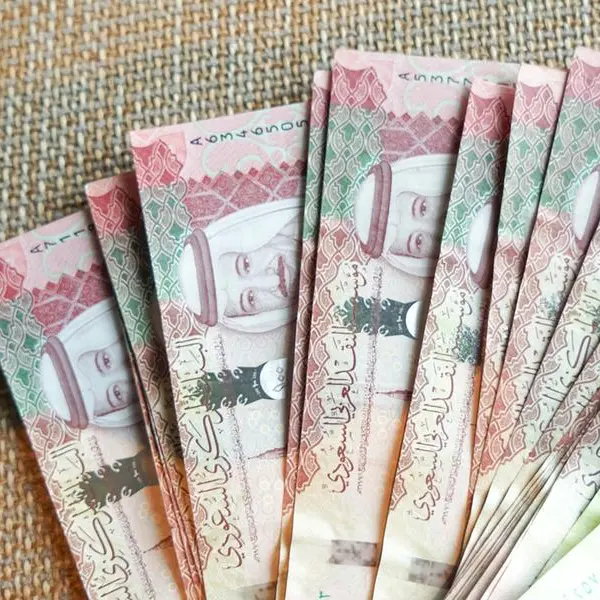
BEIRUT: Central bank governor Riad Salameh urged Arab countries Monday to establish a unified currency which is highly capable of expanding markets in the entire Arab world.
“The inter Arab trade today constitutes only 9 percent of the total trade in the Arab world, but establishing a unified Arab currency will lead to greater trade activities among the countries of the region,” Salameh told The Daily Star.
Salameh stressed that the capability of Arab banks in accessing liquidity is measured by the extent to which the central banks in Arab countries have reserves in foreign currencies.
“When a unified Arab currency replaces the dollar or euro, these banks will be having greater potential for development and growth,” he said.
His remarks came during the opening of a seminar organized by First Protocol with the cooperation of Bank Audi, and was held at Le Bristol Hotel in Beirut. Dubbed “The unified Arab currency: is it a dream or a reality?” the conference aims at discussing the advantages of having a unified Arab currency and the obstacles that come in the way of implementing this project.
Salameh said that adopting a unified Arab currency should be made in a progressive movement taking the necessary time to succeed.
“This step starts with a political decision at all the Arab levels,” Salameh said.
He added that the first step should be the approval of Arab central banks of their respective currencies in addition to accepting to keep these currencies as part of their reserves.
“This will help improve the clearance system of inter Arab trade and will also lead to an Arab economic growth in the interest of our Arab communities,” he said.
Salameh underlined the importance of promoting efficient payment system between Arab states in all currencies since all these transactions take place in non Arab states currencies.
Salameh also emphasized the necessity of supporting efforts made to develop the Arab stock exchange market to improve investments and create job opportunities.
From his side, former central bank deputy governor Ghassan Ayache started his speech by giving some statistics about the Arab world to prove the necessity of establishing a unified Arab currency.
Ayache said that the unified Arab currency is a need today because the Arab world is dispersed despite all its oil resources and wealth.
“In 2008, the GDP in Arab countries was $1.9 trillion but this figure represents only 3 percent of the global GDP. In other words, if all Arab countries gather all their resources among all GCC countries, they only amount to 3 percent of the global GDP,” he said.
He said that the combined GDPs of all Arab countries were worth less than the GDP of Italy alone or the UK, China, Japan, and of course less than the GDP of the United States.
“The unified Arab currency is necessary because even with a unified Arab currency we will not confirm that we have a large market share. Our economy will still remain modest,” he said.
“If there is no real currency union among Arab countries, our existence as Arab countries will be very minimal and even absent at the global level.”
Ayache cited the challenges facing the unification of the Arab currency project. He said that the first challenge is the difficulty of people and merchandise movement. “In some Arab airports we always have some concerns about Arab citizens. But in other nations, all citizens can enter the country except Arab ones,” he said.
The second challenge, according to Ayache, is the harmonization of the monetary policies. There cannot be one unified currency without having harmonized policies in terms of economy and culture,” he said.
One of the challenges, he added, is the social gap and the necessity to overcome the differences in lifestyles among the populations of Arab countries.
“We also cannot create a unified currency if the social conditions in some countries are excellent and in some other countries are disastrous”
Another important challenge, he continued, is the control of monetary policies regarding public budget. “If there is an excessive deficit in the public budget and a high public debt, then there will be problems in the economic structures of countries. This will also increase inflation rates and hence when there is a unified currency, inflation in one country will cause inflation in another country,” he said.
He cited the examples of some Arab countries. “There was a surplus in KSA amounting to 33 percent of the GDP, 22.5 percent in Kuwait and 30 percent in Libya. Deficit in the public budget in Lebanon was around 7 percent same to that of Egypt but over that of Jordan [4 percent],” he added.
Ayache called for the creation of a common and independent Arab central bank that would be not controlled by any member state. “It should establish an independent monetary policy for all member states and control the exchange rates.”
State Minister Adnan Kassar believes that adopting such a unified currency requires a necessary infrastructure, especially to create more convergence in the economic policies. “It is important to remove all the commercial barriers and non-custom obstacles in addition to liberalizing the movement of capital in Arab countries,” he said.
Copyright The Daily Star 2010.