Greg Christofides, chief executive of the construction unit of the UAE's largest builder by market value, Arabtec Construction, discusses the improvement in sentiment in the emirates' building industry
Since taking over the helm of the construction unit of the United Arab Emirate's largest builder by market value in March of this year, Arabtec Construction, chief executive, Greg Christofides, has been a busy man.
Despite its parent company, Arabtec Holding's 80 per cent slump in first quarter net profits - down to Dh 26.6 million ($7.24 million) in the three months to March 31, compared with a net profit of Dh 134.5 million in the same period last year - the company started the year on a strong footing in its home market. Arabtec won contracts worth $170 million to build residential towers and employee accommodation in Abu Dhabi and Fujairah. Since then, business has been brisk.
"Over the last two months there has been a significant change in the momentum of the market and we are waiting to see what will materialise into real things. But definitely the sentiment has changed and there have been certain movements in the market that have shown we have turned the corner," says Christofides.
Underscoring that improvement in sentiment is the decision of the UAE's government to restructure and put their books in order, combined with the fact that banks are now willing to lend money again. The two in combination have given the right signals to the market, which is the reason things are starting to move.
This year will be a busy one in the Gulf Co-operation Council (GCC) markets, where Arabtec has diversified in recent years. Budgets have been announced and a slate of projects are waiting to move ahead.
"It may well be that in 2011 the biggest challenge for contractors in the GCC will be choosing the right project and finding the right resources to execute them," says Christofides.
Saudi Arabia, which unveiled a $130 billion spending package earlier this year, is one of Arabtec's target markets in 2011 and beyond.
"We have recently completed our first major project in Saudi Arabia and are eager to continue our involvement in many of the upcoming prestigious projects in the Kingdom," says Christofides.
The Gulf's reviving contracting markets still present challenges, however. As confidence builds and competition increases, inflation is likely to rear its head.
"We believe the material costs will again start to rise. We all know about the roller coaster ride of copper and steel, and with so many large projects to be constructed in the next five years, inevitably the price of all construction material will go up and the cost of securing the right staff will once again increase," says Christofides.
"Yes, it's good to secure a job today, but you've got to secure it at the right rates looking forward. Definitely the construction costs will go up," he adds.
The competitive challenge in its UAE market remains robust. Many of the contractors that pitched up in the emirates during the 2000s boom years didn't leave in the post-2008 downturn. With countries like Kuwait and Qatar picking up and preparing for some large projects, competition is likely be fierce.
The main construction sectors witnessing momentum are the housing and infrastructure markets, including projects such as hospitals, roads, sewage treatment plants and power stations.
"At this point some of the countries in the GCC need to develop both their infrastructure and their housing at the same time," observes Christofides.
For Arabtec, the biggest opportunity lies in structural works and structural projects - such as housing, hospitals and airports. But its opportunity stretch is broad, reflecting the wide range of activities undertaken by the holding company.
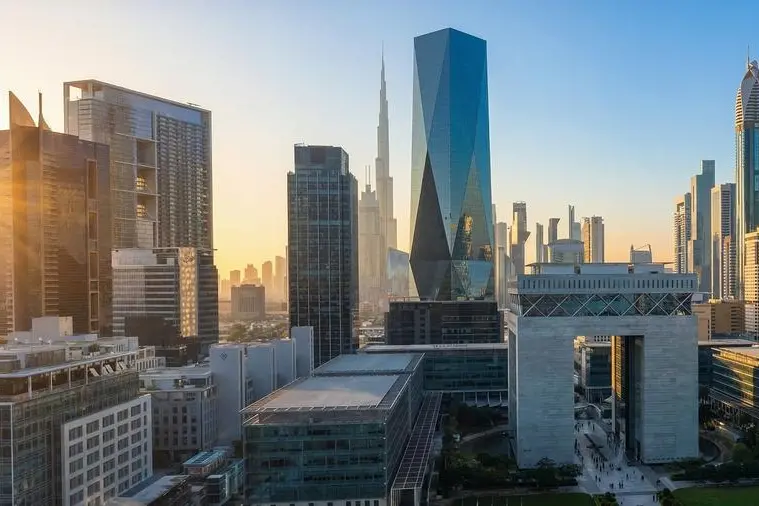
"People associate Arabtec Construction more with highrise buildings such as the Burj Khalifa, the Abu Dhabi Investment Authority Headquarters, Infinity Tower, Ocean Heights, Fairmont Hotel and the Address Hotel, while our extensive experience in all other aspects of construction including airports, malls, villas, industrial installations and stadiums receive less attention," he explains.
"As a matter of fact in combination with our sister companies under the umbrella of the Arabec Holding PJSC, our expertise extends into oil and gas, marine works, MEP [mechanical, electrical and plumbing] and infrastructure ."
Political events in the MENA region will inevitably have an impact on the construction sector, a bellwether of the wider economy - but perhaps not in ways that might have been expected, predicts Christofides.
"What I feel is that, if anything, the political issues are encouraging people to make decisions more quickly," he argues. "So far I can't say we've seen any negativity because of the political situation around the region."
Perhaps most pointedly, clear lessons have been learned from the 2008-2010 crisis.
"People have come out with some positives from this," he says. "That's one of the reasons why the banks are starting to lend again, and that's a positive sign. When the crisis first hit, the financial institutions became overly conservative which was one of the reasons why the economies were not working properly."
As order books begin to fill up again across the region, contractors across the Gulf's construction sector will be hoping that the tentative recovery is now on sound footing.
The Gulf 2011