PHOTO
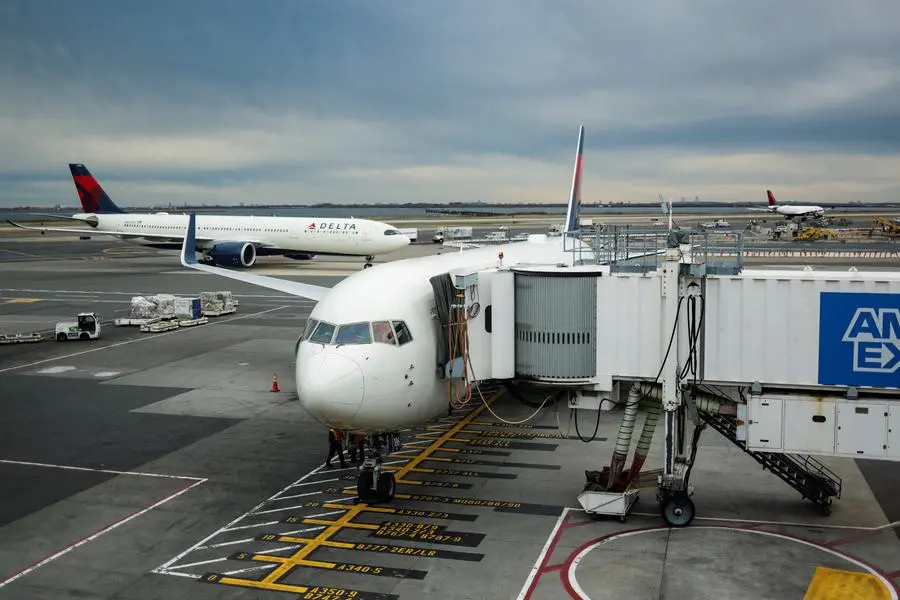
U.S. airlines abandoned the practice of hedging against fuel costs long ago. With oil prices surging following U.S.-Israel strikes on Iran, they could be looking at a big bite out of their bottom line in the event of a lengthy conflict that keeps prices elevated for months.
Jet fuel prices have risen 15% in the past week, another challenge for an industry already dealing with the fallout from the expanding conflict, with more than 20,000 flights cancelled and thousands of passengers stranded.
Fuel is the second-largest expense for air carriers after labor, typically accounting for a fifth to a quarter of operating expenses, and U.S. airlines largely stopped hedging that cost over the past two decades.
Southwest, an active hedger in the past, ended the practice in 2025, calling it expensive and unreliable. European and Asian companies, including Air France-KLM and Cathay Pacific, maintain active hedging books.
Hedging can protect airlines from spikes in fuel costs through the use of derivative contracts. But it can also backfire when prices fall, exposing carriers to above-market rates in swaps - a certain type of hedge contract that burned U.S. carriers in the past.
Without hedging, airlines are exposed to a prolonged bump in jet fuel prices, now at $2.83 per gallon on average, according to the Oil Price Information Service. Spot fuel traded at the U.S. Gulf Coast surged to $4.12 a gallon Thursday, highest since June 2022, according to Platts, a unit of S&P Global Energy. Delta Air Lines said in its annual filing that a one-cent increase in the cost of jet fuel per gallon would increase fuel expenses annually by about $40 million. For American Airlines, the increase would be about $50 million, and for Southwest, $22 million, according to regulatory filings.
American used about double the amount of fuel as Southwest in 2025, "which is a product of our fleet size and overall level of flying vs. Southwest," an American spokesperson said. TD Cowen estimated on Monday that United Airlines' earnings per share (EPS) for the March quarter in a range of 5 and 22 cents at current jet fuel prices, far short of United's January adjusted EPS forecast of $1 to $1.50. United declined to comment.
All told, those four U.S. carriers are looking at a combined $5.8 billion in additional fuel costs if jet fuel prices remain at these elevated levels all year, according to Reuters calculations, after several years where costs declined.
THE PROFIT HIT
The hit to margins will depend on the conflict's duration and the ability of individual airlines to offset rising costs. Some may be able to raise ticket prices because they rely more on premium cabins and corporate travelers.
"I'm pretty convinced the airlines are going to remain unhedged in the U.S. and look to pass through the costs to end consumers (only if needed in the event of sustained fuel inflation) instead," Morgan Stanley analyst Ravi Shanker said. Whether European airlines are able to save on fuel costs will depend on the price at which they hedged, given jet fuel price volatility over the last year, Shanker said.
Carriers like Alaska Air and JetBlue, which serve highly competitive domestic markets and take in less premium revenue, may have a harder time cushioning the cost shocks. American serves more fare-sensitive leisure travelers, and its short-haul routes use more fuel due to frequent take-offs and landings. JetBlue and Alaska did not respond to requests for comment.
Delta has a buffer thanks to a subsidiary-owned refinery in Pennsylvania with a capacity of about 190,000 barrels per day, nearly three-quarters of Delta's fuel consumption. That protects the company from paying the refining margin - the profit another refiner would make on the difference between the price of crude oil and refined jet fuel.
Still, this does not shield Delta from swings in crude oil prices. The airline did not respond to a request for comment.
Benchmark U.S. crude surpassed $85 a barrel on Friday morning, after closing at its highest since July 2024 on Thursday.
(Reporting by Shivansh Tiwary in Bengaluru and Doyinsola Oladipo in New York; Additional reporting by Nicole Jao; Editing by Sayantani Ghosh and David Gaffen)