PHOTO
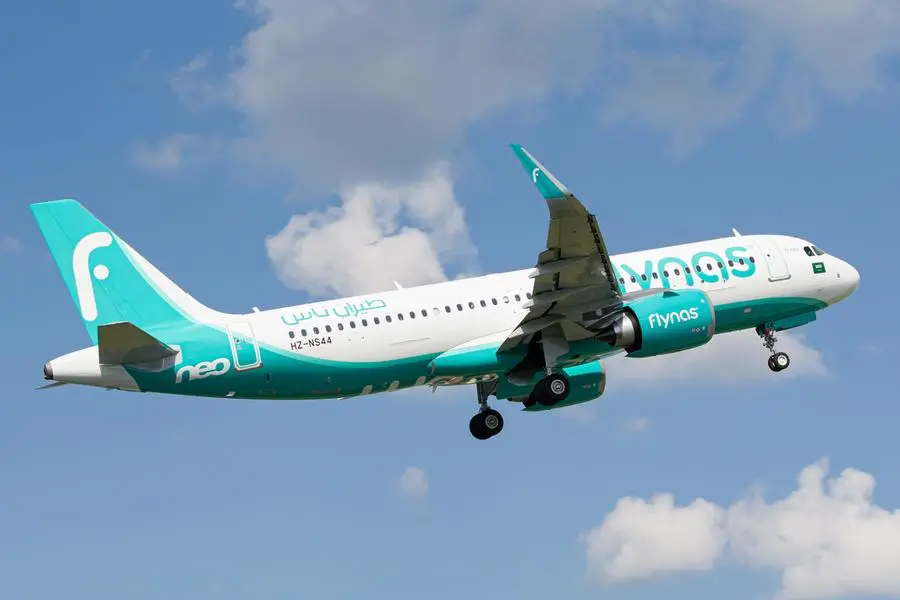
Flynas reported strong financial and operational performance for the fourth quarter and full year ending December 2025.
The airline carried 15.8 million passengers in 2025, a 7% year-on-year increase, supported by fleet expansion and steady demand.
During the year, it operated a 71-aircraft fleet across 156 routes, serving 80 destinations in 38 countries, reflecting continued network growth and disciplined operational execution.
In 4Q 2025, passenger volumes increased 13% year-on-year to 4.3 million, while revenue rose 7% to SAR 1.8 billion ($480 million), driven by a 17% increase in capacity.
Additionally, the airline introduced targeted fare initiatives in 4Q to stimulate demand and maintained average load factor above 85%. Adjusted EBITDA increased 21% to SAR 482 million, with margin improving to 27.1%, supported in part by supplier credits related to cost impact of aircraft grounding during the year.
Adjusted net profit for the quarter stood at SAR 67 million, up from an adjusted net loss of SAR 59 million in the same period last year.
For the full year, total revenue rose 4% to SAR 7.8 billion in line with guidance.
Adjusted EBITDA increased 15% to SAR 2.5 billion, with margin improving to 32.1% amid stronger cost control and enhanced network productivity.
Adjusted net profit rose 28% year-on-year to SAR 556 million, with margin reaching 7.1%, up 1.4 percentage points year-on-year ahead of the guidance.
Bander Almohanna, Chief Executive Officer and Managing Director of flynas, said: “2025 was a year of disciplined execution and strategic progress for flynas. Despite external headwinds, including aircraft availability constraints and regional disruptions, we stayed focused on what matters the most: operational reliability, cost discipline, and network expansion.
Our low-cost model continues to prove resilient, enabling us to serve growing demand for affordable travel while maintaining margin discipline. We expanded our fleet to 71 aircraft, launched 25 new routes, and entered 9 new countries, increasing our footprint to a total of 38 countries – reinforcing our position as a leading carrier in the MENA region.
The strength of our model is reflected not only in our financial performance but also in our ability to adapt quickly to changing conditions. We introduced wet leases to protect schedules and maintained load factors above 85% for the quarter through targeted fare initiatives.
Since the recent regional conflict began in February 2026, we have been focused on maintaining operational stability, supporting our passengers, and adapting our operations as needed. The safety of our passengers and employees remains a priority, and we continue to monitor the situation closely while managing disruption in a disciplined manner, preserving service continuity and operational flexibility.
Looking ahead, we remain focused on sustainable growth. Our strategy is clear: scale capacity efficiently, deepen our presence in key markets, and continue to enhance the guest experience. With a modern fleet, a strong balance sheet, and a committed team, flynas is well positioned to capture the significant opportunities ahead in both domestic and international travel.”
Ramzi Zaroubi, Chief Financial Officer of flynas, added: ”Our financial performance in 2025 reflects the strength of our operating model and the discipline embedded in our cost structure. We delivered margin expansion across the board, with adjusted EBITDA margin improving to 32.1% and adjusted net profit margin reaching 7.1%, ahead of our guidance.
Beyond the income statement, we made important strides in strengthening the balance sheet. We ended the year with a significantly enhanced liquidity position of SAR 4.1 billion in cash and equivalents and reduced net debt by 27% year-on-year, bringing our leverage down to 1.3x adjusted EBITDA. This provides us with greater financial flexibility to support our growth plans.
A deliberate shift in our funding strategy also took shape in 2025. By moving toward a more balanced mix of owned and leased aircraft, we have reduced our reliance on sale-and-leaseback transactions. This evolution is expected to improve long-term capital efficiency and support a structurally lower cost base.
Looking forward, our financial framework remains anchored on margin discipline, cash generation, and prudent capital allocation, ensuring we can continue to invest in growth while maintaining a resilient and efficient balance sheet.” -TradeArabia News Service
Copyright 2026 Al Hilal Publishing and Marketing Group Provided by SyndiGate Media Inc. (Syndigate.info).