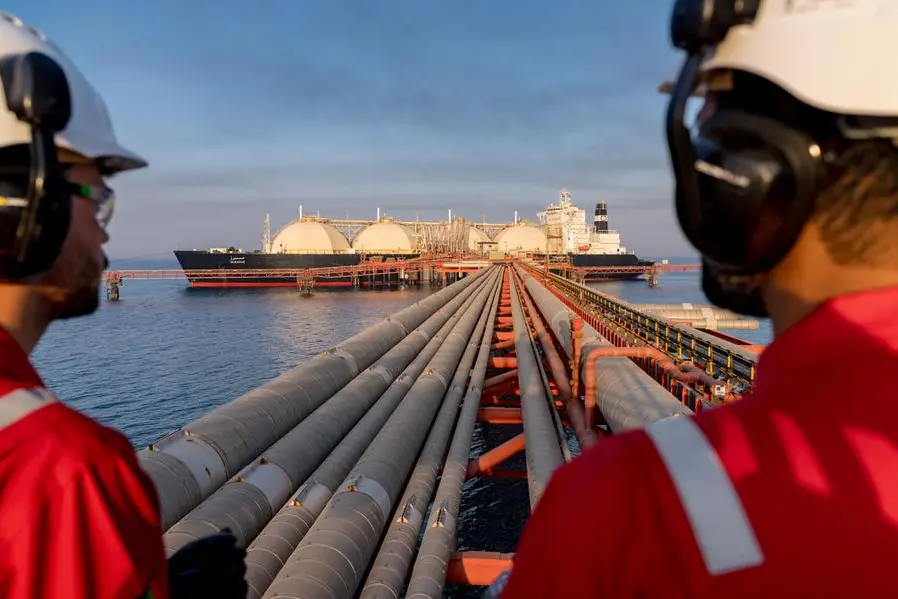
Uganda pushed its oil file forward after signing a memorandum of understanding with China National Oil Offshore Company (CNOOC), and Ugandan units of French oil giant Total E&P and UK explorer Tullow Corp. earlier this year.
The MoU paves the way for a "harmonized commercialization plan for the development of Uganda's petroleum," according to Irene Muloni, the minister of energy and mineral development.
Uganda discovered oil in 2006, but a string of delays has left the country lagging behind neighboring states of Tanzania and Kenya who have pushed ahead and monetize their hydrocarbon riches.
Oil companies estimate that Uganda's oil and gas resources exceed one billion barrels of oil equivalent.
"We expect that plateau production from our four licenses will average 200,000 to 230,000 barrels per day," said Total.
"A project to develop these resources is under study. It would include a pipeline to export the oil to the Indian Ocean. Some of the resources in the Total-operated licenses are located in Murchison Falls National Park. The project will include measures to mitigate its environmental impact and protect biodiversity."
The government also aims to build a refinery project in two phases -- 30,000 barrels per day initially, followed by an additional 30,000 barrels per day -- to meet domestic demand.
CRUCIAL PIPELINE
Equally crucial, is a conduit that could take landlocked Uganda's oil to Kenya's Eastern coast.
Energy consultant Wood Mackenzie notes that the proposed 1,400-kilometer pipeline from central Uganda to Lamu on Kenya's east coast, is vital in order to realize the region's hydrocarbon potential.
The proposed pipeline will likely cost at least USD 4 billion but is set to face a number of challenges before construction can begin.
"Once the pipeline is complete, Wood Mackenzie forecasts the discoveries will deliver good returns for the operators and substantial tax revenues to both [Kenyan and Ugandan] governments."
The two governments have been making efforts to push the pipeline proposal forward. Kenyan president Uhuru Kenyatta and Uganda's Yoweri Museveni met to fast-track the project in late October.
After considering several export route options, Uganda and Kenya's governments finally agreed to build the pipeline to transport the stranded resources.
"There is huge untapped potential across both countries, with over 3.5 billion barrels of YTF [yet-to-find] volumes in Kenya, and a further 1 billion barrels of YTF reserves in Uganda," said Martin Kelly, head of Sub Sahara Africa upstream research for Wood Mackenzie ." The proposed pipeline is fundamental in unlocking value for both countries."
The urgency is clear, as government officials have reportedly been given rushed timelines to proceed with the project.
"The two countries are under pressure to get quotations," a Kenya oil executive told the local media.
GREATER PLAN
There is also a greater plan to extend the pipeline further north to Sudan, and create a pan-Eastern African conduit that could unlock hydrocarbon deposits across the region.
The project will not be easy to develop as the deposits are in remote regions with very little access to infrastructure. Plus, the texture of the reservoir is waxy, which means oil will have to be heated before it enters the pipelines, according to major oil companies.
"There are of course a number of challenges to be overcome before the pipeline can be built," said Catriona O'Rourke, senior Sub-Sahara Africa upstream research analyst. "The pipeline will also pass through extremely difficult terrain, including mountains, rivers and marshland. Factoring in these challenges, we estimate the cost of the pipeline to be at least USD 4 billion, including port offloading and storage facilities at Lamu."
Still, the project could get on stream before the end of the decade further deepening economic ties between the East African states. Indeed, the pipeline could also spur exploration activity in neighboring Ethiopia, South Sudan and Democratic Republic of Congo, "as any discoveries could potentially tie-in to the Uganda/Kenya pipeline at a later date," WoodMac noted.
UGANDA'S PROSPECTS
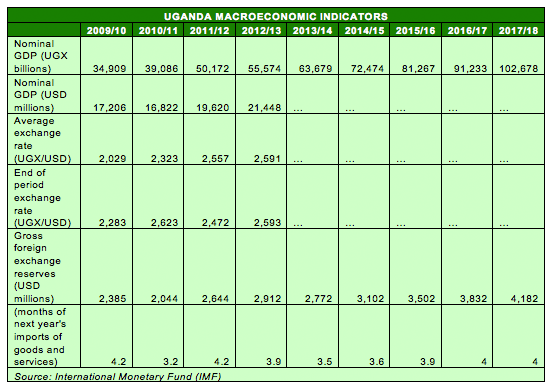
Uganda has been progressing well with GDP growth rate at 6.25% in 2013 and forecast for a 6.5% growth this year - but future prospects would partially depend on resource development.
"The construction of roads and electricity infrastructure projects, the start of oil production in 2018, and a renewed emphasis on East African Community (EAC) regional integration bring favorable medium-term growth and external stability prospects," said the International Monetary Fund.
The country has also earmarked USD 200 million in oil-related infrastructure, but delays in approval of oil regulations could hamper growth. Construction of the envisaged pipeline and small refinery is planned to start in by fiscal year 2015-16, with total capital expenditure of around USD 15-20 billion, funded primarily through foreign direct investment.
The IMF forecasts that the production of oil could have a transformative impact on the country's economy, with crude revenues accounting for 50% of the government's revenues.
"Based on the investment and production profile, real GDP growth in 2016-2023 is expected to be 2-4% higher than under the baseline scenario [due to the start of oil production]," said the IMF. "Growth would pick up during the investment phase and the onset of full production. Oil production is expected to account for close to 15% of Uganda's GDP during the peak extraction period."
The feature was produced by alifarabia.com exclusively for zawya.com.
© Zawya 2014