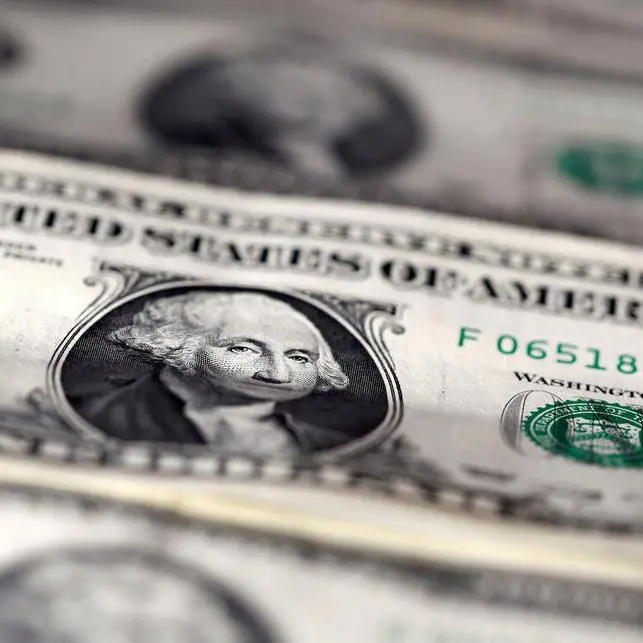
The US dollar has been the "cleanest dirty shirt" over the past few years. While the US economy has been in great pain for the past five years, the economies of the Eurozone, United Kingdom and Japan have fared far worse, leading to the depression of their currencies in relation to the battered American greenback.
This is why the US dollar has held up despite trillions of dollars of quantitative easing poured into the economy by the US Federal Reserve.
"Today interest rates spreads between the US and the rest of the world suggest the US dollar is trading cheap," Michael Lewis, strategist at Deutsche Bank, said in a note to clients.
"As a result, commodity consumers, producers and investors should be prepared for a more vigorous appreciation in the US dollar between now and the end of the year. Indeed we expect the momentum of the US dollar's rise will start to accelerate."
The rising dollar, however, will have a negative impact on oil prices.
Given that oil is priced in US dollar and since Gulf nations are either pegged to the greenback or tied to a basket of currencies with a heavy dollar weighting, they could see their finances suffer.
The US Department of Energy data is predicting OPEC's oil export revenues to decline from an estimated US 895 billion in 2012 to just under USD 800 billion this year.
The dollar appreciation will also impact precious metals such as gold and silver, which are historically inversely correlated to the American greenback.
Expect other metals to outperform gold and silver, especially as the global economy recovers.
"Our expectation of rising US growth and with it a normalization in US Treasury yields would therefore tend to suggest that the extreme discount of aluminum, copper and nickel has run its course and that these ratios will rise over time. In our view, this trend would also be encouraged by US dollar strength," said the strategist.
MONETARY EASEMENT
The dollar will also appreciate when the US Federal Reserve starts rolling back its quantitative easing program.
Scotiabank concurs with Deutsche Bank's assessment, arguing that the Fed will need to step away from QE.
"Accordingly in the near-term, we expect broad FX moves to be data dependent. Beyond that, we expect the EUR (euro), JPY (Japanese yen) and GBP (British pound) to weaken against the USD into year-end mainly on relative central bank policy and growth outlooks," the bank said.
"Several other currencies, including the CAD (Canadian dollar), MXN (Mexican peso), THB (Thailand baht) and CHF (Swiss franc), are expected to be somewhat range-bound, while the AUD (Australian dollar), NZD (New Zealand dollar), NOK (Norwegian krone), PEN (Peruvian Nuevo Sol) and KRW (South Korean won) are expected to appreciate."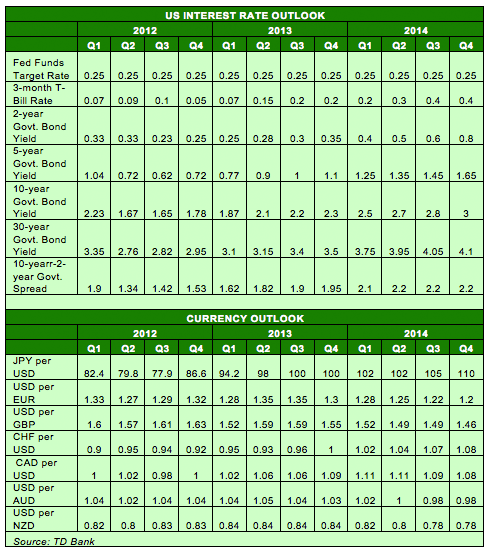
Citibank analysts also appear to forecast US dollar strength, "as underlying US growth accelerates and markets start anticipating some QE withdrawal maybe from the September FOMC [Federal Open Market Committee] onwards."
With this background in mind, Citi analysts forecast about 4-5% upside in the American dollar against other industrialized economy currencies in six to 12 months.
That would push the euro to 1.25 against the US dollar in six to twelve months, compared to its current level of 1.30. Longer term, the US dollar could trade at 1.20 per euro, Citi says.
The Japanese yen would also continue to depreciate against the US dollar after Bank of Japan's (BoJ) easing measures.
"Overall, Citi's forecast shows USD/JPY at 107 in 0-3 months but they would not rule out higher levels, maybe 115 or a bit higher. More medium term, we may see some pull back to around 105 at 6-12 months."
ENERGY OUTPUT
Meanwhile, the surge in US energy production will also impact on the American dollar.
"We continue to feel very strongly about our 1.25 end-2013 forecast and 1.22 end-2014 forecast for EUR/USD and believe the balance of risks is to the downside of our forecast," said David Woo, Bank of America Merrill Lynch analyst.
"US energy independence has altered fundamentally the valuation calculations for this important cross -- going forward, it will be the Eurozone rather than the US that will have to bear the brunt of the cost of the growing Chinese and Indian consumers and their appetite for energy."
The analyst notes that a weakened correlation between the US dollar and oil prices should help break the traditional inverse relationship between the two asset classes.
"This, by helping to reduce the risk premium of US assets and make them more attractive, should be also supportive for the USD."
© alifarabia.com 2013