The greatest growth in container trade will take place between the Far East and the Middle East for the next two decades, according to the latest report by marine consultants Lloyd's Register, security experts QinetiQ and the University of Strathclyde.
"The marine world in 2030 will be almost unrecognizable owing to the rise of emerging countries, new consumer classes and resource demand," the report Global Marine Trends 2030 projected.
The report focuses on three possible scenarios for the global economy in the next two decades:
Competing nations - Trade barriers will create major hurdles to economic growth and global economy will nearly double by 2020;
Status quo - The global economy will focus on short-term measures and China will gallop ahead of the United States; the economy will grow 2.6 times from the current GDP.
Global commons - Trade will thrive and China and India will play an even more prominent role in the global economy.
In each of the scenarios, emerging markets will overtake the developed world, and the Middle East will remain at the center of global trade, thanks to its role as an energy supplier, but also due to its own rising domestic needs.
Much of the growth in oil production is still expected to come from the Middle East over the next two decades, despite the threat of US shale oil and unconventional crude deposits across the world.
The Middle East will supply more than 60% of new production, according to the research, although increasingly new forecasts suggest US shale revolution may crimp Middle East production.
Nearly 17 million barrels of oil, or 35% of seaborne petroleum trade, passes through the politically-charged water of the Gulf, making it the world's busiest shipping route. And that's likely to rise as China and India's appetite for energy becomes even more insatiable.
"The largest increase in seaborne oil trade will come from the Arabian Gulf, Black Sea, and Latin America to China and other Asia," the Lloyd's report noted. "The rise will be caused by increased transport demand in these emerging regions."
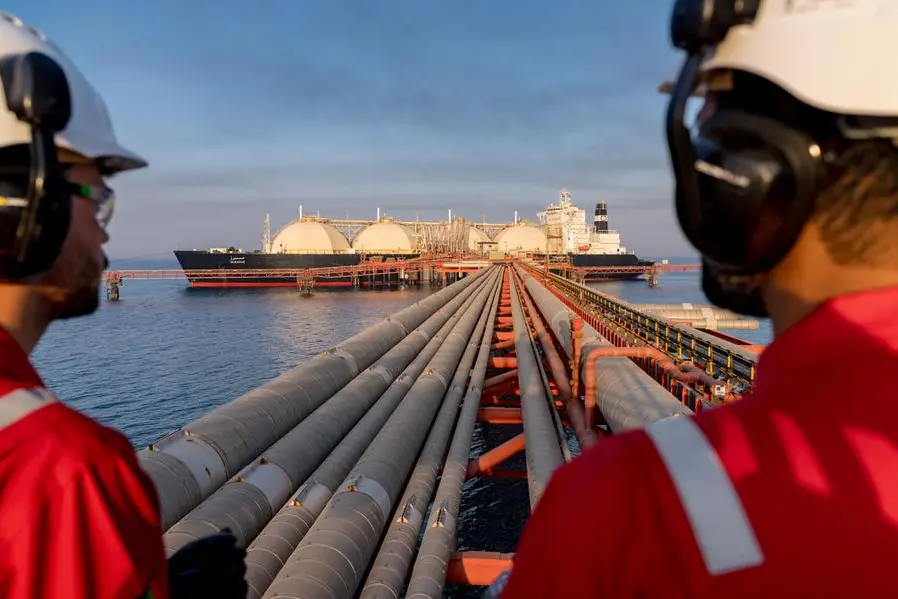
However, the Middle East is likely to lose its status as the pre-eminent gas exporter of the world, as East and South Asia diversify to Australia, and East Africa build natural gas export capabilities.
"LNG carrier ownership will still be mainly controlled by the Middle East, Europe, and Japan in 2030," the report noted. "However, their dominance will be challenged by the rise of Africa and China."
New world order
Growth in emerging markets is reflected in the new shipping orders. The world shipping fleet has grown by 37% over the past four years and major shipbuilders in South Korea, Japan and China continue to see shipping orders from emerging economies.
"Developing countries continue to expand their market share in different maritime sectors, including shipbuilding, ownership, registration, operation, scrapping and manning," said United Nations Conference on Trade and Development (UNCTAD) in its annual marine review. "Ship owners of one third of the world fleet and 12 of the top 20 container operators are from developing countries."
The Middle East's share of container ownership will also rise from 4.3% in 2010 to 8.9%-10.9% in 2030, notes Lloyds in the report.
And while crude will fuel exports, the Middle East's own consumption will make it a destination for products and other commodities from places like China, India and the Far East.
"There will be large increase in the import levels in Africa and the Middle East," the report noted. "In 2030, grain import will be dominated by Africa, Latin America, Middle East, and Southeast Asia."
Middle East operators like DP World are taking advantage of the rising trade flow. The company told investors on March 20 it has invested more than USD 6 billion to raise its operational capacity by 20 million twenty-foot equivalent units (TEU) and a further 10 million TEU will be added in the next two years.
The Dubai-based global port giant said that while operating environment remained challenging in some of its regions, operations in Africa, Middle East, South America and Asia has supported improved adjusted earnings of USD 1.4 billion.
"Last year was also an important period in terms of progressing the delivery of four major development projects around the world," said Mohammad Sharaf, group chief executive.
"The first of these will come on stream in the next few months at Jebel Ali (UAE), with Embraport (Brazil) and London Gateway (UK) opening later this year. The fourth, the new terminal at Jebel Ali, is well underway and set to open next year."
The UAE handled 16 million TEUs in 2011, making it the fifth busiest port in the developing world, after China, Singapore, Hong Kong, South Korea and Malaysia. Dubai alone handled 13 million TEU in 2011, UNCTAD data shows, making it the ninth busiest port in the world, behind mostly East Asian ports.
With Middle East trade expected to surge, modern ports like Dubai will be the greatest beneficiaries of the rising tide.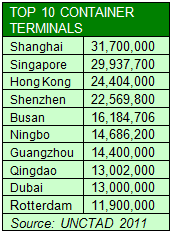
© alifarabia.com 2013