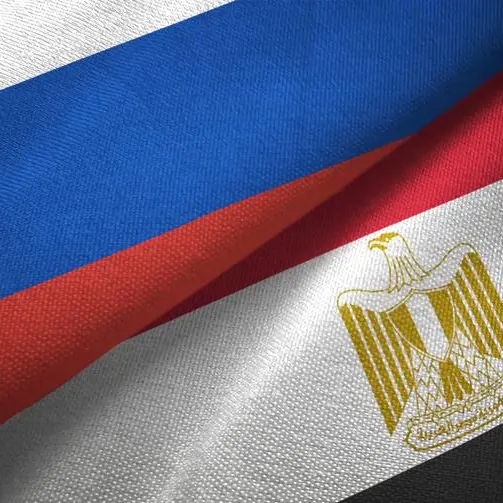
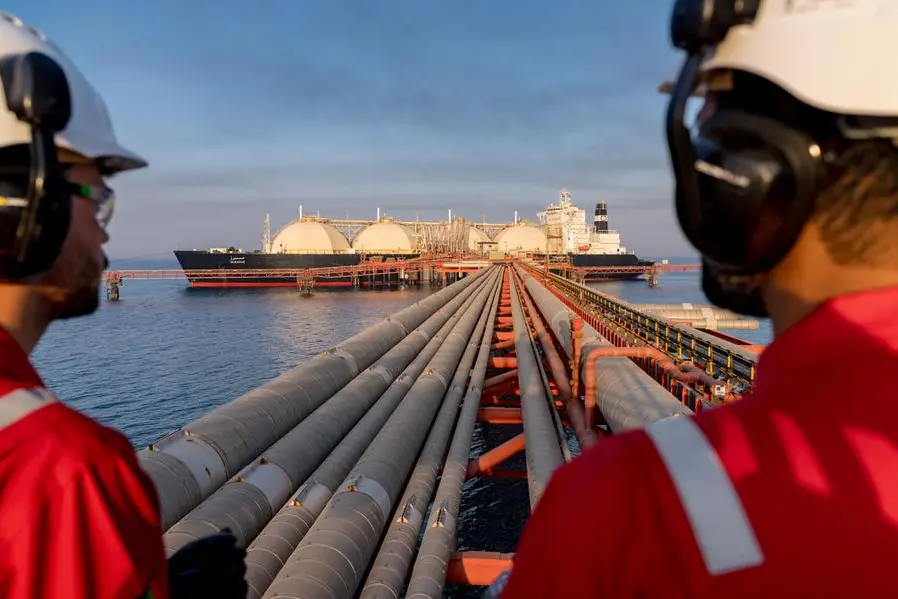
China recently replaced the UAE to become the Saudi Arabia's largest exporting market. The Asian giant's share of Saudi exports stood at 15.4%, according to National Commercial Bank report.
This is a significant development for both countries.
Energy-hungry China is keen to develop ties with major oil exporters, while Saudi Arabia is eager to develop ties with the emerging superpower which is already the world's second largest economy.
China's importance is not lost on the Saudis - indeed King Abdullah Bin Abdulaziz Al Saud's first visit as head of the state in 2005 was to the Middle Kingdom.
Perhaps it is an opportune time to reinforce the trade ties, especially as Saudi Arabia is in the midst of a generational leadership, while China recently nominated Communist Party chief Xi Jinping as its new head, to replace President Hu Jintao in a year's time.
His first task will be to revive the Chinese economy which appears to be stalling after years of sterling growth, and this could have a huge impact on the coffers of oil exporters like Saudi Arabia.
Saudi Aramco is already making its presence felt in China, by opening an office to underscore "the strategic importance of Asia to the company," according to a statement.
Aramco Asia, a unit of Saudi Aramco and headquartered in Beijing, will serve as the business and cultural exchange portal between Saudi Aramco and China and will have a branch each in Shanghai and Xiamen.
"Our new Asia office here in Beijing will be a hub for facilitating our joint activities in general and in particular investment and other business opportunities arising from the capital projects in Saudi Arabia and Asia," said ," Abdulrahman F. Al-Wuhaib, Saudi Aramco Senior Vice President, Downstream. "The Kingdom is 'open for business' for Chinese and other Asian companies, as there are abundant opportunities across many sectors."
Aramco Asia's operations will focus on crude oil and chemicals marketing, joint venture coordination, procurement, inspection, research and development, project management, human resources development and communications in the region.
Aramco and Chinese national oil giant Sinopec have also signed a joint venture which guarantees the country 400,000 barrels per day by 2014, in further evidence that the energy corridor between Asia and the Middle East is going to become extremely busy over the next few decades.
CHINA SLOWDOWN IMPACTS SAUDI ARABIA
"Investors have had a progressively more bearish view of China's potential growth rate over the past seven or eight years, since well before the Global Financial Crisis," said Deutsche Bank in a note to clients.
However the German bank believes concerns about the Chinese economy growth potential are ill-founded.
"Our 8% - 8.5% medium-term growth forecast is well below the 10% growth rate that China has recorded for most of the last 30 years and slightly below the IMF's medium-term projection of 8.5% growth," said Michael Spencer, analyst at Deutsche Bank.
"So, really, the question is, how much of a 'structural' slowdown can one expect in this economy? We think the answer is much smaller than what we perceive to be the consensus expectation. If so, then investors will be surprised at how rapidly China grows in the coming years."
This is great news for Saudi Arabia, which needs to secure new markets for its crude. With the United States on the road to energy self-sufficiency and most OECD countries progressively decreasing their oil consumption, Saudi and other Gulf energy exporters are increasingly looking east to China and other developing economies to secure future demand for their crude.
The reduction in U.S. oil imports - in combination with surging oil consumption in emerging economies - is set to be a major driver for changing patterns of global oil trade, notes the International energy Agency.
"The way that oil trade evolves will have implications for market dynamics and for trade flows along some key strategic maritime and pipeline transportation routes. The main shift is already visible, as oil is drawn increasingly towards Asia-Pacific markets and away from the Atlantic basin."
OPEC expects Chinese oil demand to rise from 9 million bpd in 2010 to 17.6 million bpd by 2016, according to OPEC estimates.
Much of it will be driven by the Middle Kingdom's transportation needs.
"China moves from just 34 cars per 1,000 people in 2009 to 213 per 1,000 by 2035, higher than the rate seen in South Korea at the turn of this century and similar to the rate seen in Japan in the early 1980s, growing at nearly 7.5% per year till 2035," according to OPEC estimates.
The country will need six million barrels per day for its transportation needs alone by 2035.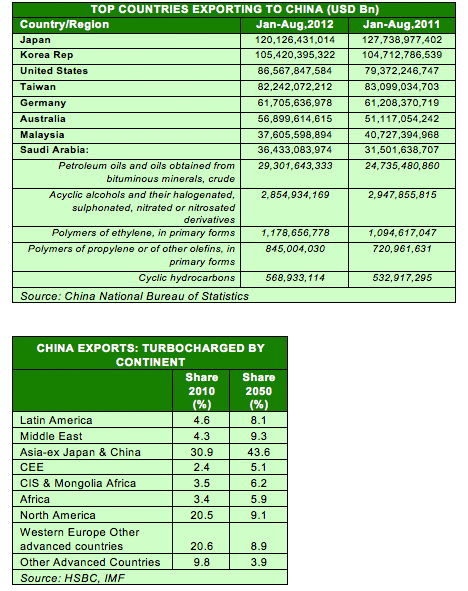
The International Energy Agency states that China will play a decisive role in global energy markets.
"It makes the biggest contribution (33%) to the growth in global energy use, its demand rising by 60% between 2010 and 2035, with growth decelerating over time. China consolidates its position as the world's largest energy consumer and, by 2035, its use is 77% higher than the second-placed United States (though China's use is 52% lower on a per-capita basis). China makes a major contribution to the increase in primary demand for all fuels: oil (54%), coal (49%), natural gas (27%), nuclear power (57%) and renewables (14%)."
The Middle East, and especially countries like Saudi Arabia are poised to benefit from this changing global trade dynamic. With China and other energy-hungry markets such as India, South Korea, Japan and Taiwan in close proximity, the Kingdom should focus on forging even stronger trade ties with the Asian giants.
This may especially a good time to fast-track GCC-China trade negotiations. With Western markets in doldrums, the Gulf bloc must move quickly to forge and deepen new alliances. After all, the (foreseeable) future belongs to the east.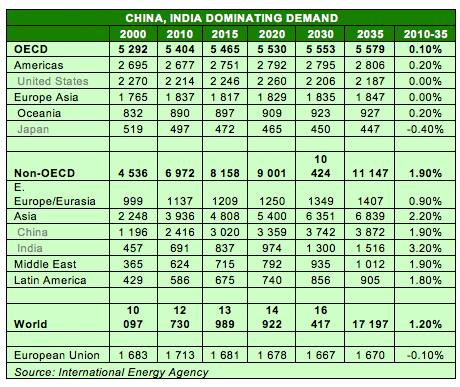
© alifarabia.com 2012