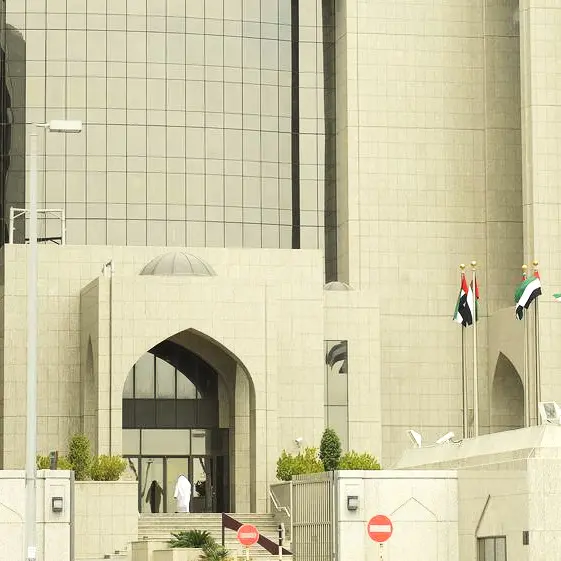
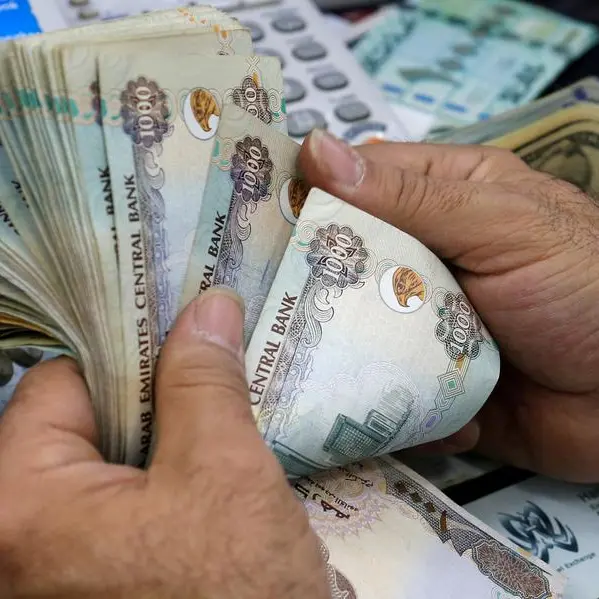
The UAE's banking sector's solid performance over the past few quarters has earned the praise of ratings agency.
Moody's Investors Service said it is raising the UAE banks' outlook to stable from negative, as the sector continues to repair its books and the economy continues to improve across a wide range of sectors.
The ratings agency expects the country to post growth rates of 3-4% led by Abu Dhabi's public sector spending and Dubai's private sector growth.
"This economic growth, combined with increasing confidence and the ongoing real estate market recovery, will support credit growth of 7%-10% annually for the banking system over the outlook period, while inflation levels are expected to stay in the 2%-2.5% range," Moody's said in its report.
UAE banks have posted a solid set of results over the past few quarters, which justify the improved outlook.
Emirates NBD's (ENBD) third-quarter results were robust as net interest income rose 10.3% year-on-year while fee income, led by trade finance and improved loans, also rose sharply.
The bank's quarter-on-quarter results were a bit disappointing as fee income shrank and the bank increase provisions by 52.1% quarter-on-quarter.
"On a positive note, net interest income grew 19.6% QoQ mainly due to improvement in NIM [net interest margins]. Notably, the bank's NIM improved 35bps quarter-on-quarter due to a 17bps increase in loan spreads and an 18bps increase in Treasury spreads. On nine-monthly basis, net profit grew 33.9% year-on-year," wrote Naveed Ahmed, manager research group of Global Investment House.
National Bank of Abu Dhabi also saw strong loan growth in the third quarter driven by public sector. However, net profit declined on lower operating income. The bank posted a net profit of AED 1.03 billion (USD 280 million) in the third quarter due to lower operating income, down 15% quarter-on-quarter, and 8% year-on-year.
'ROBUST LOAN GROWTH'
"Rate of NPL formation has now decreased for five consecutive quarters, which is a major positive," said Aarthi Chandrasekaran, senior analyst at NBK Capital in a note.
"Operating income was in line with our view, while loan growth continues to be higher-than-expected. Major positives are the robust loan growth, the strong fee income, and the improving asset quality trends. In contrast, investment income remained a drag for the second consecutive quarter."
First Gulf Bank, another major UAE financial institution, saw its net profit edge up 2% in the third quarter, with net interest income leading the charge. LoanS have also grown 11% year-to-date, with deposits rising 7% during the period.
However, NBK Capital notes that FGB's asset quality weakened in the third quarter.
"The NPL ratio increased to 3.9% by the end of September 2013 from 3.6% at the end of June 2013 indicating continuing NPL formation (+12% quarter-on-quarter)."
FGB reported that that consolidation of Aseel Finance in the third quarter, apart from minor downgrades in the corporate portfolio, led to the increase in non-performing loans.
"Despite ongoing high provisioning which stood at AED 422 million in 3Q2013 (+6% year-on-year, +1% quarter-on-quarter), NPL coverage decreased to 75% in September 2013 from 80% in June 2013."
Loan loss coverage levels for problem loans are low at around 53% in the UAE banking system for June 2013, Moody's said.
Current loan loss reserves partly reflect the large Dubai World exposure, which we consider as a problem loan with a low loss content of 10%-20% on a NPV [net present value] basis.
The ratings agency expects the UAE banks to benefit from lower loan-loss provisions and recovery of higher problem loan recoveries and settlements because of rising property prices.
"We expect net income as a percentage of risk-weighted assets to be around 2.5% over the outlook period, up from around 2% as of year-end 2012."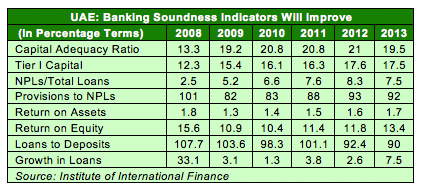
RISKS AND REWARDS
Despite the major turnaround by the leading banks, the issue of exposure to government-related entities continues to persist, especially among Dubai-based lenders.
The Institute of International Finance recently warned that the UAE may be in the midst of a renewed cycle of "exuberant risk-taking," as shown by the strong recovery in real estate and the sharp increase in equity market prices.
"In this regard, we welcome the recent plan of the Central Bank of the UAE, which includes limits on banks' exposure to real estate and government-related entities," the IIF said.
The institution also warned that the resurgence in asset values could suggest that the lessons of the past experience may not have been fully absorbed, and efforts should continue to focus on strengthening the balance sheets of financial institutions and the government-related entities.
"New projects need to be prioritized and designed in a way that limits risk-taking by the highly indebted GREs to avoid another boom-bust cycle," IIF said.
"Further progress in structural reforms, the strengthening of federal institutions, further improvements in GREs' corporate governance, and strengthened risk management practices are also important to reinforce the UAE's resilience to external shocks."
The International Monetary Fund also offered similar advice during a press conference in Dubai on November 12, but says the government is taking steps to let maintain discipline.
"When you begin to see very rapid increases in any asset prices then you just need to be prepared to act," Masood Ahmed, the IMF's Director for the Middle East and North Africa told reporters. "The government of Dubai is already beginning to act."
The UAE banks, which have only recently recovered - and some might argue still recovering from the last real estate crash - will be keen to ensure that this time it will be different.
© alifarabia.com 2013