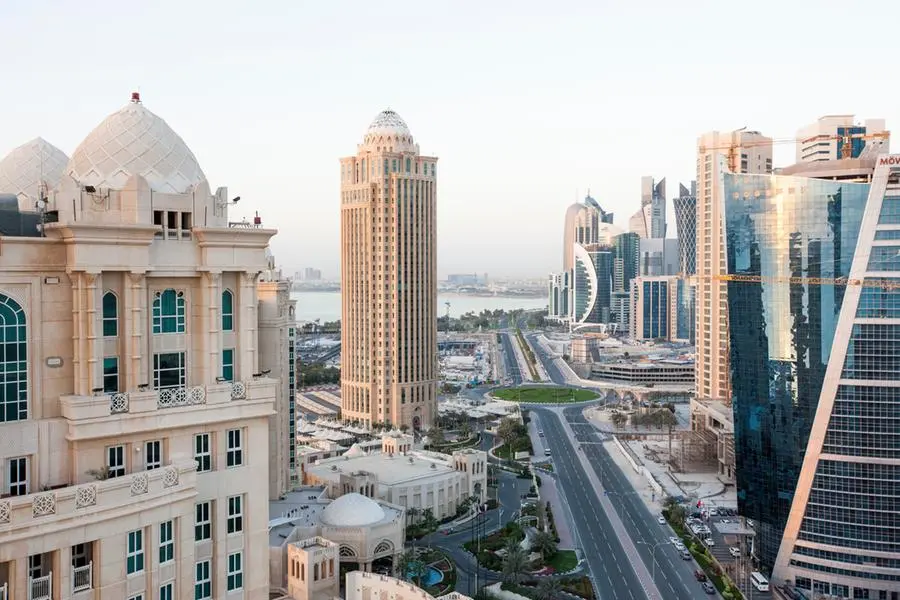
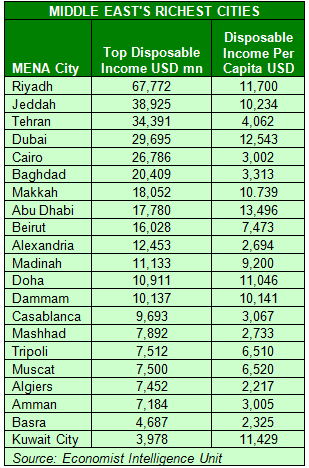
Abu Dhabi, Dubai and Riyadh are the Middle East's three richest cities, according to a new survey.
Abu Dhabi has the highest disposable income per capita in the region at USD 13,496, followed by USD 12,543 in Dubai and USD 11,700 in Riyadh, according to data from the Economist Intelligence Unit.
However, Riyadh led in total disposable income of USD 67.7 billion last year, with Jeddah a distant second at USD 38.9 billion.
"Across the region, major cities like Riyadh, Jeddah, Cairo, Istanbul, Tehran, Baghdad [and] Dubai dominate - in terms of sheer scale. But income levels in these major cities differ markedly," the EIU said in a survey of Middle East and North Africa cities.
Like other parts of the world, urban centers in the region are engines of economic growth. Across the MENA region, income per capita is 20% higher in cities compared to the countries they were located in, according to EIU data.
GULF CITIES RACE AHEAD
While the North African cities of Cairo, Alexandria, Algiers and Tripoli have struggled to gain momentum over the years, Gulf cities have emerged as regional hubs. Dubai, Doha, Riyadh, Abu Dhabi and Manama are home to numerous international institutions and offer better quality of life than cities in other Mideast countries.
Indeed, Dubai was recently ranked as the world's third most dynamic city after San Francisco and London, by real estate consultant Jones Lang La Salle.
Dubai is bouncing back following a deep slump in its economy and real estate market since the global financial crisis.
"Property prices are rising, but growth appears to be on a sounder footing than in the pre-crash years of 2006-2008, underpinned by the city's strong global connectivity and its status as the service hub for the MENA region, as well as its position as a preferred staging point for an increasingly dynamic Sub-Saharan Africa," said Jones Lang LaSalle.
"Furthermore, winning the bid to host Expo 2020 has given the city renewed confidence and momentum."
The city has learnt lessons from the property crash of 2008-09 and is working hard to ensure that it manages the boom better.
JLL notes that Dubai became the first jurisdiction to back new international property measurement standards (IPMS) in September 2013, which should help better regulate the market in 2014.
"With measurement standards varying between different developers within the UAE, calculating rentable or saleable areas on a like-for-like basis is somewhat complex," JLL said.
"Evidence from Europe suggests the use of different measurement standards could result in differences in area, and therefore values, of as much as 25%, up or down. Another regulatory change that will affect the UAE market from 1st April 2014 is tighter restrictions on who is entitled to undertake valuation work."
SHOWCASING EVENTS
Unlike North African and Levant states, Gulf countries have spent billions to upgrade the infrastructure of their key cities.
These investments have been further fuelled by the desire to stage global events. Qatar won the right to host the 2022 FIFA World Cup, which is set to transform the capital city of Doha.
The development of USD 37 billion Doha Metro, the USD 14 billion The Pearl Qatar and USD 5.5 billion Lusail City are some of the projects that are under way in and around the city, apart from stadiums and arenas for the world's second most popular sporting event after the Olympics.
Similarly, Dubai is embarking on a new wave of development in preparation for the Expo 2020, which would likely lead to billions in new investments ranging from roads, to hotel development and expanded rail and aviation links.
Meanwhile, Riyadh city is also looking to develop its transportation infrastructure. The Arriyadh Development Authority (ADA) Riyadh Metro is expected to consist of six lines with 96 stations and a total length of 176 kilometers.
Construction is scheduled to commence in the first quarter of the year, with the first phase of the project opening by the end of 2016.
SLEEPING GIANTS
Then there are the sleeping giants in Iran and Iraq. Cities such as Tehran, Baghdad, Mashhad, Basra and Erbil, all have the right mix of demographic and industry to emerge as regional dynamos, but they are hamstrung by a range of political issues, security challenges and lack of infrastructure.
Still, there is hope for some of the North African and Middle East cities outside the Gulf region.
McKinsey Global Institute's Cityscope index has 140 Middle East cities in its database.
"Today, these 140 cities generate nearly two-thirds of the region's GDP, and, with the region expected to more than double its GDP to 2025, the urban share is likely to remain roughly the same. We see middleweights contributing virtually all of this growth. We anticipate that the cities of Middle East and North Africa will slightly increase their share in the world economy, from generating 2% of global GDP today to 3% by 2025."
The feature was produced by www.alifarabia.com exclusively for www.zawya.com.
© Zawya 2014