Guinea has the world's largest reserves of bauxite - an ore crucial for the development of aluminum - which makes the small West African country a magnet for global mining and metal companies.
The country is the sixth biggest producer of bauxite, with 17.4 million metric tons last year, after Australia, China, Brazil, Indonesia and India, and is expected to raise production exponentially in a few short years.
In March, president Alpha Conde pledged to triple production to 61 million metric tons by 2016-17 and account for a quarter of the world's bauxite production by 2020.
But trouble in the global mining sector and the country's own political unrest could derail the country's ambitious plans.
On May 19, BHP Billiton and Global Alumina Corp. sold their share of the Guinea Alumina Corp. to Dubai Aluminium and Abu-Dhabi based Mubadala.
In March, Rio Tinto informed the Guinea government that it was slowing down investments in the giant Simandou iron ore, as it cuts back on investment globally.
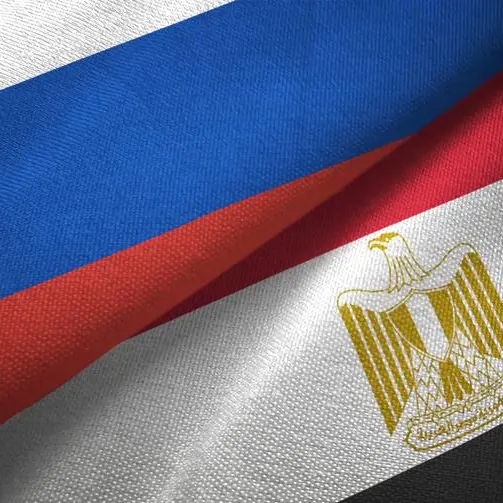
Rusal, Russian mining company has also suspended operations in the Guinea town of Friguia. Reports suggest the company is also scrapping plans for a USD 5 billion 240,000 tons per year alumina refinery project in Dian Dian, said to be one of the largest bauxite sites in the world.
Global mining companies have been reeling after over-investment in the past few years and have been waylaid by a fall in commodity prices.
Indeed, investment write-downs and departure of CEOs in many global mining companies have ended a decade-long bull run in commodity prices and massive investment in places like Guinea.
Worried about losing the prospect of USD 20 billion of potential investment in its mineral and mining sector, the Guinea government reacted quickly by slashing mining profit tax from 35% to 30%. It also reportedly reduced tax on bauxite from 0.55% to 0.15% of the international price and made efforts to reform the mining code.
The retrenchment by global players is already having an impact on the economy. GDP grew by 3.9%, as alumina production fell to 241,000 tons last year, less than half of the 586,000 tons produced in 2011. However, bauxite production surged 20% to reach 20 million tons, according to government estimates.
Political issues
"After years of military dictatorship and instability, and a disastrous transition under military rule during 2009-10, Guinea's first democratically elected president assumed power in December 2010," explains a World Bank report. "Since it attained independence from France in 1958, Guinea has lived under a succession of autocratic regimes."
Civilian rule came with the election of Alpha Conde as president in 2010 after generally free and fair elections, but the second phase of the transition remains stuck in limbo.
Parliamentary elections were due in 2011, but the ruling party and its opponents have failed to agree on rules and regulations. The stalemate has led to sporadic violence, political tensions between the various ethnic groups and nervousness among the international investor community.
There are fears that military rule might be reinforced in the country, especially as president Conde has long fought against the armed forces and forcibly retired more than 4,000 Guinean soldiers after taking office.
The political tension could upset hard-earned economic gains. The country secured a USD 2.1 billion debt relief program from multilateral agencies such as the World Bank and the International Monetary Fund late last year. The debt relief represents 66% reduction of Guinea's future external debt service over a period of 40 years
Rebuilding economic fundamentals
The government is set to follow a World Bank-prescribed program to reduce poverty, maintain a sound macroeconomic policy framework, the improvement of a poverty database and monitoring capacity, the publication of annual reports on the activities of the anti-corruption agency, an increase in gross enrolment rates in primary schools, and an increase in immunization rates for children, according to the World Bank.
"Full debt relief is a tremendous development opportunity for Guinea, as this will help the country achieve economic stability and devote more resources to reduce poverty," said Ousmane Diagana, World Bank Director for Guinea.
"We will continue to support Guinea in strengthening financial management, transparency and accountability to turn debt relief into visible development outcomes such as better health, education, environmental preservation and infrastructure for sustainable and inclusive growth," Diagana said.
Guinea needs foreign investment in its mineral and mining sector to keep the momentum going and strengthen the fragile political set up.
The presence of deep-pocketed investors from the UAE is comforting, but the country will need international mining giants to reach its economic targets.
"Looking ahead, Guinea's large untapped mining resources offer the potential for a substantial boost in growth and poverty reduction," said the International Monetary Fund. "To ensure an effective exploitation of these resources in which the country reaps an equitable share of the rewards, the government should promote good governance and transparency in the sector."
© alifarabia.com 2013