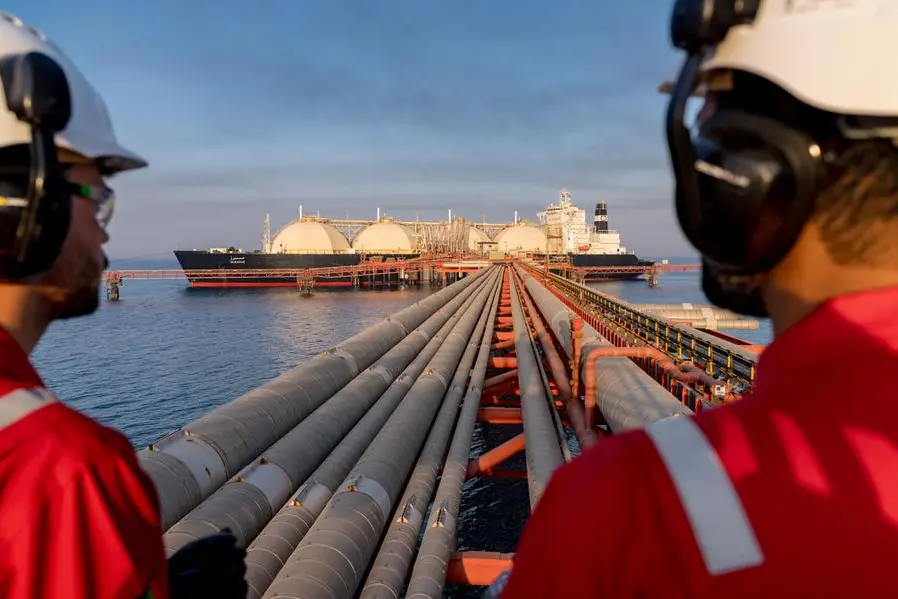
Chinese oil and gas giant Sinopec's recent USD 3.1 billion bet on Egyptian natural gas highlights the country's huge energy prospects, despite the major political challenges facing the country.
Sinopec bought a 33% stake in US natural gas company Apache Corporation's Egyptian operations.
And while some analysts have suggested that the sale represents international companies leaving Egypt due to its political troubles, the fact that Apache managed to sell its Egyptian assets at a 50% premium, suggests that "Sinopec clearly sees upside to the assets that hasn't been obvious," according to Leo Mariani, analyst at RBC Capital Markets.
"Egyptian government support for the deal is evidence of (a) a supportive leadership, and (b) a functioning government, in our view," said Bob Brackett, analyst at Sanford Bernstein. "The ability to get final approval of the sale in the current environment is evidence of government support and capability."
In addition, the Egyptian government is looking to list some of the major oil companies on the Cairo Stock Exchange, as a way to finance debt and improve the efficiency of the country's hydrocarbon sector.
The country's natural gas exports have fallen since 2009 due to huge demands made by the country's domestic economy and flat production.
"Promising natural gas discoveries may revive production in the next few years as new fields come on stream," said the US Department of Energy in its latest report on the country.
Egypt's proven natural gas reserves are said to be around 77 trillion cubic feet per day - the third highest in Africa, after Nigeria and Algeria.
"Egypt's LNG exports have been cut in half over the past five years, from 496 Bcf in 2008 to 237 Bcf in 2012, according to BP Statistical Review," said the EIA. "LNG exports are expected to decline further in 2013 because increased domestic demand has diverted additional natural gas supply to the local market."
The move robs Egypt of premium-priced export revenues to Asian markets, and much-needed foreign currency.
ALGERIAN AMBITION
Algeria has seen gas production suffer as the country has been unable to attract foreign investment in the sector.
The recent terrorist attack on a natural gas facility in the country has also raised security risks for companies operating in the country.
In addition, a major contract with Italian company Eni is set to expire in 2019 and it is unclear whether state-owned energy company Sonatrach can attract other companies to fill the void.
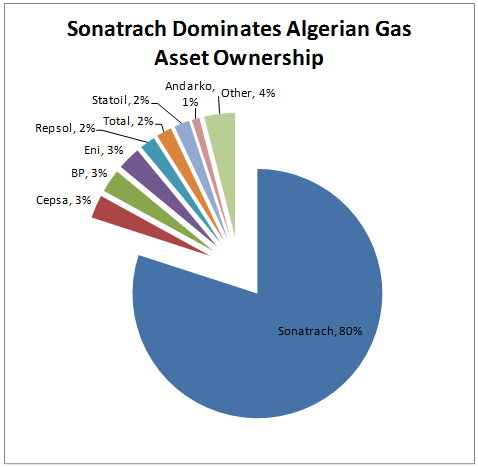
In January, the Algeria government approved amendments to its hydrocarbon law in a concerted effort to revive foreign investor interest in the sector.
"Amid declining hydrocarbon production and stagnant reserves, the Algerian government has stated it needs foreign partners to increase oil and gas reserves and explore new territories, such as offshore in the Mediterranean and areas containing shale oil and gas resources," said the EIA.
"The amendments, however, do not change Sonatrach's majority stake requirement, but include changes to the tax structure and offer greater fiscal incentives to companies investing in offshore exploration and unconventional resources."
LONG ON LIBYA
Things may look bleak in Libya right now due to a crippling strike and political uncertainty that has crippled oil and natural gas production in the country.
However, the country holds Africa's fourth largest natural gas reserves, after Nigeria, Algeria and Egypt.
While the country has focused on reviving oil production after a bloody civil war that ended Muammar Gaddafi's 40-year rule, the natural gas sector has taken a back seat.
Indeed, the current drop in oil and gas production has forced the authorities to import natural gas to make up for production in the east.
"Significant political risks loom over the country's longer-term outlook, arising from both domestic tensions between the east and the west, and from an emboldened Islamic militant movement in North Africa," said Fast Market Research in a report on the country.
"This could limit greenfield investment in particular and cap growth in both reserves and production, resulting in the country underperforming below its potential."
HIGH HOPES FOR NORTH AFRICAN GAS
New estimates by the UK-based Centre for Global Energy Studies, forecast huge growth in gas production from North Africa.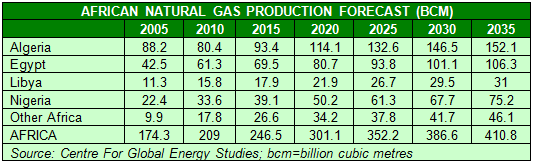
Algeria's gas production is expected to rise from 80.4 billion cubic meters (bcm) in 2010 to 1521. bcm by 2035. Egypt is also expected to see production rise from 61.3 bcm to 106.3 bcm during the period.
Libya is also expected to see its natural gas production nearly double to 31 bcm by 2035, as the short-term political issues are expected to be resolved.
"North African countries will remain the continent's most important gas exporters, but significant growth is expected to come from countries along both Africa's western and eastern coasts," said CGES in its report on African gas production prospects.
© alifarabia.com 2013