Azerbaijan's economy is expected to ride a non-oil sector boom over the next few years, as the country pours billions into infrastructure projects.
While overall GDP growth is expected to hit 5% this year and the next, it's the non-oil economy that is expected to clock 9.3% growth this year and 8.4% next year. The International Monetary Fund expects the oil sector economy to contract by 0.7% this year and another 0.1% in 2014, as oil and natural gas prices cool down.
The European Bank of Reconstruction and Development (EBRD) expects growth to accelerate in the course of the year, led by significant pre-election fiscal and monetary stimulus.
"The pace of hydrocarbon extraction has stabilized after the contraction of the past two years. The non-oil sector, supported by public spending and a credit boom, has expanded at double-digit rates and is at risk of overheating," the EBRD said.
The Azeri economy grew 5% in the second quarter of the year compared to 3.1% in the first quarter, primarily due to a decline in oil and natural gas output.
However, other parts of the economy accelerated and offset the hydrocarbon decline.
CONSTRUCTION AND MINING RALLY
Eurasian Development Bank (EDB) estimates that the construction sector grew 22.9% in the first half of the year, while the building materials industry expanded by 24.6%, metallurgical industry posted a 21% growth.
"The agricultural sector and the food industry had relatively modest growth rates of 4.9 and 3.7%, respectively," said EDB in its latest report on the country. "Retail trade rose by 9.1% in real terms. This reflected a rapid rise in household consumption that was supported by an increase in pay, which rose by 6.8% on average. Fixed capital expenditure increased by 22.9% year-on-year, down from 36.1% in Q1 2013."
Public spending stood at 27% of GDP during the period, and the increased activity saw inflation to 3%.
The draft annual budget for next projects include USD 8.4 billion for capital investment expenditure focusing on construction, transportation, power, agriculture and other socio-economic development programs in various regions, according to the Ministry of Finance.
The data suggests that the non-oil consolidated fiscal deficit could shrink by about 5% of non-oil GDP next year relative to the estimated deficit of 50% in 2013, but would still remain above the estimated sustainable level of 35%, the IMF estimates.
"Both non-oil revenue-enhancing measures and restraint on non-priority investment spending will help support the consolidation efforts, which should continue in the medium term," the IMF said in its November 15 report on the country.
"The envisaged adjustment - while slightly weakening non-oil growth next year - will help reduce risks to macroeconomic stability, begin to address medium-term fiscal sustainability and provide room for private sector activity."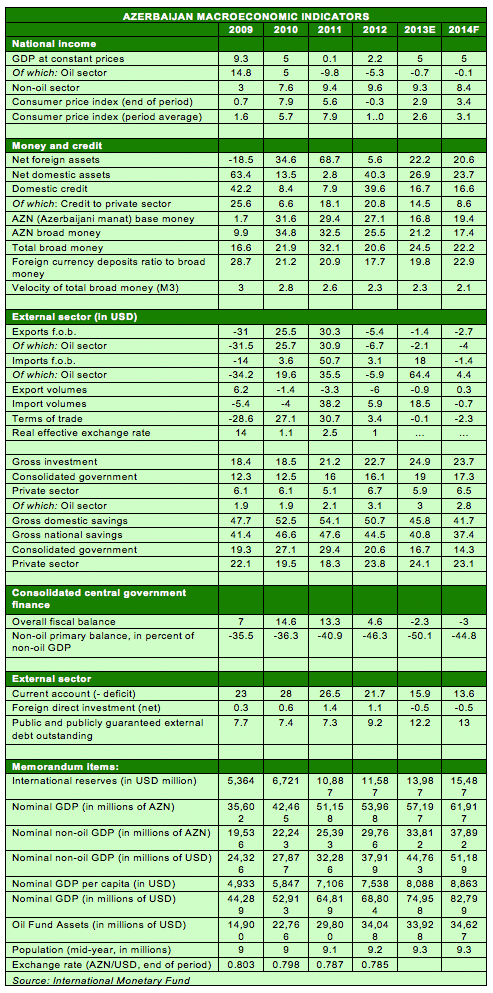
NATURAL GAS OUTPUT ROBUST
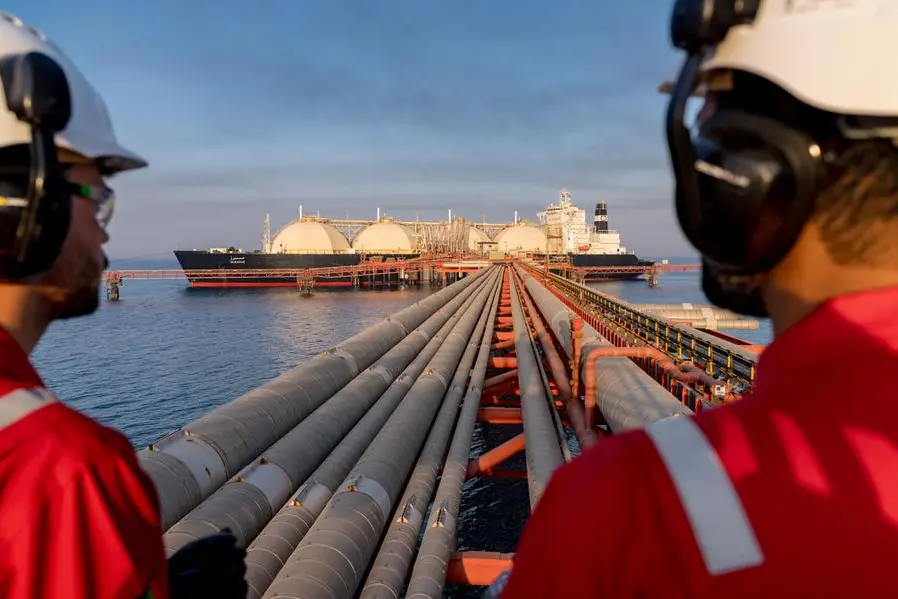
The country's natural gas sector is picking up steam especially after major oil companies recently signed off on the final investment decision on the USD 28 billion Shah Deniz II project. The development will go a long way in helping Azerbaijan forge closer ties with the EU economic powerhouse.
But oil production remains uncertain. The country's total liquids production averaged 900,000 bpd in the summer after BP, operator of the Azerbaijan International Operating Company's (AIOC) in the Azeri, Chirag and Guneshli (ACG) oilfields, stabilized output from the fields that have suffered annual declines since 2011.
"We expect that ACG output will remain at 670,000 bpd for 2013, flat y‐o‐y, based on production levels through August and our projections for ACG for the remainder of the year," the International Energy Agency said in its November report.
AIOC spent USD 1.3 billion in capital expenditure on ACG in the first half of the year, and delivered five new producing wells and two new water injector wells. An additional USD 1.2 billion in investment on ACG was planned for the second half of 2013.
"State oil company SOCAR has forecast steady production for the country as a whole for 2014, but we expect a small decline of about ‐ 30,000 bpd to 845,000 bpd total liquids," the IEA noted.
PRIVATE SECTOR TO REPLACE HYDROCARBON GROWTH
As oil production falters and low commodity prices contract the resources sector, Azerbaijan must do more to stimulate private sector and improve its business climate.
"A competitive private sector will require speeding up the efforts to implement the new customs code, finalize World Trade Organization (WTO) accession, ease barriers to competition, and generally improve governance," said the IMF.
Strengthening the banking sector should also be a priority for the government, especially after the problems with IBA Bank. Indeed, the IMF has criticized the authorities' lackluster efforts to fix problems in the financial services sector.
"The capitalization plan of IBA in absence of a restructuring of the bank is a serious source of concern and creates risks to the system," the IMF noted. "An unreformed IBA undermines the development of the banking system and could result in high costs for the shareholders, including the government."
The authorities also recent approved an inspection law, apart from a "one-stop" window to help cut business costs, which would go some way in easing business requirements in the country.
Azerbaijan is ranked a respectable 70th place in the World Bank's Doing Business Survey of 189 countries. While the country is among the world's top ranked in areas such as starting a business (ranked 10th globally), registering a property (ranked 13th) and protecting investors (ranked 22nd), it fares poorly in dealing with construction permits (ranked 180th), and securing electricity (ranked 181st).
The massive divergence within the business framework is leading to uncertainty among investors.
While the country will remain resource-driven for the most part, the authorities can leverage the USD 34.7 billion cushion of State Oil Fund of the Republic of Azerbaijan (SOFAZ) to strengthen private sector and develop new skills and industries.
The Shah Deniz project gives Azerbaijan a foothold in the massive European market and could lay the groundwork for greater cooperation in other industries as well.
Other markets also beckon Azeri private sector. With Turkey on the west, and prospects of neighboring Iran opening up after years of sanctions, Azerbaijan has the massive opportunity for greater trade in very lucrative and emerging markets.
© alifarabia.com 2013