Dubai Aluminium's (DUBAL) formal merger with its Abu Dhabi counterpart Emirates Aluminium (EMAL) is a reflection of the UAE's rise as a low-cost smelter destination at a time when high-cost players are slashing their output.
Emirates Global Aluminum Ltd, the combined entity, would emerge as the fifth largest in the world in terms of production, if it meets its stated target of 2,400,000 tons of aluminum production by mid-2014.
If the new production target is achieved, the UAE would become the world's fourth largest aluminum producer in the world, eclipsing the United States.
The merger will also allow the combined entity to improve cost efficiencies at a time when aluminum prices have been declining despite rising demand.
The move also comes at a time when major global producers are cutting production and the London Metal Exchange is enforcing new rules that could structurally alter the metal's price mechanism.
Rusal, Alcoa and Rio Tinto, the world's three largest aluminum producers, and others, have announced cuts of 500,000 tons, but latest data from the International Aluminum Institute shows global production for February rose, driven partly by Middle East capacity increases.
"We see this simply as a natural progression of capacity to low-cost regions from high-cost regions," Rob Clifford, analyst at Deutsche Bank said in an April report on the metal.
"The rising premiums around the world have assisted the producers, and combined with cost-cutting margins have actually improved in 2013 versus 2012 for many companies. The deficit market outside of China arguably makes the rationale for further cuts more difficult to justify."
MIDEAST GROWTH
As global producers dither, Deutsche Bank expects Middle East producers such as EAG to lead global growth, raising production by 14% in 2014 and another 11% in 2015 - the highest in the world by a distance.
Aluminium Bahrain (Alba) also enjoyed a record year in 2014, raising production to an all-time high of 912,700 metric tons. Alba is looking to raise production by another 400,000 tons by 2015.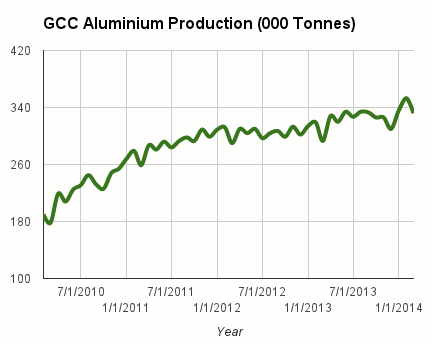
INTERNATIONAL OPERATIONS
After positioning itself as a major contributor to Dubai's GDP, Dubal had begun to dip its toes abroad with a clutch of international partnerships, and the combined entity is likely to build on these ventures.
Dubal has a 19% stake in a joint venture with Norsk Hydro of Norway to build an alumina refinery in Brazil. The refinery will have an initial capacity of 1.86 million metric tons per year, which would be expanded over time to 7.4 million metric tons.
The company also has a 45% stake in Cameroon Alumina Limited, along with Hindalco of India (45%) and Hydromine Inc. of USA (10%) to develop a mine (about 500 to 600 million tons of bauxite ore) and build an alumina refinery.
Dubal owns 20% in China's Sinoway Carbon Company Limited, to build a calciner development project (560,000 tons per annum, built in two phases) in Shandong.
In addition, the combined EGA entity owns Guinea Alumina Corporation (GAC), a strategic bauxite mining and alumina refining development project in the Republic of Guinea.
"The company plans to continue expanding along the aluminum value chain, from smelting to alumina refining and bauxite mining; and will also support the continued growth of the aluminum cluster in the UAE," a joint statement by the companies said.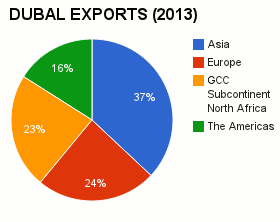
PRICE PRESSURE AMID LEGAL CHALLENGE
Global aluminum output and consumption of alumina for 2013 stood at 50 metric tons, and 49.6 metric tons, respectively, reflecting tightness of supply.
The lack of spare capacity should bode well for prices, which have been falling since 2011. Deutsche Bank expects aluminum prices to rise to USD 1,850 per ton, compared to USD 1,709 in the first quarter of the year. By 2016, prices could edge past USD 2,200 per ton.
Aluminum prices are also likely to be affected by new London Metal Exchange (LME) rules that are aimed at clearing backlog of aluminum stocks.
LME aluminum stocks are high, but difficult to access owing to long queues at warehouses. The queues make profits for warehouses (as they receive more rent) and for holders of the metal (who profit from the difference in the market), according to a Capital Economics report.
"Moreover, low global interest rates reduce the cost of financing, keeping metal in warehouses. As a result, consumers are forced to pay high price premiums for metal for immediate delivery. Indeed, the strength of premiums has provided a cushion for producers amid steadily falling prices," Caroline Bain, senior commodities economist at Capital Economics said.
Mindful of the problem, the LME announced new load-out regulations designed to accelerate the pace of deliveries. These were to come into effect on April 1.
However, last week, the Russian aluminum giant, Rusal, obtained a ruling from the UK's high court that the new rules were "unlawful".
"In our view, this ruling merely represents a delay to the LME reforms, which will take place at some point. Indeed, a number of warehouses have already started to clear the backlog of deliveries," Bain noted.
Citibank Group expects aluminum physical premiums to increase if the court judgment remains unchanged.
"Uncertainty over introducing warehousing rule changes will, we believe, prompt premiums to be bid up by consumers previously holding back from booking metal in the expectation of lower future premiums," said Citi analyst David Wilson. "A lack of shortening in load out queues may well add to premium support."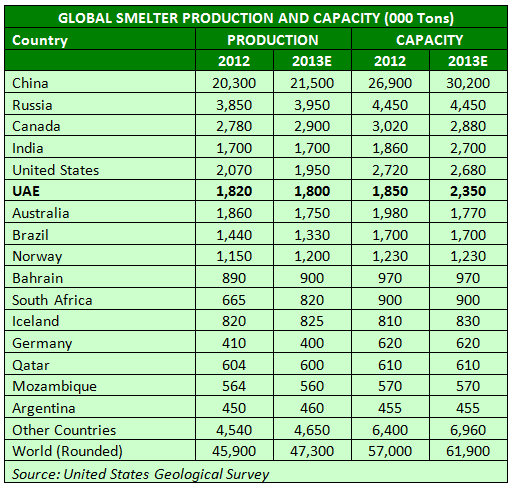
MAJORS TAKE A HIT
The Dubal-Emal merger also comes at a time when major aluminum producers are retreating from plans.
Rusal saw its smelter production decline 7.6% last year, compared to the same period in 2012, due to the company's "expansion of inefficient capacity curtailment program." Revenues fell 10.4% during the period.
"2013 was another challenging year for the aluminum industry, which, despite consumption growth of 6% to 51.7 million tons, saw negative investor sentiment continue to weigh on LME prices which fell by 8.6%, to USD 1,845 per ton - a level which takes an ever greater share of global production capacity to or below break-even level," said Oleg Deripaska, CEO of Rusal.
Still, Rusal expects global demand for aluminum to trend upwards, with growth expected to increase by 6% reaching 55 million tons in 2014, primarily driven by China, other Asian countries, United States and the European Union.
"Global aluminum deficit excluding China reaches 1.3 million tons in 2014 from 455 thousand tons in 2013. About 1.0-1.5 million tons of the global aluminum production out of China is expected to be idled in 2014," the company said.
In this uncertain backdrop, it's unclear whether EAG would be able to meet its production target of 2,400 metric tons in the next few months as the market still remains weak.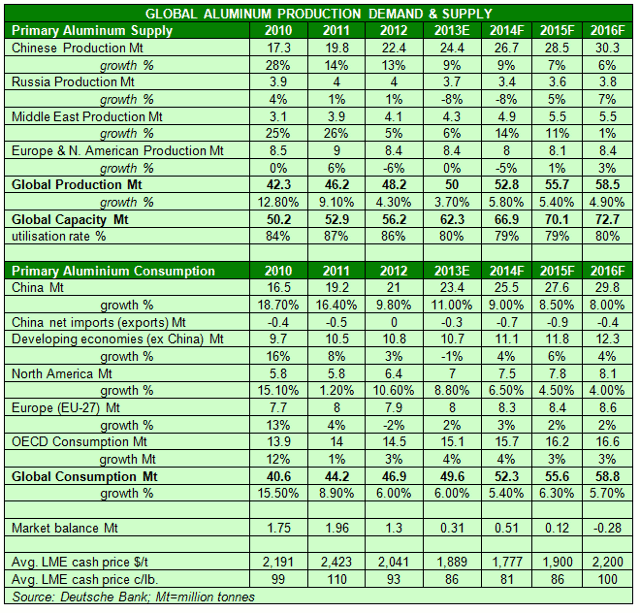
Aluminum market still needs further supply discipline, noted Deutsche Bank.
"In the market outside of China, new projects ramping up have the potential to outstrip closures, and we expect a small increase in the annual surplus," said Deutsche's Clifford.
"This should keep prices under pressure in H1. However, as premia ease lower, we may see renewed pressure in the ROW [rest of the world] and further cuts are announced in the second half of the year, we expect a price recovery."
The feature was produced by alifarabia.com exclusively for zawya.com.
© Zawya 2014