Fears of the Middle East losing its position as a major natural gas exporter in the next few decades are unfounded, at least according to ExxonMobil, the world's largest oil and gas company that's not affiliated with a government.
"The Middle East and Africa will continue to be natural gas exporters," said Exxon Mobil, in its annual outlook to 2040.
"Middle East gas exports are likely to change only marginally through 2040, as production grows by roughly 70% while demand grows by about 85%."
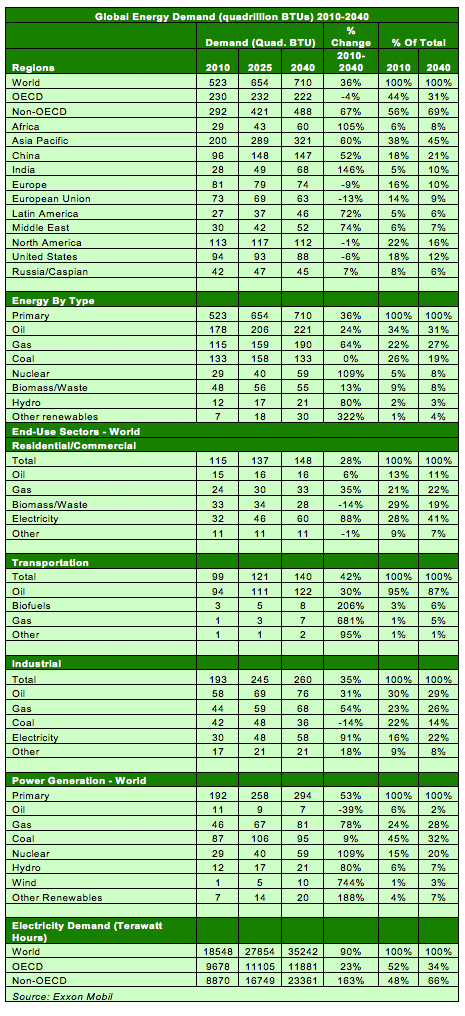
The growth is part of a global push to consume more natural gas at the expense of other energy sources. The Exxon outlook expects natural gas demand to rise 64% over the next 30 years - the highest among the main energy sources (i.e. oil and coal).
Natural gas is set to be the fastest-growing energy source over the next few decades.
"Global demand is projected to rise by close to 65% from 2010 to 2040 -- and account for about 40% of the growth in global energy needs," said Exxon. "By roughly 2025, natural gas is expected to overtake coal as the second-largest energy source, behind oil."
GROWING ATTRACTION
A number of factors are playing into the rise of natural gas. Its image as a cleaner fuel compared to coal and oil certainly adds to its attraction. In addition, natural gas resources are plentiful and often cheap.
The International Energy Agency estimates the remaining recoverable natural gas resource worldwide to be about 28,600 trillion cubic feet (TCF) -- about 200 times the natural gas the world currently consumes in a year.
The Exxon report notes that estimates of recoverable gas have doubled in the past 10 to 15 years thanks to new drilling technologies that have unlocked previously deep and inaccessible resources.
"Gas resources also are geographically diverse; six of seven regions each hold 10% or more of the world's remaining recoverable resource," said Exxon. "Conventional gas constitutes approximately 60% of the world's remaining recoverable gas resource, of which about 55% is in the Middle East and Russia/Caspian."
A report by the US Department of Energy in June estimated that shale gas resources were 10% higher than its previous estimates.
The department noted that the shale gas estimated stood at 15,583 trillion cubic feet of proved and unproven non-shale technically recoverable natural gas resources.
"Globally, 32% of the total estimated natural gas resources are in shale formations, while 10% of estimated oil resources are in shale or tight formations."
Indeed, Exxon expects about 65% of the growth in natural gas supplies through 2040 to be from unconventional sources, which will account for one-third of global production by 2040.
LNG RUSH
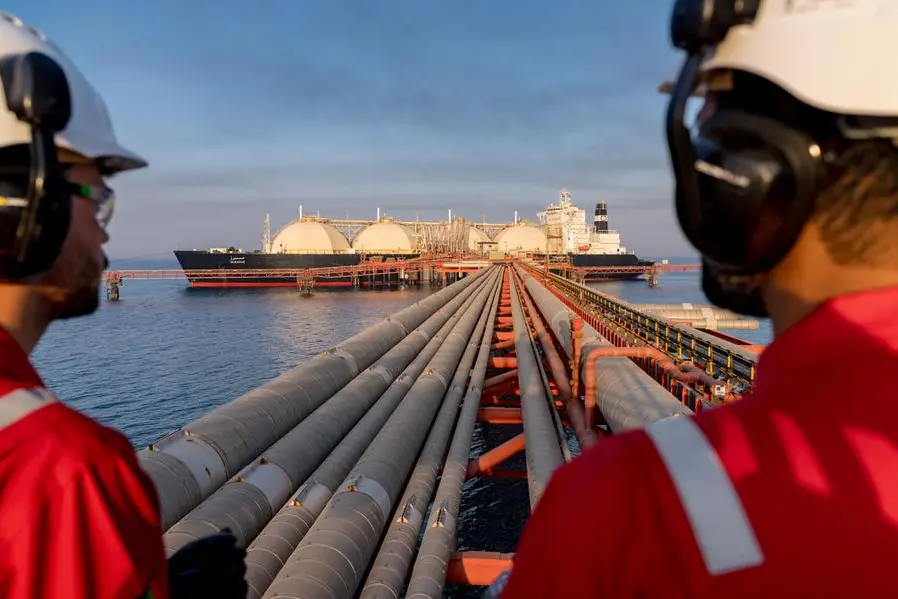
The rapid development of the liquefied natural gas (LNG) market will add to the great rush to develop natural gas resources across the world, from Canada to Mozambique, and Papua New Guinea to the Russian Arctic.
Exxon expects global LNG volumes to triple by 2040 and make up 15% of global gas demand.
"The growth of the LNG market will facilitate trade between regions, helping to balance global supply and demand of natural gas."
Clearly, Asia will lead demand for natural gas, but the Middle East will not be far behind.
China would see by far the largest increase in gas demand in any single country, reaching 530 billion cubic meters in 2035, according to the International Energy Agency.
"Outside Asia, the Middle East sees the biggest increase in gas demand in absolute terms
- around 300 bcm - between 2011 and 2035, driven by new power generation, water desalination and petrochemical projects," the IEA said.
Natural gas has traditionally been available at low cost in the Middle East, but that has led to wasteful use of the energy source. Countries like Kuwait and the UAE are forced to import natural gas as demand has outstripped production in these countries.
"Some governments are, therefore, reviewing their pricing policy towards gas and electricity, in an attempt to rein in demand, restrict imports (in some cases) and encourage supply," said the IEA. "Oman, for example, has announced that it will raise industrial gas prices to the equivalent of USD 3 per million British thermal units (MBtu) by 2015 (though this is still below the international market level)."
RENEWABLES KILLER
The rise of natural gas as a cheap and environmentally acceptable hydrocarbon has certainly diminished appetite for renewable energy in many markets. The Exxon outlook estimates renewables would make up only 7% of the global energy source by 7%, even smaller than nuclear's contribution of 8%.Fossil fuels led by oil (37% of global demand), natural gas (27%) and coal (19%) will continue to dominate energy supplies till at least the next three decades, the company notes.
However, renewables will play a bigger role in electricity generation. Renewable energy supplies -- including traditional biomass, hydro and geothermal as well as wind, solar and biofuels -- will grow by close to 60%, led by increases in hydro, wind and solar, said Exxon.
"Wind, solar and biofuels are likely to make up about 4% of energy supplies in 2040, up from 1% in 2010. We foresee wind and solar providing about 10% of electricity generated in 2040, up from about 2% in 2010."
© alifarabia.com 2013