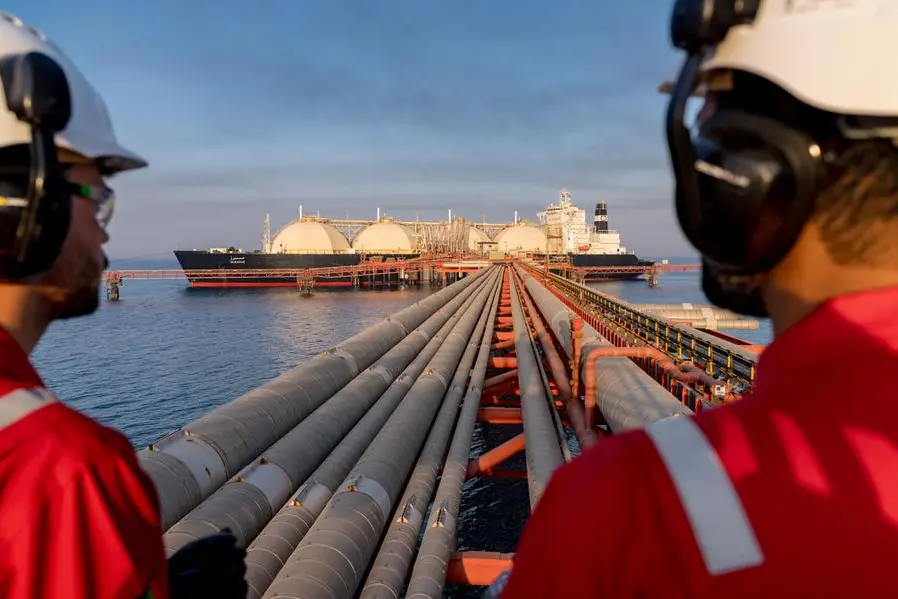
Middle East's own domestic energy demand, rather than North American shale surge, will transform the region's oil and gas sector, says the International Energy Agency.
The IEA's latest World Energy Outlook estimates that the Middle East would become the world's third largest center for oil.
"The emergence of the Middle East as a major energy consumer, which, in the case of oil, results in its demand increasing by half to 2035 (reaching 9.9 million bpd), surpassing oil demand in the European Union before 2030, the IEA said.
Demand for natural gas in the Middle East is also set to increase by more than the growth of the entire OECD countries - around 300 billion cubic meters - between 2011 and 2035, driven by new power generation (where demand for gas nearly doubles to reach 275 bcm), desalination and higher industrial activity.
"Often thought of primarily as an energy exporter, the Middle East increases its own natural gas use so rapidly that it overtakes the European Union before 2020 and consumes 26% more than the European Union by 2035," the IEA said in a report published November 12.
INDUSTRIES THIRSTY FOR GAS
By 2035, the Middle East's demand for natural gas in its industrial sector will surpass that of the United States around 2030. Much of the demand will be as petrochemical feedstock as the region expands its petrochemical production substantially by 2035, consuming 2.2 million bpd of oil and 72 bcm of gas.
"By 2035, industry in the Middle East consumes 150 bcm of natural gas - more than industry in China or the United States, where other fuels continue to play a more significant role."
Natural gas has emerged as a preferred supply source for a number of Middle East countries as they desperately try to match their major investment plans with adequate electricity capacity.
The surging demand has already led to imbalances in markets such as Kuwait and the UAE, which now import natural gas despite sitting on substantial natural gas reserves.
"Some governments are, therefore, reviewing their pricing policy towards gas and electricity, in an attempt to rein in demand, restrict imports (in some cases) and encourage supply. Oman, for example, has announced that it will raise industrial gas prices to the equivalent of USD 3 per million British thermal units (MBtu) by 2015 (though this is still below the international market level)," the IEA said.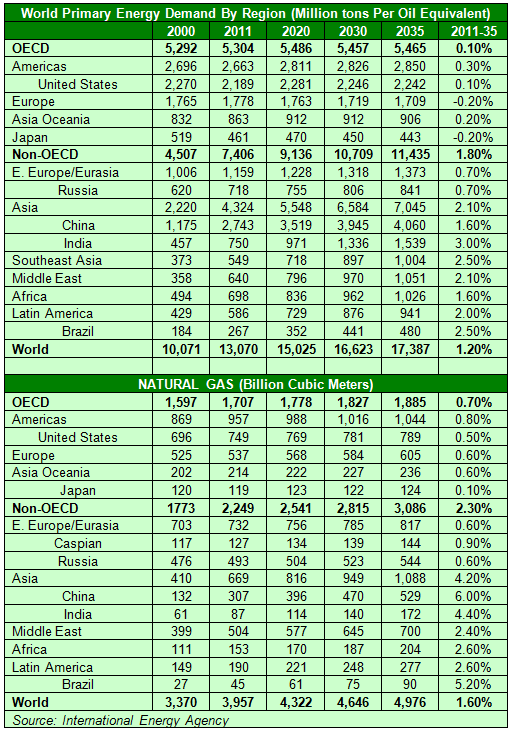
RAISING PRODUCTION
While natural gas imports might be a solution for some countries in the Middle East, others are looking to raise their own domestic production. Regional natural gas production is expected to rise 1.9% per annum over the next 20 years to reach 823 billion cubic meters by 2035, compared to 519 bcm in 2011.
While Qatar is expected to remain the major contributor to natural gas production growth in the region, the country's gas production will plateau around 2015 at 180 bcm.
The next wave of growth in the country will depend on when it lifts a moratorium on development of the north field.
Apart from Qatar, Yemen may be the only other significant natural gas exporter in the Middle East region, while Egypt will likely cut gas exports to satisfy domestic demand.
Saudi natural gas production is also expected to rise over the next few years with Karan gas field expected to start producing 30 billion cubic meters to meet rising demand for power generation and petrochemicals. However, the low fixed wholesale gas price of USD 0.75 per million British thermal units "discourages upstream investment," according to the International Energy Agency.
Iraq could emerge as another major natural gas producer, while Iran remains a wild card given the uncertainty surrounding the economic sanctions in the country. The region may need to spend as much as USD 500 billion in the natural gas sector over the next two decades.
SUBSIDY-DRIVEN DEMAND
Much of the demand is driven by heavy oil and gas subsidies of around USD 112 billion (or 13% of oil-export revenues), the IEA estimates.
On a per-capita basis, oil related subsidies stood at around USD 500 per person in Iraq, Iran and the UAE, and more than USD 1,500 per person in the Gulf states of Kuwait, Saudi Arabia and Qatar.
"Adding in the subsidies provided to natural gas and electricity (most of which is generated by fossil fuels), the total for the region rises to USD 203 billion, representing almost 40% of global fossil-fuel consumption subsidies in 2012."
While oil-powered power plants account for a mere 4% of global electricity, in the Middle East they account for a third of total power generation, and consume around 2 million bpd of crude oil.
"The Middle East saw some intensified action on limiting the spiraling electricity consumption from air conditioners, which account for roughly half of electricity demand in that region," the IEA said. "Saudi Arabia strengthened MEPS for air conditioners, while the United Arab Emirates introduced such regulation for the first time."
The renewables sector in the Middle East is expected to pick up some of the slack and reduce the stress on export-oriented hydrocarbons sector. The IEA expects electricity generation from renewable sources to grow eleven-fold to 226 terawatt-hour (TWh) two decades later, compared to 21 TWh in 2011. Renewables share of Middle East power generation is set to make up 12.9% of total generation by 2035 from 2.4% currently.
IMPACT ON GLOBAL INFLUENCE
But despite the development of natural gas and renewable sources, oil will remain a key part of Middle East power generation, which would diminish the region's influence on global oil markets at least in the current decade.
"Exports from the Middle East are slightly lower than today in 2020, but then increase to reach 24.6 million bpd in 2035. The share of Middle East production which is exported declines slightly, as domestic consumption increases more quickly than production," the IEA said.
Despite these challenges, the agency expects Middle East oil and gas exporters to regain some of their influence in global markets in the next decade, as non-OPEC production plateaus, and OPEC producers take advantage of their low-cost resources.
But the current decade remains a very challenging one for MENA oil and gas exporters, as they look to reduce energy subsidies, build power-generating capacity and face the prospects of lower exports of their primary produce.
alifarabia.com 2013