26 September 2012
While neighboring regimes crashed and burned, the Algerian government remained largely unmoved and continues its firm grip on the country.
But that's perhaps Algeria weathered its own Arab Spring two decades ago.
"Despite sharing many of the socio-political characteristics that triggered uprisings in Tunisia, Egypt and Libya in early 2011, Algeria's 1990s experience of violent internal conflict verging on civil war has acted as an effective brake on the rise of an Arab Spring-inspired nationwide protest movement," notes Dr. Claire Spencer, head of the Middle East and North Africa Program at Chatham House, in a report on the country for the World Political Review.
"Algeria's descent into violence in the period 1992-2002, provoked in large part by the armed jihadist predecessors of AQIM, claimed as many as 200,000 victims, and even Algerian activists of the younger generation of are conscious of the impact the conflict had on their immediate families and neighborhoods."
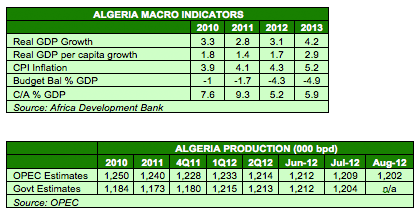
The country's GDP grew by 2.8% last year and is expected to grow by 3.1%, which is slightly disappointing given high oil prices and the country's dependence on oil exports.
Worryingly, the Central Bank reported that energy exports were down by nearly 2.29% in the first half of the year, at a time when most OPEC countries are raising output to make up for loss of Iranian crude.
While government data shows oil production has risen from 1.17 million barrels per day in 2011 to 1.21 million in the second quarter, secondary data gathered by OPEC shows output has actually fallen from 1.24 million in 2011 to 1.20 million in August of the current year.
However, state-owned Sonatrach is investing heavily to ensure Algeria's oil and gas production. A Sonatrach official, requesting anonymity, told Zawya.com that the company is investing USD13-billion in five refineries and USD40-billion offshore in oil and gas exploration.
However, Algeria's decision to limit foreign participation in the energy sector has been a disadvantage for the country.
"Together with the imposition of higher windfall taxes on foreign earnings, the law has diminished the international attractiveness of developing Algeria's energy potential," notes Dr. Spencer. "Even with the recent discovery of new gas deposits in the Algerian Saharan, Algeria has found fewer international partners willing to invest further in developing its hydrocarbon sector. It may yet find itself even further behind the curve in energy production and market share as the impact of the discovery and exploitation of shale gas deposits changes the global landscape of energy importers and exporters in coming years."
Given that hydrocarbons make up 97% of its export revenues, the focus on the sector is crucial for the country's future prosperity.
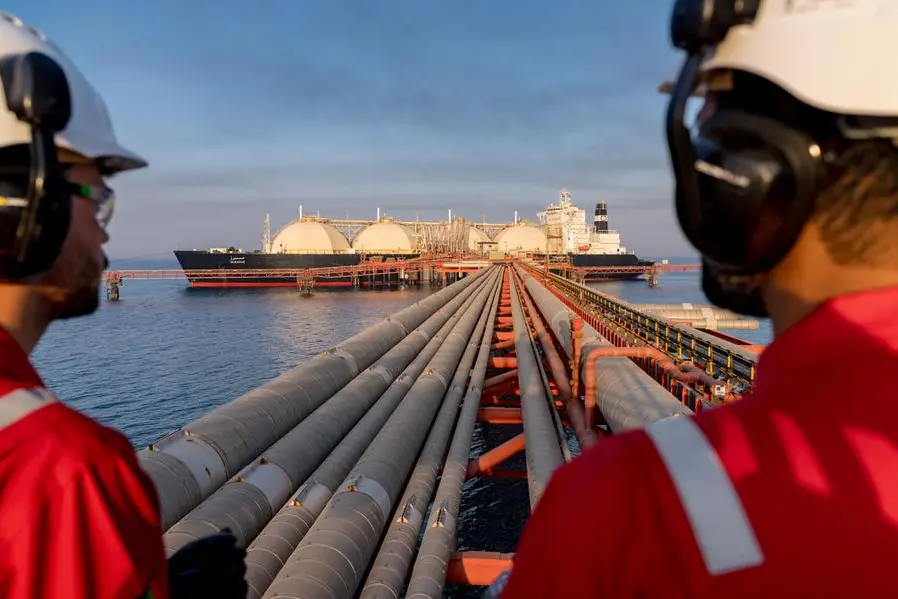
Apart from sitting on Africa's third largest oil reserves of 12.2-billion barrels, the country is also home to the tenth largest natural gas reserves in the world, and second only to Nigeria in Africa.
The country is already the third largest supplier of natural gas to Europe and it's hoping to build on that strength.
This includes the development of the Southwest Gas Project, featuring Spain's Repsol-led 102 billion cubic feet per year (bcf/y) project, Reggane Nord fields, a 56 Bcf/y project led by France's Total, and GDF Suez's 159 bcf/y Touat project.
The project includes a gas gathering facility, a gas treatment plant and a pipeline. The development, which has been delayed by two years, is expected come on line by 2016, according to the U.S. Department of Energy.
"Another major project in the area, the Menzel Ledjmet East (MLE) project led by Eni, is projected to start production of 116 Bcf/y in mid-2012, along with associated gas liquids and oil," notes the Energy Department. "The projects in the southwest are co-dependent, as they will all rely on the construction of a new gas pipeline linking them to Hassi R'Mel. Following a recent decline in upstream licensing activity, the development of gas from the southwest has taken on greater importance for Algeria's capacity to meet contracted gas exports and increasing domestic demand in the medium term."
Clearly, President Abdelaziz Bouteflika's government has no room for complacency, nor shortage of challenges to contend with.
"The coming years will see an intensification of political, economic and social reform in response to pressing social demand and intended to strengthen the process of democratisation and to improve living conditions," notes African Development Bank (AfDB) in a report. "The 2010-14 public-investment programme will cost USD286-billion, 40% of which will go to human development."
The near USD300-billion investment will come in handy if Algeria needs to bring its unemployment figure down. The National Office of Statistics data shows unemployment in the country stands at 10%, or just a million people, similar to last year's figure.
While government data shows unemployment among graduates fell to just over 16% in 2011 from 21.4% in 2010, AfDB notes unemployment among the young stands at 21.5%.
"Steps to encourage employment help mitigate the problem but measures are needed to redress the job supply. National priority should be given to making education more democratic, and extending vocational training and higher education."
BIG MOVES
Algeria did see protests at the height of the Arab Spring revolution last year, as citizens demanded a change in regime and better economic and social benefits.
Seventy-five-year-old Bouteflika, who came to power in 1999, lifted a 19-year emergency last year in response to political tensions in the country and increased some social benefits to appease the angry nation.
"After the political reforms were announced on 15 April 2011 by President Abdelaziz Bouteflika, consultations got under way on 20 May 2011 with political parties, prominent figures and national experts," wrote AfDB in a report.
"These consultations made it possible to put forward suggestions for constitutional revision, reform of the electoral code, legislation on political parties and associations, and the information code governing press freedom. In addition the first civil society round table took place in June 2011. It resulted in a series of recommendations focused on strengthening the law and spending, and the full participation of civil society in the implementation of public policy."
But the President will need to follow up on his pledges with concrete action and reform.
The dynamics in Algeria are quite different from its neighbours Egypt, Libya, Tunisia. Even Morocco, which did not see a regime change, nevertheless saw an Islamic government democratically elected.
But Algeria has been keeping a tight lid on its crisis and memories of massacres during 1992-2002 had hardened the resolve of the Algerian regime long before Mr. Mubarak and Mr. Zineabeddin faced crisis in their respective countries of Egypt and Tunisia.
Algeria is also wary of Gulf governments' increasing influence in the affairs of Libya, Tunisia, Egypt and Syria, as it's wary of the Salafism that has risen in all these states, primarily due to Saudi influence. The GCC's invitation to Morocco to join the economic bloc is also seen negatively by the Algerian government as an encroachment of the Gulf states in North Africa.
"For Algiers, Qatar's backing of "moderate" Islamism and Saudi Arabia's official or unofficial backing of its Salafist variants, above all in Egypt, pose exactly the kind of destabilizing risk that Algeria has successfully clamped down on since the late 1990s," wrote Dr. Spencer.
A USD182-fiscal reserve cushion also allows the government to pursue a more independent policy, especially as external debt is around 2.3% of GDP.
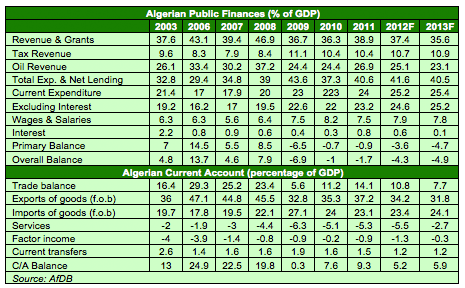
"Algeria's external position remains healthy even though the current-account balance has been dropping since 2009," notes AfDP. "The current-account balance amounted to 9.3% of GDP in 2011, and the trade surplus was 14.1% of GDP compared with 11.2% in 2010. Exports amounted to USD 73.39 billion, USD 71.24 billion of which were accounted for by oil and gas, or 98% of the total. Non-hydrocarbon exports rose and amounted to USD 2.15 billion. Imports of goods rose by 14.78%, or USD 46.45 billion."
ECONOMIC MOVES
Algeria is moving at its own pace to address its issues. A Zawya report notes the country is looking to build 5 skyscrapers to solve some of its housing issues.
The report notes that Algeria needs 225,000 housing units per year to meet demand. The government creates 75,000 units annually, leaving a shortage of 150,000.
The building and public works sector had done well over the past few years and contributed 10% to annual GDP during the last three years as a result of major infrastructure projects such as the East-West motorway, the Algiers metro, dams and public oil works, notes the AfDB.
But clearly, much work will need to be done to diversify the economy. Zawya Project Monitors' data shows that Algeria's largest project are focused on oil and gas related sectors.
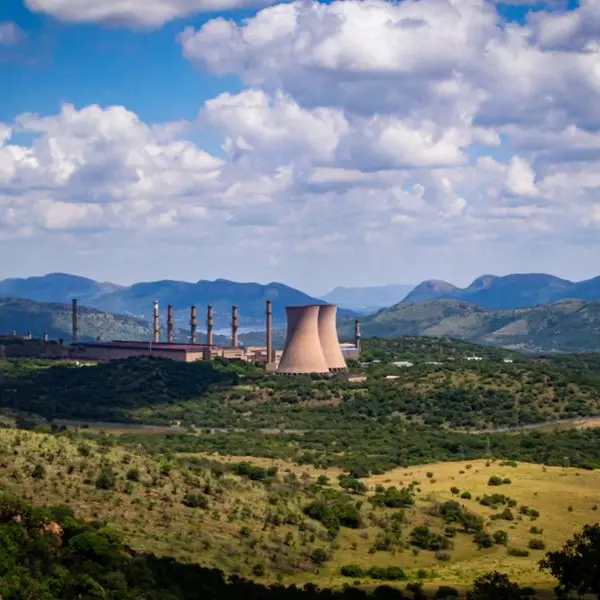
Major infrastructure projects include the USD2.18-billion Koudiet Edraouch Power Plant and USD2-billion Terga Power Plant. Meanwhile, a USD1.5-billion metro project is in design stage, according to Zawya Projects.
CONCLUSION
Algeria just has not moved fast enough on economic reforms and diversification and that could hurt the government in the long run. The region around the country is changing and Algeria may find itself out of step with the changes.
© alifarabia.com 2012
While neighboring regimes crashed and burned, the Algerian government remained largely unmoved and continues its firm grip on the country.
But that's perhaps Algeria weathered its own Arab Spring two decades ago.
"Despite sharing many of the socio-political characteristics that triggered uprisings in Tunisia, Egypt and Libya in early 2011, Algeria's 1990s experience of violent internal conflict verging on civil war has acted as an effective brake on the rise of an Arab Spring-inspired nationwide protest movement," notes Dr. Claire Spencer, head of the Middle East and North Africa Program at Chatham House, in a report on the country for the World Political Review.
"Algeria's descent into violence in the period 1992-2002, provoked in large part by the armed jihadist predecessors of AQIM, claimed as many as 200,000 victims, and even Algerian activists of the younger generation of are conscious of the impact the conflict had on their immediate families and neighborhoods."
The country's GDP grew by 2.8% last year and is expected to grow by 3.1%, which is slightly disappointing given high oil prices and the country's dependence on oil exports.
Worryingly, the Central Bank reported that energy exports were down by nearly 2.29% in the first half of the year, at a time when most OPEC countries are raising output to make up for loss of Iranian crude.
While government data shows oil production has risen from 1.17 million barrels per day in 2011 to 1.21 million in the second quarter, secondary data gathered by OPEC shows output has actually fallen from 1.24 million in 2011 to 1.20 million in August of the current year.
However, state-owned Sonatrach is investing heavily to ensure Algeria's oil and gas production. A Sonatrach official, requesting anonymity, told Zawya.com that the company is investing USD13-billion in five refineries and USD40-billion offshore in oil and gas exploration.
However, Algeria's decision to limit foreign participation in the energy sector has been a disadvantage for the country.
"Together with the imposition of higher windfall taxes on foreign earnings, the law has diminished the international attractiveness of developing Algeria's energy potential," notes Dr. Spencer. "Even with the recent discovery of new gas deposits in the Algerian Saharan, Algeria has found fewer international partners willing to invest further in developing its hydrocarbon sector. It may yet find itself even further behind the curve in energy production and market share as the impact of the discovery and exploitation of shale gas deposits changes the global landscape of energy importers and exporters in coming years."
Given that hydrocarbons make up 97% of its export revenues, the focus on the sector is crucial for the country's future prosperity.
Apart from sitting on Africa's third largest oil reserves of 12.2-billion barrels, the country is also home to the tenth largest natural gas reserves in the world, and second only to Nigeria in Africa.
The country is already the third largest supplier of natural gas to Europe and it's hoping to build on that strength.
This includes the development of the Southwest Gas Project, featuring Spain's Repsol-led 102 billion cubic feet per year (bcf/y) project, Reggane Nord fields, a 56 Bcf/y project led by France's Total, and GDF Suez's 159 bcf/y Touat project.
The project includes a gas gathering facility, a gas treatment plant and a pipeline. The development, which has been delayed by two years, is expected come on line by 2016, according to the U.S. Department of Energy.
"Another major project in the area, the Menzel Ledjmet East (MLE) project led by Eni, is projected to start production of 116 Bcf/y in mid-2012, along with associated gas liquids and oil," notes the Energy Department. "The projects in the southwest are co-dependent, as they will all rely on the construction of a new gas pipeline linking them to Hassi R'Mel. Following a recent decline in upstream licensing activity, the development of gas from the southwest has taken on greater importance for Algeria's capacity to meet contracted gas exports and increasing domestic demand in the medium term."
Clearly, President Abdelaziz Bouteflika's government has no room for complacency, nor shortage of challenges to contend with.
"The coming years will see an intensification of political, economic and social reform in response to pressing social demand and intended to strengthen the process of democratisation and to improve living conditions," notes African Development Bank (AfDB) in a report. "The 2010-14 public-investment programme will cost USD286-billion, 40% of which will go to human development."
The near USD300-billion investment will come in handy if Algeria needs to bring its unemployment figure down. The National Office of Statistics data shows unemployment in the country stands at 10%, or just a million people, similar to last year's figure.
While government data shows unemployment among graduates fell to just over 16% in 2011 from 21.4% in 2010, AfDB notes unemployment among the young stands at 21.5%.
"Steps to encourage employment help mitigate the problem but measures are needed to redress the job supply. National priority should be given to making education more democratic, and extending vocational training and higher education."
BIG MOVES
Algeria did see protests at the height of the Arab Spring revolution last year, as citizens demanded a change in regime and better economic and social benefits.
Seventy-five-year-old Bouteflika, who came to power in 1999, lifted a 19-year emergency last year in response to political tensions in the country and increased some social benefits to appease the angry nation.
"After the political reforms were announced on 15 April 2011 by President Abdelaziz Bouteflika, consultations got under way on 20 May 2011 with political parties, prominent figures and national experts," wrote AfDB in a report.
"These consultations made it possible to put forward suggestions for constitutional revision, reform of the electoral code, legislation on political parties and associations, and the information code governing press freedom. In addition the first civil society round table took place in June 2011. It resulted in a series of recommendations focused on strengthening the law and spending, and the full participation of civil society in the implementation of public policy."
But the President will need to follow up on his pledges with concrete action and reform.
The dynamics in Algeria are quite different from its neighbours Egypt, Libya, Tunisia. Even Morocco, which did not see a regime change, nevertheless saw an Islamic government democratically elected.
But Algeria has been keeping a tight lid on its crisis and memories of massacres during 1992-2002 had hardened the resolve of the Algerian regime long before Mr. Mubarak and Mr. Zineabeddin faced crisis in their respective countries of Egypt and Tunisia.
Algeria is also wary of Gulf governments' increasing influence in the affairs of Libya, Tunisia, Egypt and Syria, as it's wary of the Salafism that has risen in all these states, primarily due to Saudi influence. The GCC's invitation to Morocco to join the economic bloc is also seen negatively by the Algerian government as an encroachment of the Gulf states in North Africa.
"For Algiers, Qatar's backing of "moderate" Islamism and Saudi Arabia's official or unofficial backing of its Salafist variants, above all in Egypt, pose exactly the kind of destabilizing risk that Algeria has successfully clamped down on since the late 1990s," wrote Dr. Spencer.
A USD182-fiscal reserve cushion also allows the government to pursue a more independent policy, especially as external debt is around 2.3% of GDP.
"Algeria's external position remains healthy even though the current-account balance has been dropping since 2009," notes AfDP. "The current-account balance amounted to 9.3% of GDP in 2011, and the trade surplus was 14.1% of GDP compared with 11.2% in 2010. Exports amounted to USD 73.39 billion, USD 71.24 billion of which were accounted for by oil and gas, or 98% of the total. Non-hydrocarbon exports rose and amounted to USD 2.15 billion. Imports of goods rose by 14.78%, or USD 46.45 billion."
ECONOMIC MOVES
Algeria is moving at its own pace to address its issues. A Zawya report notes the country is looking to build 5 skyscrapers to solve some of its housing issues.
The report notes that Algeria needs 225,000 housing units per year to meet demand. The government creates 75,000 units annually, leaving a shortage of 150,000.
The building and public works sector had done well over the past few years and contributed 10% to annual GDP during the last three years as a result of major infrastructure projects such as the East-West motorway, the Algiers metro, dams and public oil works, notes the AfDB.
But clearly, much work will need to be done to diversify the economy. Zawya Project Monitors' data shows that Algeria's largest project are focused on oil and gas related sectors.
Major infrastructure projects include the USD2.18-billion Koudiet Edraouch Power Plant and USD2-billion Terga Power Plant. Meanwhile, a USD1.5-billion metro project is in design stage, according to Zawya Projects.
CONCLUSION
Algeria just has not moved fast enough on economic reforms and diversification and that could hurt the government in the long run. The region around the country is changing and Algeria may find itself out of step with the changes.
© alifarabia.com 2012