Iran's beleaguered economy may catch a break if the thawing of Tehran's relationship with Washington results in an easing of sanctions.
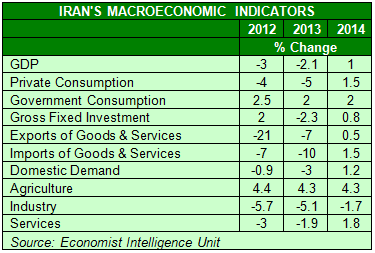
Iran's economy shrank 1.9% last year and could fall 1.3% this year as oil exports dried up, according to the International Monetary Fund (IMF). The Economist Intelligence Unit has an even more pessimistic 3% decline forecast for the country in 2013.
According to some estimates, the economy is hemorrhaging USD 4.2 billion in lost revenue every month.
The United States and other Western countries have imposed tough sanctions on Tehran for pursuing a nuclear program. For its part, Iran maintains its nuclear program is for civil purposes.
But the election of moderate Hassan Rouhani and his recent phone conversation with US president Barack Obama has raised hopes that Iran may be able to come to an agreement with the United States and other Security Council members on the nuclear issue.
While, Tehran is optimistically hoping that the issue can be resolved within three to six months, both sides have huge internal political challenges to contend with.
"Negotiating an accord with Iran that trades constraints on its nuclear program in exchange for easing of sanctions will be tough. Gaining congressional approval could prove even tougher" said Richard Hass, president of Council on Foreign Relations.
RIAL TAKES A BEATING
"We will know soon enough. Both sides are in a hurry. The new Iranian leaders worry that time is against them. They fear that conservatives defeated in the June elections will rally, while the public will grow impatient if the sanctions-battered economy does not improve."
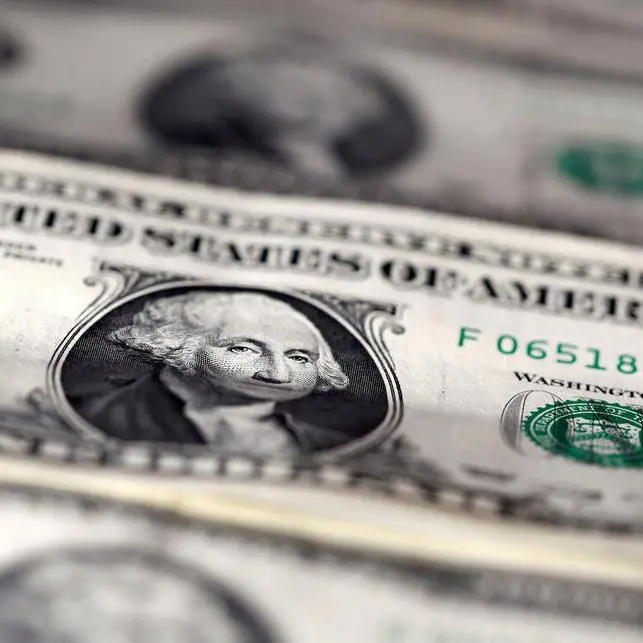
The most worrying aspect for the Iranian government is that the sanctions have hurt the middle class. The Iranian rial has devalued from 12,300 to a US dollar to 25,000. Meanwhile, inflation has shot up 44% year-on-year in July, leaving many Iranians unable to buy goods and services from the international markets.
"Economic hardship will mean that Iran faces the risk of social unrest, and The Economist Intelligence Unit still expects that the regime would use heavy-handed measures against challenges to the political status quo," the EIU said in a recent report.
"In the medium term, as Rouhani's honeymoon period fades away, with the economy languishing and the presence of high inflation and unemployment among a young and growing population, the risk of unrest will become more acute and probably more difficult for the authorities to contain."
OIL DECLINE
In addition, Iranian oil output has fallen 3.7 million barrels per day in 2010 to around 2.6 million barrels per day, as Iran's avenues to export oil are closed out by Western governments.
"Tehran's crude oil sales fell 36% in 2012 to 1.5 million bpd," wrote Trevor House, analyst at Rhodium Group. "Among Iran's major customers, sales to Europe were hit hardest - down 78% year-on-year - followed by Japan at 40% and Korea at 36%. Chinese imports were down 21% while Indian imports declined by 12%. Overall, Iranian export revenue was 35% lower in 2012 than in 2011."
Iranian oil minister Bijan Zanganeh recently told Fars news agency that the country earned USD 23 billion in oil exports and revenues in the first six months of the year, and exported 1.3 million barrels of oil and natural gas condensates during the period. In sharp contrast, Iran generated USD 81.1 billion from oil exports in the full fiscal year of 2010-11, suggesting that its revenues have practically halved.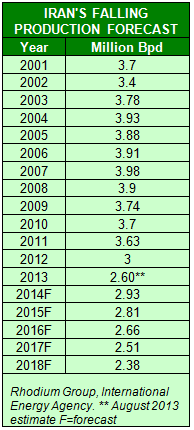
RETURN TO MARKET
If Iran were to return to the oil market, the world will get a "positive shock supply" of roughly 1 million barrels per day, according to Francisco Blanch, global investment strategist at Bank of America Merrill Lynch.
"With limited access to foreign capital, a major government funding problem, a collapsing currency and a theocratic political system, it may take years to bring Iranian oil output back to pre-sanction levels," the Wall Street strategist said. "In sum, Rouhani's diplomatic push to end the embargo, if and when that happens, may end up having less than a USD 10 per barrel impact on oil prices."
Much will depend on the speed of the diplomatic resolution, and no doubt there are many political obstacles in the way, including pressure on the United States from Israel, which doubts that Iran is sincere in its wish to end the nuclear stalemate.
Even if a diplomatic resolution is achieved through some miraculous compromises from both sides, the Iranian oil industry will need a much longer time frame and capital investment to truly realize its potential.
Iran is home to the fifth largest oil reserves in the world and the second largest natural gas reserves, but it has suffered from under-investment for years.
"With limited access to foreign capital, a major government funding problem, a collapsing currency and a theocratic political system, it may take years to bring Iran oil output back to pre-sanction levels," said BAML's Blanch. "In sum, we think Rouhani's diplomatic push may end up having a rather limited effect on oil prices."
While Russian, Chinese and Indian firms will probably be the first to enter the Iranian oil industry, Tehran will have to create a more conducive business environment to be able to raise production quickly in a meaningful way.
Iran is still a long way away from being able to persuade the United States to lift the sanctions, but if it does, it would usher in a new era of growth in the Iranian economy and go a long way in reducing regional tensions. Wishful thinking, perhaps, but worth pursuing.
© alifarabia.com 2013