Saudi Arabia lags behind regional and global counterparts in healthcare infrastructure, which presents growth opportunities for the private sector, according to a new report.
Saudi Arabia's healthcare spending per capita has stood at around USD 850 for the past three years and is expected to rise 26% to reach USD 1,100 by 2015.
Meanwhile, the UAE's per capita healthcare spending currently hovers at around USD 1,640 and at around USD 5,000 for advanced economies like Canada and the United States.
"We believe the government understands the acute shortage in its medical infrastructure and has established some ambitious targets within its ninth development plan (2010-2014)," Shuaa Capital said in a report. "The kingdom aims to increase the hospital bed per population to 35 per 10,000 people (from 22 in 2010). This plan mandates an aggressive 68% increase in bed capacity over the 2010-2014 period - reflecting close to 40,000 additional beds.
Other targets set forth in the plan include dropping the infant mortality ratios below 120 per 10,000, increase the penetration of health centers across the kingdom to 7,000 people per health center and improve the availability of medical staff (doctors and nurses) across the country, the investment bank said.
HOSPITAL CONSTRUCTIONS
Rising population in Saudi Arabia and emphasis on developing new urban centers has led to a surge in hospital-building in the kingdom. So much so, that the Ministry of Health is facing a shortage of available land, which could lead to delays in development of new hospitals.
The ministry recently allocated SAR 700 million (USD 187 million) to secure land as there have been 200 medical centers and 30 new hospitals earmarked for development. The ministry recently finished building 28 hospitals, and is expected to handover 21 hospitals by the end of this year. Nearly 102 hospitals are under construction.
There are close to 400 hospitals in the country, of which 249 are operated by the ministry, 39 by other government agencies, and 127 private hospitals, Economist Intelligence Unit data shows.
The kingdom is also looking to build five "medical cities" in hopes of getting the private sector involved in developing the industry.
And the private sector is paying heed. Companies like Saudi German Hospital Group, Kingdom Holding and the Saad Group are already very active in the kingdom, offering high-level services.
Publicly listed companies such as Al Mouwasat Healthcare Company, Dallah Hospital and Care have announced major expansion plans to take advantage of the kingdom's focus on healthcare services.
Dallah is expanding an existing hospital and building a 300-bed hospital in Riyadh. The company also plans to grow its clinics from 113 to 284 by 2017.
Mouwasat is set to open a 175-bed hospital in Riyadh and a 120-bed facility in Jubail within the next two years, while Care is also planning the expansion of an existing hospital and building four family care facilities.
In early November, Reuters reported that Sulaiman Al-Habib Medical Group (HMG) and Almana General Hospitals (AGH) are seeking a public listing. HMG is one of the largest healthcare providers in the region, while AGH remains focused on the Eastern province. 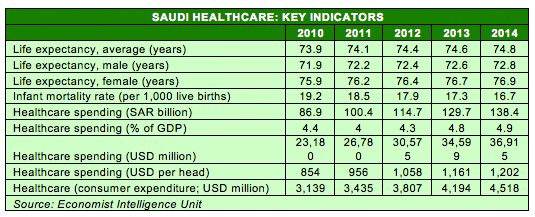
SKILLED LABOR SHORTAGE
While the companies are unveiling massive plans, the kingdom faces acute skilled labor shortage that could leave the sector at a "standstill", according to a government official.
"The doctor/patient ratio is 1.8 per 1,000 people, which is low in comparison with most OECD countries. Although the government has invested in medical training, expatriate doctors and nurses make up a large majority of the total nurses and doctors working in the kingdom," noted the Economist Intelligence Unit.
"According to the latest Ministry of Health data, 22.6% of physicians, including dentists, were Saudi nationals at the end of 2010, but just over half of nurses were Saudi (compared with 40% in 2006)."
Most analysts believe there may not be enough new supply of doctors, nurse and medical practitioners including pharmacists, to meet the needs of a population that's growing at an annual rate of 3.1% each year.
While the kingdom does not have a huge population aged 65 years and above, it does have high incidence of obesity, with cancer and cardiovascular disease the leading causes of death. The recent MERS virus, which rocked the kingdom, also highlights the dangers of epidemics especially as the kingdom receives millions of visitors making their pilgrimage to religious sites.
Shuaa notes that the kingdom's healthcare sector "ticks all the boxes" with its combination of growing population, rising wealth, increase in lifestyle-related diseases, growing healthcare demand, shortage of medical infrastructure and government intentions to promote private sector participation.
"The growth in private healthcare spending has been mainly driven by the phased introduction of mandatory health insurance to all employees (nationals and expats) working in the private sector," the bank said.
"This has significantly changed the healthcare financing scheme in the kingdom with 60% of expats and 12% of locals insured. However, we believe the game changer would be the implementation of mandatory health insurance to the local population, which would spur significant demand for private healthcare."
© alifarabia.com 2013