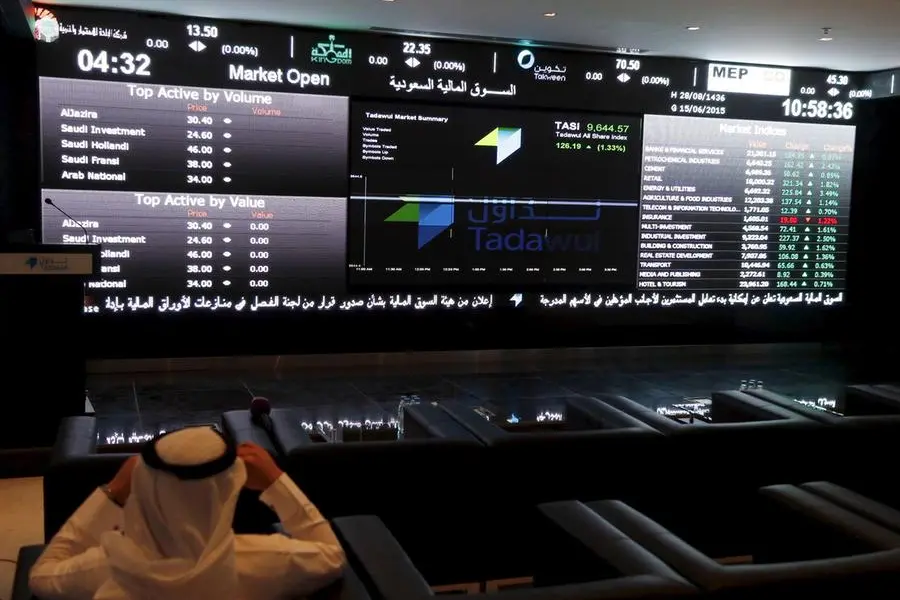
News that Saudi Arabia would allow foreign investors to participate in the Tadawul market would give fresh impetus to the market and bring a number ofinternational money managers to the bourse.
As the world's largest exporter of crude oil, Saudi Arabia enjoys high credit ratings and a stable economy with strong underlying macroeconomic fundamentals.
Last year, index provider MSCI said it was reintroducing the coverage of the Saudi Arabia equity market after reaching agreement with the Saudi Stock Exchange for the provision of market data. The index is geared towards GCC investors as the market remains closed tonon-GCC based investors.
Non-GCC investors can only access the market indirectly through the use of swaps,which for institutional investors may cause compliance issues for internationalinvestors, MSCI said.
"The introduction of a new scheme allowing direct access for non-GCC basedinvestors to the Saudi equity market may result in MSCI considering the inclusionof Saudi Arabia in frontier markets or emerging markets, depending on the levelof market accessibility," MSCI said in its assessment.
The upgrade to emerging market status is important as more than USD 7 trillionin funds are benchmarked to the MSCI. In addition, existing emerging marketssuch as Korea and Taiwan could soon move up to developed market status, leavingmore room for Arab markets to capture a share of emerging market-indexed funds.
Given Saudi Arabia's market capitalization, it is unlikely to be considered afrontier market and may jump the queue to attain emerging market status.
This may not be a huge stretch given that Saudi Arabia's GDP is higher than many emerging markets such asSouth Africa, Poland, Thailand, Malaysia and Chile, which are part of MSCI'semerging market index.
Saudi Arabia could potentially attract as much as USD 29.2 billion in gross inflows if it opens up, according to a Markazreport published late last year.
Separately, Qatar and the UAE markets arehoping to move up the ladder from MSCI's frontier market status to emergingmarkets. Doha Securities Market may see USD 4.3 billion in inflows, while the UAE markets could attract as much as USD 2.9 billion, Markaz data showed.
MSCI is expected to make a decision on Qatar and the UAE markets in the summer.
Falling behind itsneighbors
While the UAE and Kuwaiti markets have soaredthis year, Tadawul has trundled along. The market has risen 5.6% in the firstfour months, compared to Dubai Financial Market's sterling 31.6% increase andKuwaiti market's 9.1% rise.
In fact, over a 12-month period, the Saudi market has fallen 5%.
"Weakness in petrochemical names offset strength in retail names asdividends were paid out," said Emad Mostaque, analyst at Noah Capital.
The Saudi market has also lagged behind other areas. The Tadawul's market capitalizationfell 0.5% last year to USD 385.3 billion in April, compared to USD 387.3 billionin March - the only GCC market to witness a contraction.
Still, the Riyadh-based market accounted for 80% of all trading in the Gulf region and saw shares worth USD 38.5 billion exchange hands in Aprilalone.
Tadawul's subdued performance is at odds with trends in the wider regional and global markets. The market is usually correlated to international markets suchas Standard & Poor's, Dow Jones and Nikkei, which have all touched all-time highs.
Despite lower oil prices over the past few months, Saudi crude revenues remainstrong with plenty of domestic economic activity that should spur growth inmany domestic sectors such as real estate, retail and consumer staples.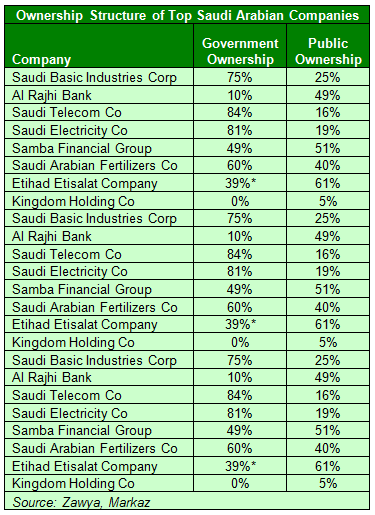
NEW CHAPTER
Conscious of the shallow pool of domestic investors, Saudi Arabia is making changes to its business outlook. Its recent decision to switch public holidays from Thursday-Friday to Friday-Saturday signals a greater intent to align itself to global and regional markets.
The move to seek greater foreign investor participation also suggests a desireby Saudi Arabia to open up to international investors, particularlyinstitutional investors who would no doubt be salivating at the chance of investingin profitable and well-run Saudi companies such as Sabic.
But expect the authorities to be careful and bide their time. The Tadawul market is a great way for the Saudi government to include Saudi nationals to participate in the country's key companies such as Saudi Telecom, Sabic and Maaden.
The arrival of international institutional investors may sideline Saudi nationals and leave the market at the mercy of internationalebbs and flows. But market observers believe retail investors wield too much influence and account for 93% of trading, which is not healthy for the market.
"Inclusion in the index will attract institutional money to the region and thenwill trigger demands on disclosure, corporate governance, etc., which may setthe path for qualitative progress of the local bourses, a key requirement for the development of the long-term role of stock markets in the capitalallocation process," said Markaz.
Indeed, the Saudi Capital Markets Authority should strive to obtain a place inthe emerging market index so that Saudi Arabia can claim its rightful place inthe international equity markets as a G20 nation.
alifarabia.com 2013