03 June 2012
The Libyan economy is set to grow by 20%, the fastest in Africa, and easily among the fastest in an otherwise depressed global economy.
"Libya's civil war hugely disrupted the economy by cutting oil output, the primary source of revenue, to virtually zero," noted the African Development Bank Group (ADBG) in a new report on the continent. "As a result, the economy contracted 41.8% in 2011 but as oil production recovers, it should expand 20.1% in 2012 as reconstruction takes holds, followed by a gain of 9.5% in 2013."
Currently, Libya's current political dysfunctional nature has not impacted its economic growth, primarily due to its rising crude production.
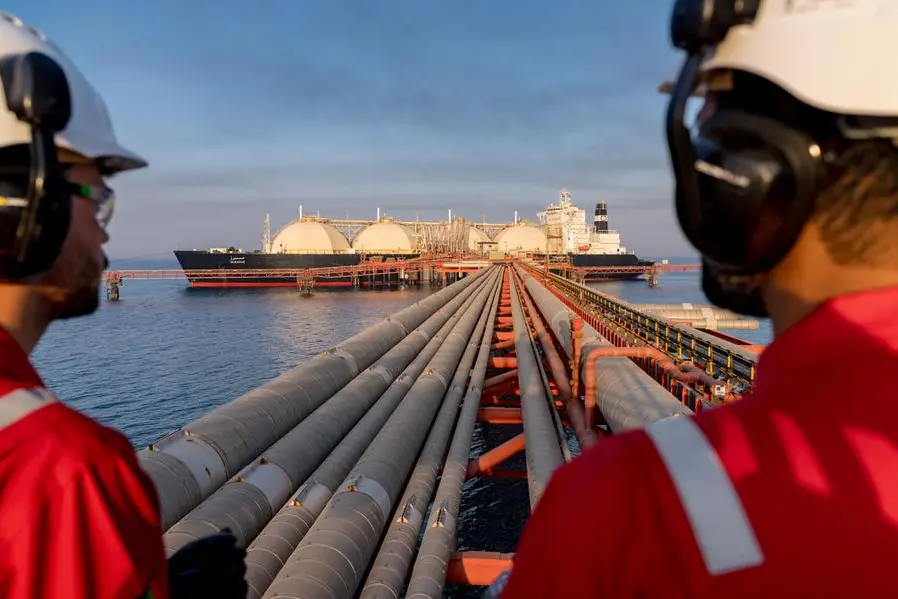
Oil output in April rose a further 50,000 barrels per day to 1.4 million bpd compared to March, as Libyan production edges closer to its pre‐civil war average of 1.6 million bpd in 2010. This is a remarkable turnaround given that the country's average production in 2011 stood at 460,000 bpd during a bloody civil war which ended with the killing of Colonel Moammer Gaddafi.
"I guarantee you this wasn't like a piece of cake, you know, just go back to work - no, this was a very serious undertaking," said Libyan interim PM Abdurrahim El-Keib at a conference in London. "I mean people really took a chance. This, just this example, will intensify our feelings, or our belief that we'll make it. We will certainly be the engine of growth."
The PM says that a further rise in production would require proper infrastructure. "In a transparent fashion, we welcome every company that can help us move forward and enhance our production further in the future."
BP has already paid heed and has returned to Libya, although the news was somewhat dampened by Royal Dutch Shell's decision to abandon its project in Libya, citing unviable development prospects.
BP had signed a USD900-million contract to explore onshore and offshore developments in the country in 2007, but a cloud hung over the deal after Britain's decision to release of Libyan Abdel Basset al-Megrahi whoo was convicted for the bombing of a U.S. airliner over Lockerbie in Scotland.
BP had closed its office soon after the civil war broke out, but has since lifted the 'force majeure' - a clause, which typically frees companies of their obligations due to events beyond their control - in this case a civil war.
The company has acquired over 31,000 square kilometres of 3D seismic data over blocks offshore in the Sirt basin and onshore in the Ghadames basin, and has committed to exploring five wells offshore and 12 wells onshore.
"The lifting of force majeure is a significant milestone in BP's plans to return to the exploration of onshore and offshore blocks in our existing EPSA contract," said Dr. Michael Daly, BP's Executive Vice President for Exploration. "We look forward to working with the NOC and our partners in the Libyan Investment Authority to safely implement our drilling programme."
'Safely' is a crucial word that is foremost on the minds of oil majors. French company Total and Italian company Eni have also returned to Libya, while Shell is looking to pursue new opportunities within the country.
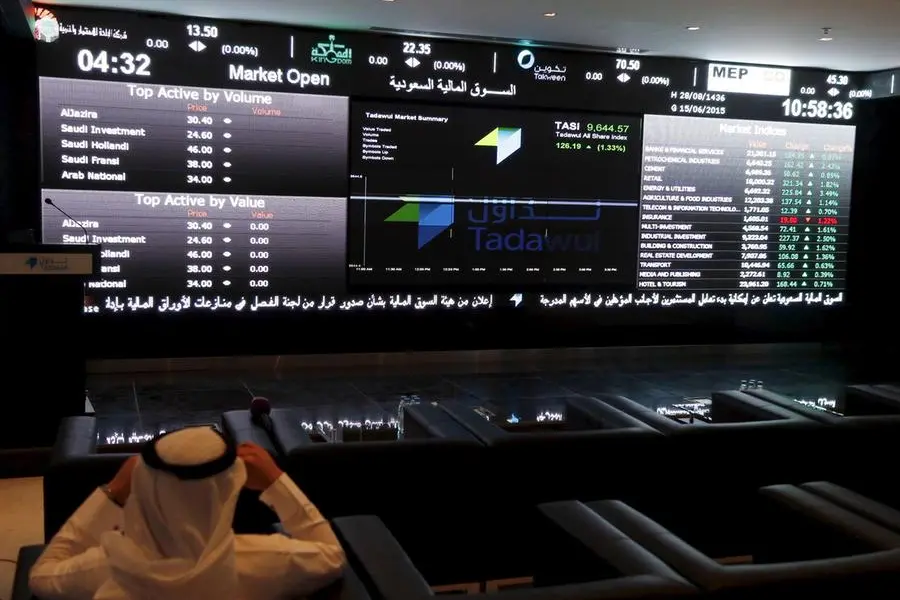
There are others morsels of good economic news. British Airways and Etihad have started flying to Libya again, while the nascent stock market resumed trading in May.
"The interim government has taken necessary measures to build on the oil industry's strengths while mitigating the former government's mismanagement of the resource," notes the ADBG.
Overall, the NTC intends to reform the economy as part of a comprehensive approach to the country's reconstruction. Government spending faces major pressures as subsidies and other forms of wealth transfers are channelled to those most affected by the conflict.
"As a result, the budget is expected to show a deficit equal to 17.1% of GDP in 2011, compared with a surplus of 8.7% in 2010, but this is expected to improve by 2012 with a positive balance of 13.6%," says the ADBG.

THE ELECTIONS
Despite the many challenges Libya faces in such areas as economic management, structural policies, social inclusion and governance, it is expected that the country will be able to make important strides in its reconstruction efforts if the interim government is able to maintain stability, notes the ADBG.
First key step to stability is the parliamentary election set for June.
"We've scheduled it for June 19th, but given the appeals that have been filed and also given submissions by the Integrity Commission, nobody can say between now and June 12th whether the election will be held at its pre-scheduled date or will be postponed," National Transitional Council (NTC) chief Mustafa Abdel Jali said, according to North African news wire Maghrebia.
More than 4,000 candidates, including 2,600 independent candidates, plan to stand for election.
Libya's lack of many basic institutions, such as a constitution and an independent judiciary, compounds the confusion since it is not clear how decisions on matters like candidate eligibility are made, says Isobel Coleman, Senior Fellow for U.S. Foreign Policy, Director of the Civil Society, Markets, and Democracy Initiative.
"From my perspective, this is all the more reason for Libya to hold elections in a timely manner and begin building up the country's political infrastructure. A potential delay adds to the likelihood that ongoing civil unrest will continue to foment. Moreover, risk-averse companies will continue to sit on the sidelines of Libya's economy until a government is formed. Already, talk of delay has Libyans grumbling about a possible power grab by the NTC, whose legitimacy as a governing body is declining by the day."
But the Libyan PM has hinted that elections could be delayed.
"There are many who are trying to get us to a point where we can't do the elections. And it's very unfortunate," said PM El-Keib. "What we are trying to do is to tell them look, slow down, let's get going with the elections, and then you can form your own parties."
As public expectations rise, the country faces numerous political hurdles especially with the continued presence of militias in parts of the country, and various factions that ousted Gaddfai's forces that now seek greater political and economic benefits for their sacrifices.
In the eastern province of Cyrnaica, tribal leaders and military commanders declared the oil-rich region semi-autonomous, as they felt ignored by the NTC Government. Cyrnaica's largest city Benghazi was ground zero of the Libyan resistance to Gaddafi's regime in February 2011, and its tensions with the federal government does not bode well for national unity.
Apart from its oil riches, the eastern province is home to the country's deepest container port and an important economic centre. Aware of their economic importance, in April protesters in Benghazi disrupted work at Libya's largest oil company, Arabian Gulf Oil Co (AGOCO), forcing a shut‐in some of the company's 360,000bpd production for more than two weeks.
Calling for more transparency on how the new government has spent oil revenues, the protestors effectively closed AGOCO's headquarters on 23 April, forcing the company to shut‐in production of around 30,000 bpd.
UNEMPLOYMENT AMONG YOUTH
Libyan unemployment stands at 30%, a figure which is set to rise as close to 50% of the population is below 25 years of age.
"Transforming the economy will require a workforce with new skill sets, and private companies may struggle to find qualified and experienced personnel," the IMF said in a report on the country in April. "To meet the demand, it will be important to establish training programs for workers and job seekers, and to reform the education system to reflect new needs, such as language and computer skills."
Libya has achieved universal enrolment in primary education while gross secondary enrolment hit 94% by 2007. Adult literacy rate is at 87% -- 94% for men and 78% for women. The curriculum, however, is of poor quality and teachers receive inadequate training.
"Libya's problems of unemployment and youth unemployment in particular largely result from a miss-match between the skills developed by the education system and those demanded by the labour market," notes the ADBG. "Given the role unemployment played in driving the uprising against the government and its potential for causing social unrest, Libya needs to address this issue in the interest of promoting promote economic and political stability."
Another key issue are low wages, coupled with high inflation which has led to great dissatisfaction.
The IMF notes that wage increases implemented by the previous regime will raise the wage bill from 9% of GDP in 2010 to about 19% of GDP in 2012. A high level of public-sector wages will reduce the incentive for individuals to seek employment in the private sector and will undermine efforts to advance economic diversification.
"The envisaged increase in subsidies will raise expenditures on subsidies from 11.7% of GDP in 2010 to 15.9% of GDP in 2012. In 2012, revenues are expected to reach LD55.9 billion (57.9 percent of the GDP), expenditures are estimated at LD62.4 billion (64.7% of the GDP), and the deficit (to be financed through the issuance of government bonds and a drawdown in government deposits at the CBL) is foreseen to reach LD 6.6 billion (6.8 percent of the GDP)."
CONCLUSION
On paper the Libyan economy will grow by 20% this, but much of it will be driven by the hydrocarbons sector. The interim government faces a daunting task and operate on multi-speeds: in the short term it must quickly address political instability, create jobs and holding successful elections. In the medium to long-term, the government needs to implement strong regulations, build the infrastructure from the ground up and basically re-imagine the country in social, political and economic spheres of life.
Few think this is likely even in the medium-term, especially as Libyans will take a while to shake off the feeling off being shackled after being suppressed for forty years.
"A lot of people... don't have this attitude, this can-do attitude," said the Libyan PM at the London conference. "It's a problem among Libyans as a whole; they can do. But they lost this feeling. So that's one reason."
The Libyan economy is set to grow by 20%, the fastest in Africa, and easily among the fastest in an otherwise depressed global economy.
"Libya's civil war hugely disrupted the economy by cutting oil output, the primary source of revenue, to virtually zero," noted the African Development Bank Group (ADBG) in a new report on the continent. "As a result, the economy contracted 41.8% in 2011 but as oil production recovers, it should expand 20.1% in 2012 as reconstruction takes holds, followed by a gain of 9.5% in 2013."
Currently, Libya's current political dysfunctional nature has not impacted its economic growth, primarily due to its rising crude production.
Oil output in April rose a further 50,000 barrels per day to 1.4 million bpd compared to March, as Libyan production edges closer to its pre‐civil war average of 1.6 million bpd in 2010. This is a remarkable turnaround given that the country's average production in 2011 stood at 460,000 bpd during a bloody civil war which ended with the killing of Colonel Moammer Gaddafi.
"I guarantee you this wasn't like a piece of cake, you know, just go back to work - no, this was a very serious undertaking," said Libyan interim PM Abdurrahim El-Keib at a conference in London. "I mean people really took a chance. This, just this example, will intensify our feelings, or our belief that we'll make it. We will certainly be the engine of growth."
The PM says that a further rise in production would require proper infrastructure. "In a transparent fashion, we welcome every company that can help us move forward and enhance our production further in the future."
BP has already paid heed and has returned to Libya, although the news was somewhat dampened by Royal Dutch Shell's decision to abandon its project in Libya, citing unviable development prospects.
BP had signed a USD900-million contract to explore onshore and offshore developments in the country in 2007, but a cloud hung over the deal after Britain's decision to release of Libyan Abdel Basset al-Megrahi whoo was convicted for the bombing of a U.S. airliner over Lockerbie in Scotland.
BP had closed its office soon after the civil war broke out, but has since lifted the 'force majeure' - a clause, which typically frees companies of their obligations due to events beyond their control - in this case a civil war.
The company has acquired over 31,000 square kilometres of 3D seismic data over blocks offshore in the Sirt basin and onshore in the Ghadames basin, and has committed to exploring five wells offshore and 12 wells onshore.
"The lifting of force majeure is a significant milestone in BP's plans to return to the exploration of onshore and offshore blocks in our existing EPSA contract," said Dr. Michael Daly, BP's Executive Vice President for Exploration. "We look forward to working with the NOC and our partners in the Libyan Investment Authority to safely implement our drilling programme."
'Safely' is a crucial word that is foremost on the minds of oil majors. French company Total and Italian company Eni have also returned to Libya, while Shell is looking to pursue new opportunities within the country.
There are others morsels of good economic news. British Airways and Etihad have started flying to Libya again, while the nascent stock market resumed trading in May.
"The interim government has taken necessary measures to build on the oil industry's strengths while mitigating the former government's mismanagement of the resource," notes the ADBG.
Overall, the NTC intends to reform the economy as part of a comprehensive approach to the country's reconstruction. Government spending faces major pressures as subsidies and other forms of wealth transfers are channelled to those most affected by the conflict.
"As a result, the budget is expected to show a deficit equal to 17.1% of GDP in 2011, compared with a surplus of 8.7% in 2010, but this is expected to improve by 2012 with a positive balance of 13.6%," says the ADBG.
THE ELECTIONS
Despite the many challenges Libya faces in such areas as economic management, structural policies, social inclusion and governance, it is expected that the country will be able to make important strides in its reconstruction efforts if the interim government is able to maintain stability, notes the ADBG.
First key step to stability is the parliamentary election set for June.
"We've scheduled it for June 19th, but given the appeals that have been filed and also given submissions by the Integrity Commission, nobody can say between now and June 12th whether the election will be held at its pre-scheduled date or will be postponed," National Transitional Council (NTC) chief Mustafa Abdel Jali said, according to North African news wire Maghrebia.
More than 4,000 candidates, including 2,600 independent candidates, plan to stand for election.
Libya's lack of many basic institutions, such as a constitution and an independent judiciary, compounds the confusion since it is not clear how decisions on matters like candidate eligibility are made, says Isobel Coleman, Senior Fellow for U.S. Foreign Policy, Director of the Civil Society, Markets, and Democracy Initiative.
"From my perspective, this is all the more reason for Libya to hold elections in a timely manner and begin building up the country's political infrastructure. A potential delay adds to the likelihood that ongoing civil unrest will continue to foment. Moreover, risk-averse companies will continue to sit on the sidelines of Libya's economy until a government is formed. Already, talk of delay has Libyans grumbling about a possible power grab by the NTC, whose legitimacy as a governing body is declining by the day."
But the Libyan PM has hinted that elections could be delayed.
"There are many who are trying to get us to a point where we can't do the elections. And it's very unfortunate," said PM El-Keib. "What we are trying to do is to tell them look, slow down, let's get going with the elections, and then you can form your own parties."
As public expectations rise, the country faces numerous political hurdles especially with the continued presence of militias in parts of the country, and various factions that ousted Gaddfai's forces that now seek greater political and economic benefits for their sacrifices.
In the eastern province of Cyrnaica, tribal leaders and military commanders declared the oil-rich region semi-autonomous, as they felt ignored by the NTC Government. Cyrnaica's largest city Benghazi was ground zero of the Libyan resistance to Gaddafi's regime in February 2011, and its tensions with the federal government does not bode well for national unity.
Apart from its oil riches, the eastern province is home to the country's deepest container port and an important economic centre. Aware of their economic importance, in April protesters in Benghazi disrupted work at Libya's largest oil company, Arabian Gulf Oil Co (AGOCO), forcing a shut‐in some of the company's 360,000bpd production for more than two weeks.
Calling for more transparency on how the new government has spent oil revenues, the protestors effectively closed AGOCO's headquarters on 23 April, forcing the company to shut‐in production of around 30,000 bpd.
UNEMPLOYMENT AMONG YOUTH
Libyan unemployment stands at 30%, a figure which is set to rise as close to 50% of the population is below 25 years of age.
"Transforming the economy will require a workforce with new skill sets, and private companies may struggle to find qualified and experienced personnel," the IMF said in a report on the country in April. "To meet the demand, it will be important to establish training programs for workers and job seekers, and to reform the education system to reflect new needs, such as language and computer skills."
Libya has achieved universal enrolment in primary education while gross secondary enrolment hit 94% by 2007. Adult literacy rate is at 87% -- 94% for men and 78% for women. The curriculum, however, is of poor quality and teachers receive inadequate training.
"Libya's problems of unemployment and youth unemployment in particular largely result from a miss-match between the skills developed by the education system and those demanded by the labour market," notes the ADBG. "Given the role unemployment played in driving the uprising against the government and its potential for causing social unrest, Libya needs to address this issue in the interest of promoting promote economic and political stability."
Another key issue are low wages, coupled with high inflation which has led to great dissatisfaction.
The IMF notes that wage increases implemented by the previous regime will raise the wage bill from 9% of GDP in 2010 to about 19% of GDP in 2012. A high level of public-sector wages will reduce the incentive for individuals to seek employment in the private sector and will undermine efforts to advance economic diversification.
"The envisaged increase in subsidies will raise expenditures on subsidies from 11.7% of GDP in 2010 to 15.9% of GDP in 2012. In 2012, revenues are expected to reach LD55.9 billion (57.9 percent of the GDP), expenditures are estimated at LD62.4 billion (64.7% of the GDP), and the deficit (to be financed through the issuance of government bonds and a drawdown in government deposits at the CBL) is foreseen to reach LD 6.6 billion (6.8 percent of the GDP)."
CONCLUSION
On paper the Libyan economy will grow by 20% this, but much of it will be driven by the hydrocarbons sector. The interim government faces a daunting task and operate on multi-speeds: in the short term it must quickly address political instability, create jobs and holding successful elections. In the medium to long-term, the government needs to implement strong regulations, build the infrastructure from the ground up and basically re-imagine the country in social, political and economic spheres of life.
Few think this is likely even in the medium-term, especially as Libyans will take a while to shake off the feeling off being shackled after being suppressed for forty years.
"A lot of people... don't have this attitude, this can-do attitude," said the Libyan PM at the London conference. "It's a problem among Libyans as a whole; they can do. But they lost this feeling. So that's one reason."
© alifarabia.com 2012