Kazakhstan's Eurasian Natural Resources Corp. (ENRC) shareholders have been made an offer they may not be able to refuse.
On June 24, the founding members of ENRC made an offer to key shareholder Kazakhmys Plc. to buy the remaining portion of the company they did not already own, via a newly formed Eurasian Resource Group.
The deal would mean the three founders of the company - Alexander Machkevitch, Alijan Ibragimov, Patokh Chodiev - will retain full control of the company and avoid the rigmarole of public scrutiny.
The USD 4.6 billion deal includes USD 887 million in cash and 77,041,147 shares in Kazakhmys at 234.3 pence per share.
The founders and the Kazakh government say they are confident of the underlying quality and overall potential of ENRC's key businesses, but believe that the value of ENRC will only be fully realized if ENRC is no longer a listed company, allowing greater management focus on operational performance.
The Kazakh government has a particular interest in stabilizing the operating and financial performance of ENRC given that ENRC employs approximately 66,700 people in Kazakhstan and is responsible for providing key infrastructure support in a number of areas, the group said.
Indeed, the FTSE-listed ENRC has been operating under a cloud due to a string of corporate governance issues and allegations of corruption, over the past few years, which has seen its share price plummet.
Kazakhmys owns a quarter of ENRC and appears to be supporting the deal, but with some hesitation.
The board of Kazakhmys believes that the offer may undervalue ENRC and its assets, but after consultation with other stakeholders, it said it has concluded that there is no prospect of obtaining improved terms. The deal remains subject to shareholder approval.
"In the light of the significant issues currently facing ENRC and the prospects for ENRC and the impact on its value if the offer does not proceed, the board of Kazakhmys believes that the offer represents the only realistic opportunity to realize value for the group's investment in ENRC," said Simon Heale, chairman of Kazakhmys in a statement.
"The board has acted to safeguard the offer for Kazakhmys shareholders and the ultimate decision on whether to accept the offer is for Kazakhmys shareholders."
GLORY DAYS
The deal is a far cry from the meteoric rise of the company in 2007 when it shot into the FTSE Index listing after listing on the prestigious exchange, and was 80% higher than its current share price.
After the flotation, the group's founders held 44% of the company, with Kazakhmys owning 26%, the Kazakhstan government 12%, and the public had bought the remainder.
Kazakhmys has been disappointed with its stake in the company, and says the recent departure of senior executives and board members does not inspire it with confidence that the remaining ENRC leadership will lead a strong independent company.
Another key concern is the prospect of ENRC not meeting the FTSE's free-float requirement of 25% from 2014, which would exclude the company from the FTSE UK Index Series.
This could impact its trading liquidity and put further pressure on the share price.
The company's woes were compounded after the UK Serious Fraud Office launched an investigation in "fraud, bribery and corruption relating to the activities of the company or its subsidiaries in Kazakhstan and Africa", notably Democratic Republic of Congo.
Kazakhmys believes the corporate governance concerns in the company suggest risk of a breach by ENRC of certain of its continuing obligations.
"If there is such a breach which is not remedied, or is not capable of remedy given the complicated governance issues and shareholding structure, there are a number of sanctions which ENRC could be the subject of, including fines and/or the suspension or cancellation of its listing," Kazakhmys noted.
The company's board believes that a suspension and/or cancellation of ENRC's premium listing on the London Stock Exchange would be damaging for Kazakhmys as well as other minority shareholders in ENRC.
"In addition, irrespective of whether or not ENRC's listing is cancelled, the board considers there to be a high risk, in the absence of the offer that the group's investment in ENRC, as well as the ENRC free float, become illiquid, to the detriment of Kazakhmys shareholders and other ENRC minority shareholders."
PRIVATIZATION WOES
The deal adds to Kazakhstan's problems as it tries to position itself as a regional hub and pursue a privatization program. But issues of corruption and murky dealings could impact its ability to attract investors for its planned public private partnerships (PPPs).
The Asian Development Bank expects the country's economy to be driven by the industrialization process, in the absence of high crude revenues.
"GDP is forecast to grow by 5.2% in 2013 and 5.6% in 2014, largely reflecting higher domestic demand, including investment spending under the industrialization program and the more active investment of National Fund of the Republic of Kazakhstan assets," the bank said.
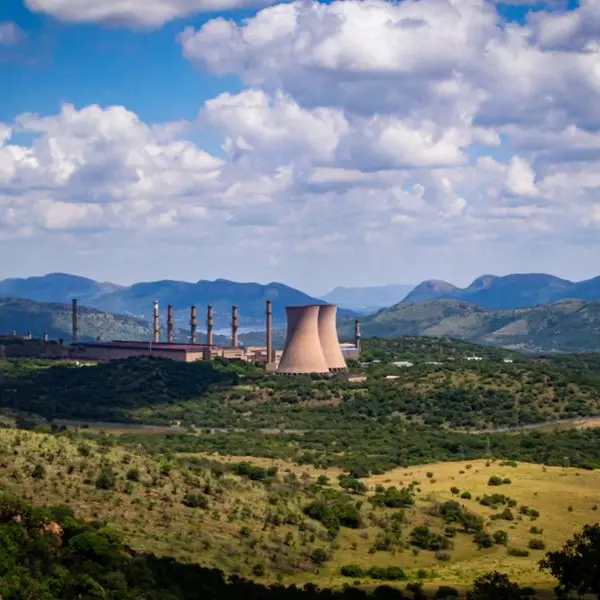
For many, ENRC is the face of corporate Kazakhstan with international operations spanning China, Russia, Brazil, the Democratic Republic of Congo, Zambia, Mozambique and South Africa.
It is also a major creator of jobs for 70,000 people, of which 65,000 are in Kazakhstan alone. The company had annual revenues of USD 6.3 billion in 2012, but posted a loss of USD 852 million last year. It claims to be the ninth largest producer of traded alumina by volume.
ERNC's retreat from public market may be good for the company's shareholders, but it certainly does not help Kazakhstan's international reputation.
© alifarabia.com 2013