PHOTO
LONDON - British retail sales fell in February after the strongest growth in a year and a half in January, official figures showed on Friday, ahead of a likely hit in March as higher oil prices caused by the Iran war sap households' disposable income.
Retail sales volumes slipped by 0.4% on the month - a smaller decline than the 0.7% forecast in a Reuters poll of economists - after upwardly revised growth of 2.0% in January, the Office for National Statistics said.
January's monthly growth was the strongest since May 2024.
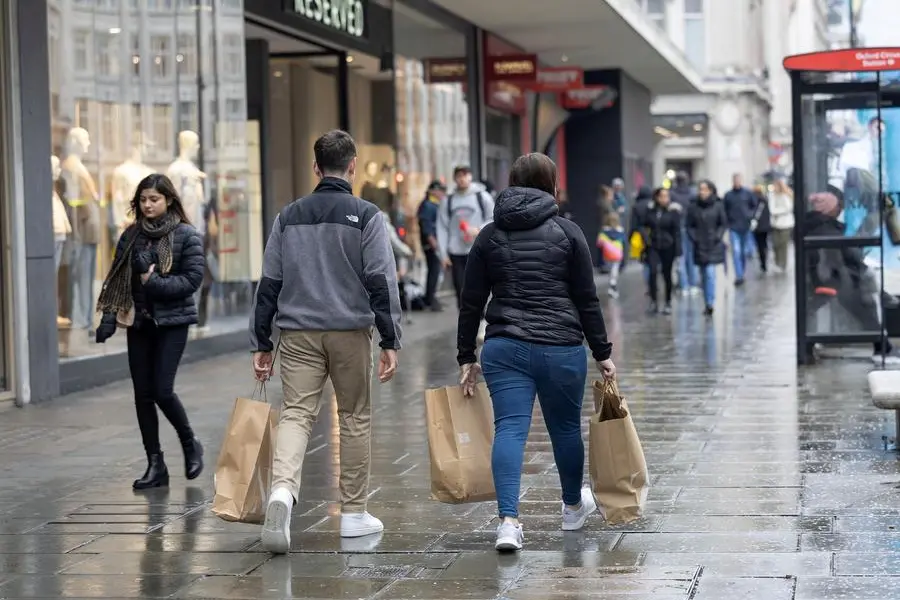
Annual sales growth slowed to 2.5% in February from 4.8% in January as unusually wet weather kept some shoppers at home, the ONS said, with monthly drops in purchases of automotive fuel, clothing, food and household goods.
British consumer sentiment has fallen since the start of the U.S.-Israeli strikes on Iran on February 28, which have pushed oil prices up by around 50%, though the extent of the decline has varied between surveys.
"Retailers will now be facing into the spring season with growing trepidation. The conflict in the Middle East is likely to push up input and fuel costs for businesses and consumers alike," said Matt Jeffers, managing director for retail strategy in the United Kingdom and Ireland at consultants Accenture.
Earlier on Friday, Britain's longest-running consumer sentiment survey, from GfK, showed that morale had fallen to its lowest since April 2025, when households were hit by a wave of rises in utility bills.
Recent updates from major British retailers have generally been cautious on the trading outlook, though department store group John Lewis, B&Q owner Kingfisher and clothing retailer Next all said they had not yet seen an impact on UK sales from the Iran war.
Next did, however, warn that if war disruption persisted beyond three months, it would need to offset higher operating costs by raising prices.
(Reporting by David Milliken; additional reporting by James Davey Editing by William Schomberg)