PHOTO
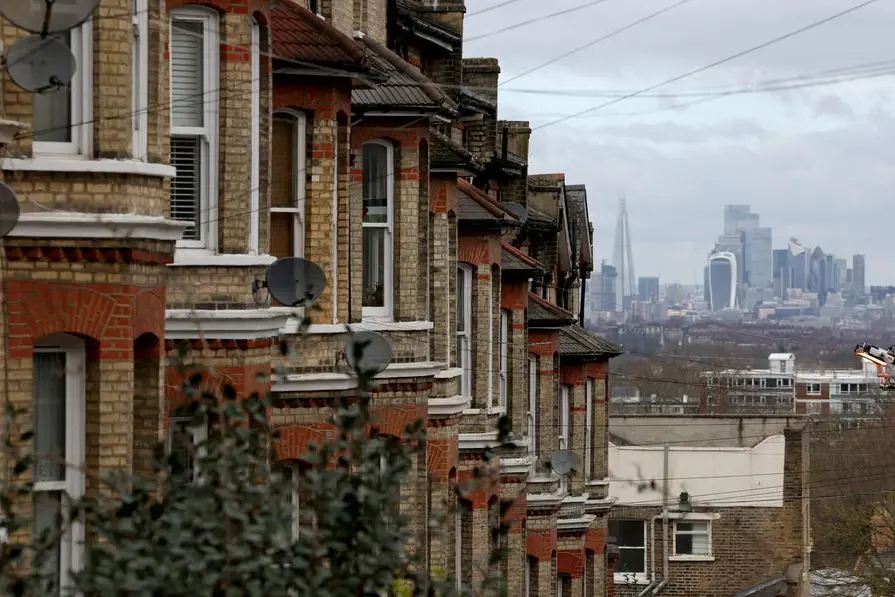
Britain's housing market cooled noticeably last month as economic uncertainty stemming from the Iran war unnerved buyers who face rising mortgage rates, a survey from the Royal Institution of Chartered Surveyors showed on Thursday.
RICS' monthly net balances of new buyer demand, sales expectations and house prices all softened markedly in March, with the last falling to -23 from February's downwardly revised figure of -14.
That represented the broadest fall in prices since January 2024 and followed data on Wednesday from mortgage lender Halifax which showed an unexpectedly sharp drop in its measure of house prices last month.
RICS' net balance of price expectations for the next three months fell to -43 from -19, marking the lowest reading since August 2023. New buyer demand also fell by the most since then.
"What had been a cautiously improving picture for activity has been knocked off course by the wider macro fallout from the Middle East conflict, as the renewed deterioration in the mortgage rate outlook has proved particularly challenging," said Tarrant Parsons, RICS' head of research and market analysis.
Wednesday's news of a two-week ceasefire between the United States and Iran sparked a sharp fall in swap market rates that underpin Britain's mortgage market.
However, they remain markedly higher than their levels of late February, before the start of the conflict.
Parsons said it was unsurprising that buyer demand had softened in the face of the increase in mortgage rates.
"The path ahead hinges on whether or not recent surges in oil and energy costs begin to reverse in what remains a highly uncertain geopolitical environment," he added.
Rents continued to increase widely, however, with a balance of +25, reflecting a drop in new landlord instructions of -25 and rising demand for housing. New protections for tenants against eviction and rent rises take effect next month. (Reporting by Andy Bruce; editing by David Milliken)