PHOTO
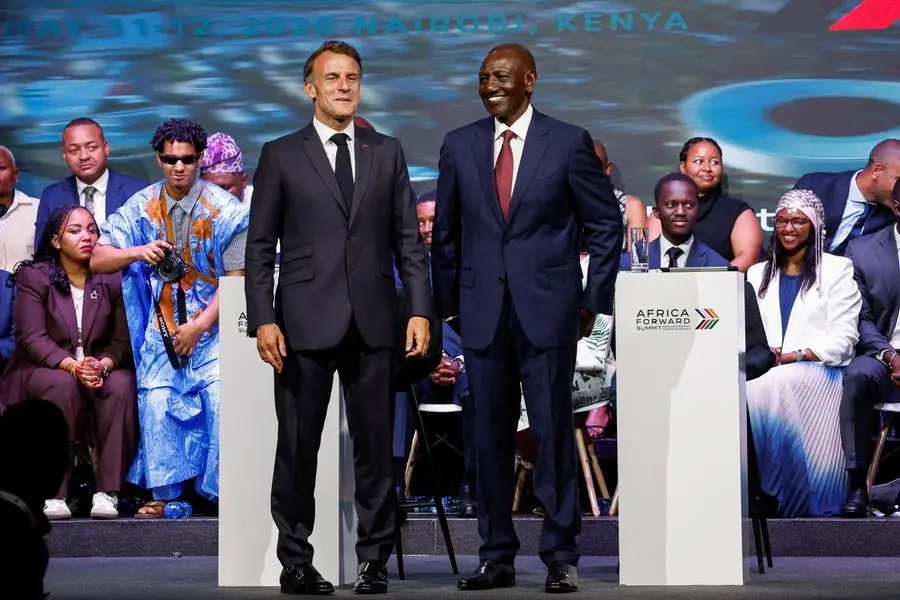
The Africa Forward Summit 2026, co-chaired by Kenya’s President William Ruto and France’s Emmanuel Macron, closed in Nairobi on May 12, with commitments worth up to €23 billion ($25 billion) for projects spanning technology, energy and infrastructure.
The pledges were accompanied by calls for stronger African representation at the UN Security Council and reforms to global lending, but also drew doubts over France’s true intent.
The outcomes listed in a ‘Nairobi declaration’ included support for a new pan-African financial architecture and commitments to sustainable development.
President Ruto said governments have a responsibility to ease investment bureaucracy by removing or reducing red tape, providing efficient permits, and enabling predictable policy and a conducive environment for investment.
“Together, we can build Africa into a competitive industrial powerhouse that drives inclusive growth, advances climate action and shared prosperity for generations to come.”On average, the continent faces borrowing costs that are twice as high as those of Organisation for Economic Co-operation and Development (OECD) countries, the richest pool of countries which include the United States, United Kingdom, Germany, Japan, Canada, Australia, South Korea, Mexico and Chile.
Mafalda Duarte, Executive Director of the Green Climate Fund, observed that the summit brought Africa’s vast potential onto the global agenda, but warned that debt continues to slow growth.“It is where borrowing costs run several times higher than elsewhere, where debt servicing is forcing countries to forgo the very investments in development and climate they need to reach their fullest potential,” said Ms Duarte.“More than $7.5 billion of our own resources are at work on the continent, unlocking $25 billion in total investment,” she said.
The conference, France’s regular platform to engage African countries since 1973, was coming to Nairobi for the very first time. It was also the first time it was held in an Anglophone country, signalling France’s shift in the way it views Africa. Previously, Paris focused mainly on Francophone countries.
But that is also where France was criticised for overbearing policies on local politics and the economy. Some of the countries have endured coups, coup attempts and political instability directly blamed on Paris’s fingerprints.
President Macron used the occasion to defend France’s intent: “I believe in a balanced partnership between Africa and France. That is the meaning of the transformation we have been leading for the past 10 years,” he said, referring to his Africa policy during his tenure, which ends next year.“I have never considered Francophone Africa as precisely a private preserve. We are the true Pan-Africanists; we believe that Africa is a continent. And this continent has a great deal to build. It is the youngest in the world, so it has an extraordinary demographic dividend.
Mr Macron was defending his country’s role in Africa. But he used the Summit to show that France has turned a corner. Among leaders attending the Summit were those from Francophone countries such as Senegal, Chad, Gabon, Côte d’Ivoire, Madagascar.
All of them except Senegal have had coups in the past, with France playing a key role in the chaos. There were Anglophones too, including Nigeria, Botswana, Zambia and Ghana.
Egypt and Ethiopia also attended. Most other countries, in total 50, sent a representative to Nairobi, signalling France’s resilient influence, or Kenya’s power of convening.
Yet moving forward, Africa enters 2026 still facing a severe debt crisis, with countries projected to borrow roughly $155 billion in long-term commercial debt, a 10 percent increase over 2025. Total sovereign commercial debt could exceed $1.2 trillion.
Countries such as Ghana, Kenya and Zambia devote between 30 and 50 percent of their revenues to debt servicing, far exceeding combined health and education budgets in most African states.
However, some critics see France as a continuation of reliance on foreign powers in Africa’s development needs.“With its population of 1.5 billion, Africa has a GDP of approximately $2.8 trillion, while France, with a population of 70 million, has a GDP of over $3 trillion,” said Elkanah Odembo, a former ambassador to France and US.“This is the main reason why Kenya should be advocating for an Africa–France trade and economic partnership, not a France–Kenya partnership,” he said, warning that Kenya must be cautious in its relations with France.“While vocal in its rhetoric, France continues to oppose genuine reform of the international debt architecture, which is currently dominated by the interests of rich countries in spaces closed to Global South nations: the IMF, G20, G7, the Paris Club, the Common Framework,” said a joint statement from civil society groups attending the Summit as observers.
They argued that averting a repeat of cyclical debt crises requires more than relief measures, demanding fundamental reform of debt governance itself.
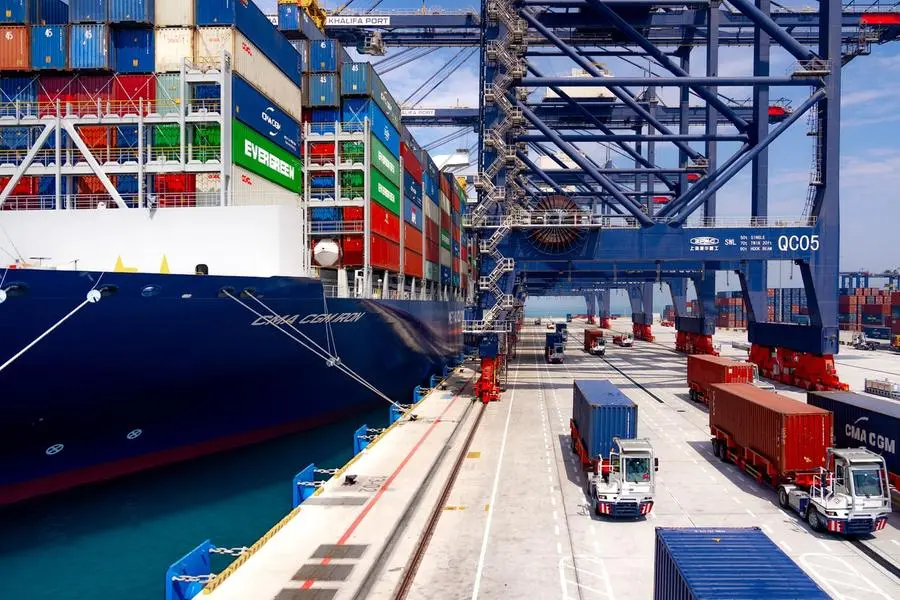
The event signalled a broader, more inclusive strategy for regional engagement. France also announced a €700 million ($813 million) investment to modernise a terminal at the Port of Mombasa, with French firm CMA CGM to upgrade two Mombasa Container Terminals.
The summit highlighted digital sovereignty, with plans to establish 50 digital centres across Africa by 2030, targeting the training of more than 1 million young people.
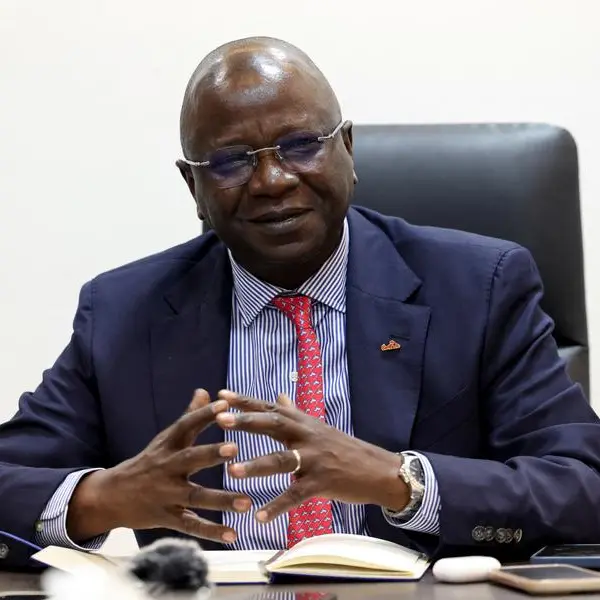
“As many Western governments face domestic fiscal pressures and reduce their aid budgets, unlocking private capital will become increasingly important for long-term growth across Africa.”Oxford Economics argued African states will still need to make calculated decisions to protect their sovereignty and strategic interests, especially as France’s efforts also reflect a new trend for former colonial powers to remain relevant.“France’s strong pivot towards Anglophone Africa further highlighted Paris’s recognition that its future influence will depend far more on business and investment ties than historical relationships alone,” noted Mr Naidoo.“The talk of ‘a deep renewal of our relationship with Africa’ coming from the Élysée Palace suggests France wishes for a different relationship from its previous ones. France has a major image problem in Africa. Kenya must be careful not to be perceived, especially by Francophone Africa, as the new ‘blue-eyed boy’ for France.”He also criticised Kenya’s acceptance of France’s invitation to the G20 at the exclusion of South Africa, which in turn skipped the Nairobi event. French officials have said France retained the right to invite different countries at the G7 summit which takes place in June, and rejected the notion it was a divide-and-rule tactic.
Despite high-level successes, the summit faced criticism for some protocol hitches. Frustrations also arose over media access and logistical issues, including mishandling of guests and dignitaries at the KICC.
© Copyright 2026 Nation Media Group. All Rights Reserved. Provided by SyndiGate Media Inc. (Syndigate.info).