PHOTO
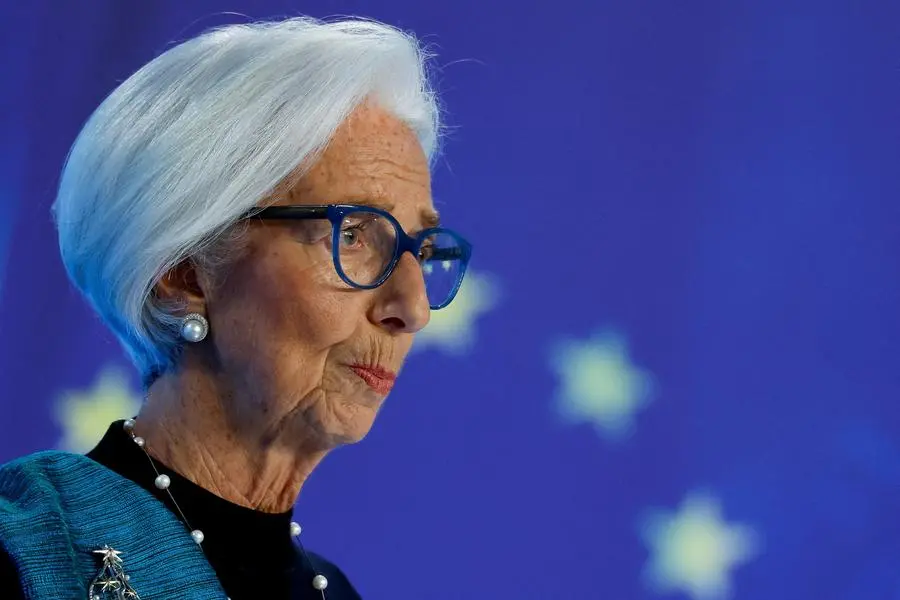
FRANKFURT - European Central Bank President Christine Lagarde expressed scepticism on Friday over the need for stablecoins pegged to the euro, saying they may hamper the ECB's own work and exacerbate any financial turmoil.
A number of large euro zone banks, including Societe General e, have been working on crypto assets linked to the single currency, trying to make inroads in a market dominated by the U.S. dollar in a move that some hope will boost the euro's appeal.
But Lagarde said the case for euro-denominated stablecoins was "far weaker than it appears" because they are subject to runs during market turmoil and they weaken the ECB's ability to reach all corners of the economy with its interest-rate policy.
"These trade-offs ... outweigh the short-term gains in financing conditions and international reach that euro-denominated stablecoins might provide," she told an audience in Spain.
"If we want to strengthen the international appeal of the euro, stablecoins are not an efficient way of doing so."
She cited a drop in the value of USD Coin during the collapse of Silicon Valley Bank as an example of the risks, and pointed to an ECB research finding that large-scale deposit substitution for stablecoins would weaken lending to firms and the transmission of monetary policy.
Instead, Lagarde singled out tokenised commercial bank deposits as a better route, arguing they were safer than stablecoins but could also circulate on blockchain.
The comments put Lagarde at odds with the European Commission and governments including that of France, which see euro stablecoins as a tool for boosting the euro's international status.
European rules require issuers of stablecoins to hold at least 30% of reserve assets in bank deposits, while the rest must consist of low-risk, highly liquid financial instruments, such as government bonds.
In an interview with Reuters this week, Bundesbank board member Michael Theurer said tokenised deposits and stablecoins were both "crucial", but acknowledged the risk associated with the latter.
(Reporting by Francesco Canepa; Editing by Alexandra Hudson and Clarence Fernandez)