PHOTO
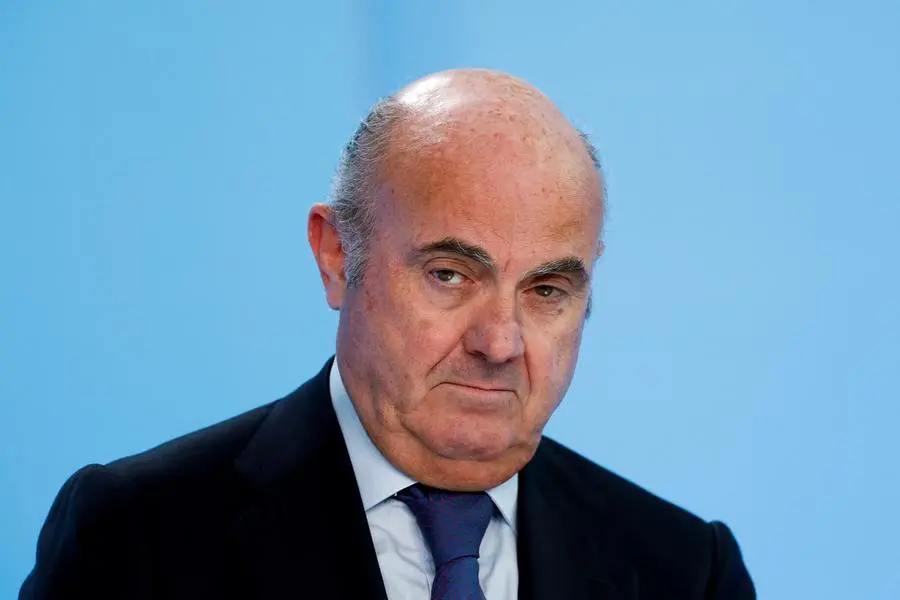
FRANKFURT - The European Central Bank cannot prevent a surge in inflation from sharply higher energy prices but must act if it fears rapid price growth is at risk of getting entrenched, ECB Vice President Luis de Guindos said.
The ECB kept interest rates unchanged last week but signalled it was ready to tighten policy if high energy prices seeped into the broader economy, impacting the price of other goods and services via so-called second-round effects.
"Monetary policy cannot prevent the war from having an initial impact on both inflation and growth, but the ECB can monitor the situation and be alert to potential second-round effects," Spanish newspaper El Mundo quoted de Guindos as saying on Monday.
He argued firms and unions must treat this as a transitory inflation shock, otherwise there would be second-round effects and the central bank would have to step in to stop them.
The ECB was among the last central banks to raise interest rates in the 2021/22 inflation surge but tamed price growth before any of its major peers, and inflation has been at its 2% target for the past year.
Its latest projection, however, sees it surging to 2.6% under its most benign scenario, and risks are skewed toward higher readings.
De Guindos said the ECB will monitor underlying inflation, price expectations and specific items like fertilizer and food prices.
He also said higher energy costs are unlikely to trigger a recession in the euro zone as all scenarios anticipate positive growth.
(Reporting by Balazs Koranyi; Editing by Chris Reese)