PHOTO
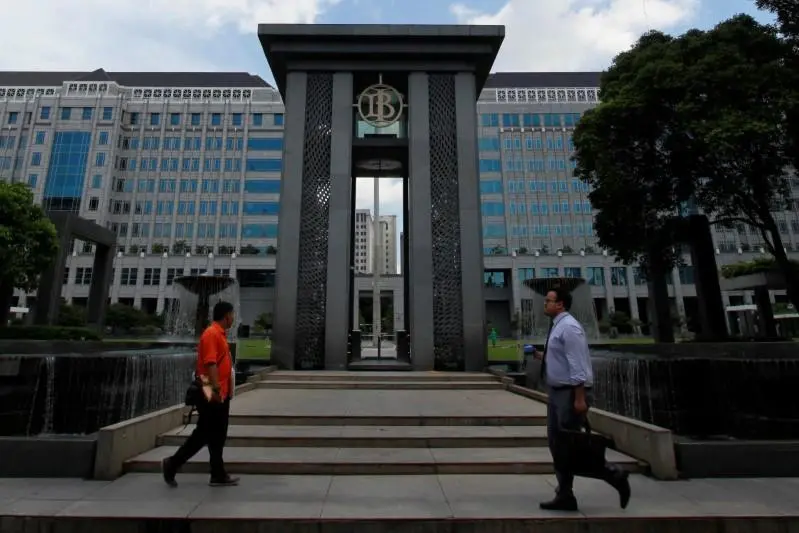
JAKARTA - Indonesia's central bank kept policy rates unchanged on Wednesday, saying it would not hesitate to spend the country's foreign exchange reserves to reverse the decline in the rupiah amid concerns about fiscal health and monetary policy autonomy. The decision came after the rupiah hit a record low of 16,985 in intraday trading on Tuesday, after President Prabowo Subianto nominated his nephew for a senior Bank Indonesia (BI) job raising concerns for central bank independence.
BI kept the benchmark 7-day reverse repurchase rate at 4.75%, where it has been since September, as unanimously expected by 26 economists surveyed by Reuters. The bank also left unchanged its two other key rates.
"We emphasise here that BI will not hesitate to intervene in large amount" to defend the rupiah, Governor Perry Warjiyo told a video press conference, noting BI had ample FX reserves, which reached $156.5 billion at the end of 2025.
"We will safeguard the stability of the rupiah exchange rate and guide it to strengthen, supported by good economic fundamentals."
After the rate decision, the rupiah strengthened slightly to 16,930 per dollar, versus 16,965 before.
Warjiyo said while the focus was on the rupiah, there remained room for the central bank to resume its rate-cutting cycle because inflation was expected to stay within a 1.5% to 3.5% target range over the next two years.
BI cut interest rates by a total of 150 basis points from September 2024 to September 2025.
ABOVE BOARD
Investors have worried about Jakarta's widening fiscal gap as well as potential political interference in BI's policymaking since Prabowo nominated his nephew, Thomas Djiwandono, alongside two others, to the BI board of governors, following the resignation of a board member.
Warjiyo said he had recommended all three names to Prabowo in accordance with the regulation and requirements for the position, in a process that was above board and would not affect BI's autonomy.
"We continue to ensure that Bank Indonesia's policy decision-making process is conducted professionally, with strong governance in place," Warjiyo said.
"This is, of course, in close synergy with government policies to maintain stability and promote sustainable economic growth."
Southeast Asia's largest economy still grew below its capacity, the governor said, maintaining a growth projection of 4.9% to 5.7% for 2026, up from 4.7% to 5.5% in 2025.
"The decision to hold rates will ease fears that Bank Indonesia is bowing to political pressure for looser policy and, in turn, should provide a prop to the currency," said Jason Tuvey, deputy chief emerging markets economist with Capital Economics.
The consultancy predicted a total of 75 bps more cuts this year.
Barclays economist Brian Tan said it was unlikely that any particular change in personnel would result in more aggressive monetary easing, given the rupiah's weakness. He sees two more cuts of 25 bps each.
The government's official growth target is 5.4%, but Finance Minister Purbaya Yudhi Sadewa said 6% should be achievable this year, putting the Southeast Asian country on track to hit Prabowo's target of 8% by 2029.
(Reporting by Gayatri Suroyo, Stefanno Sulaiman and Fransiska Nangoy; Editing by David Stanway and Kate Mayberry)