PHOTO
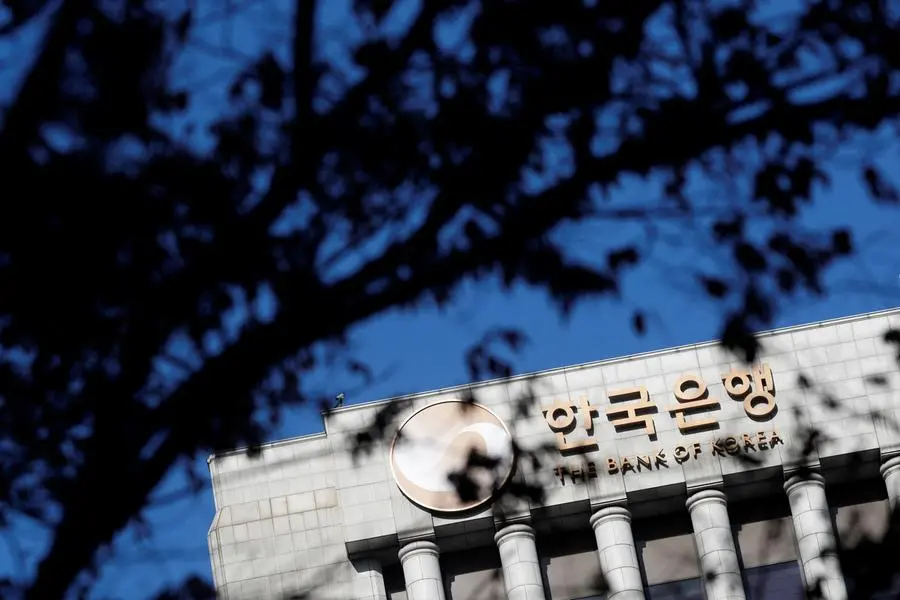
SEOUL - South Korea's central bank stood pat on interest rates on Thursday and signalled policy would stay unchanged for the next six months as a chip boom in exports and steady inflation allow policymakers more time to assess financial stability risks.
The won strengthened to the highest level against the dollar since October last year after the bank raised this year's growth forecast and introduced a new forward-guidance path on policy that reinforced market bets for a pause in rates until at least August this year.
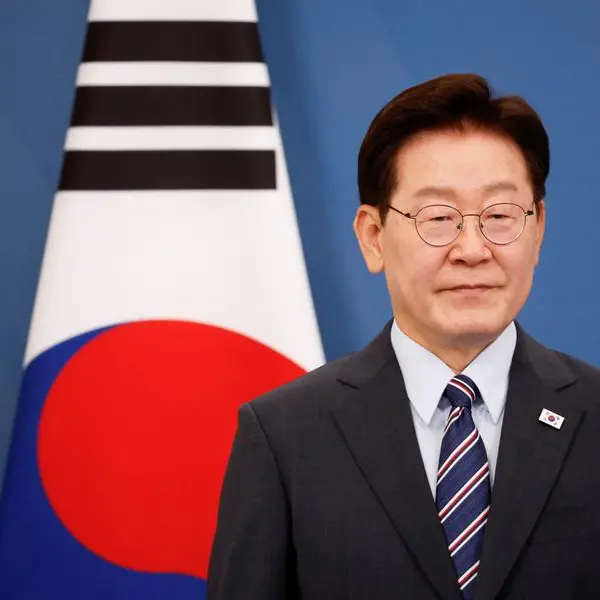
"They are conditional views made at this point in time, and the interpretation is that there is only a small possibility of an increase or decrease for at least six months," Governor Rhee Chang-yong said in a press conference after the Bank of Korea voted to keep its benchmark interest rate unchanged at 2.50%, as polled by Reuters.
The central bank introduced the Federal Reserve's dot plot style chart for the first time on Thursday that shows where the policy interest rate would be in the next six months. Of the 21 dots, 16 were at 2.50%.
It also raised this year's GDP growth forecast to 2.0% from 1.8% previously, citing stronger-than-expected chip exports.
"Today’s meeting provided no compelling evidence to alter our base case for the BoK to keep the policy rate unchanged throughout 2026," said Krystal Tan, an economist at ANZ.
The won was trading up 0.34% at 1,422.9, after strengthening past 1,420 per dollar to hit its highest level since Oct. 30, 2025.
South Korea's policy-sensitive three-year treasury bond yield fell as much as 8.6 basis points to 3.035%, the lowest since January 15.
The BOK recently signalled a prolonged pause in its easing cycle that began in October 2024 as it navigates currency market volatility and risks from swelling household debt.
The central bank sees Asia's fourth-largest economy growing significantly faster this year than in 2025, helped by a chip boom led by Samsung Electronics and SK Hynix , it said in a report on Monday.
The rosy economic outlook defies trade uncertainties sparked by unpredictable shifts in U.S. tariff policies, which could dampen export growth and destabilise key sectors such as automobiles and steel.
"The new dot plot was dovish than expected as there were four dots at a lower rate level (2.25%)," said Ahn Jae-kyun, an analyst at Korea Investment Securities.
"Having said that, today's meeting helped calm the local bond market somewhat" Ahn said, referring to the three-year treasury yields which spiked to a 1-1/2-year high earlier this month.
On Wednesday, the benchmark KOSPI topped the 6,000-mark for the first time, extending its world-beating rally even after doubling in value in the past year.
(Reporting by Cynthia Kim and Jihoon Lee; Editing by Sam Holmes and Shri Navaratnam)