PHOTO
NEW YORK - Investors are facing a cloudier view of U.S. monetary policy in the coming months, with a war in the Middle East muddying the outlook for a Federal Reserve that already was grappling with above-target inflation and an uneven labor market.
The Fed on Wednesday held interest rates steady for the second consecutive meeting, as markets had expected, and stuck to its prior projections for one cut in 2026. But the central bank also forecast higher inflation this year than it had previously, amid the surge in oil prices stemming from the conflict in Iran, while Fed Chair Jerome Powell said it was too soon to know the ultimate fallout for the economy. Investors who were banking on near-term rate cuts were reconsidering. Amid the Middle East turmoil, some were left eyeing places to hide, including long-dated bonds, commodities or dividend-paying equities.
"The market is trapped amidst a whole lot of reasons to be nervous, a lot of reasons to be uncertain, including what is happening at the Fed," said Mark Spindel, chief investment officer at Potomac River Capital.
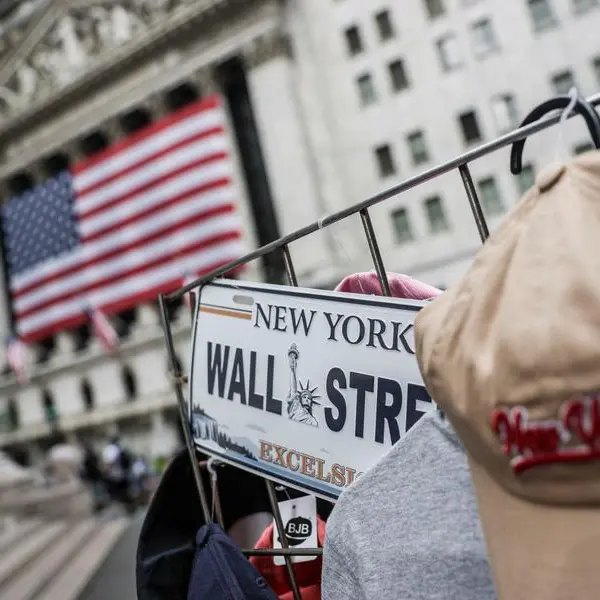
Stocks sold off following the Fed meeting, with the benchmark S&P 500 sinking 1.4% on the day. Wall Street was also digesting a fresh jump in oil prices, with Brent crude nearing $110 a barrel, as Iran's huge Pars gas field was hit on Wednesday in a major escalation in the U.S.-Israeli war.
The U.S. dollar index rose, while Treasury yields climbed, with the benchmark 10-year yield hitting 4.26%.
DIMMING RATE CUT HOPES AMID THE CONFLICT
The over 40% surge in crude prices since the conflict began in late February, and the extent to which it will force the Fed to dial back rate cuts, have been top of mind for investors.
Even as the Fed maintained its rate projection on Wednesday, markets reduced their expectations for monetary easing following the meeting. Powell noted that individual Fed member projections show a "meaningful" number of policymakers are penciling in less easing this year than they did three months ago.
Powell "pointed not only to high energy prices, but tariffs too... he's really now on the lookout for inflation," said Jack Ablin, chief investment officer at Cresset Capital. "I'm sure there's going to be a growing school of thought that says they won't cut at all this year."
Fed funds futures as of late on Wednesday suggested investors expected only about 14 basis points of easing by December, according to LSEG data, or barely half a standard quarter-percentage-point cut. That is down from at least two such cuts expected as of late February before the U.S.-Israeli military strikes on Iran began.
"People were way ahead of what the Fed was saying in terms of cuts, and now I think people have really pulled back those expectations," said Marta Norton, chief investment strategist at retirement and wealth services provider Empower. "So to the extent that you were bullish on stocks for monetary stimulus, maybe that's not the near-term catalyst that you thought it was."
A weakening jobs backdrop had prompted the Fed -- which seeks to maintain stability in employment and inflation -- to lower its benchmark rate last year to its current level of 3.50%-3.75%.
"From an overall perspective, it kind of highlights the delicate balance," said Brent Schutte, chief investment officer at Northwestern Mutual Wealth Management Company, who said his firm is underweight equities. "We've made no progress on inflation, but the jobs market is still weak and is actually showing signs of being weaker."
WILL POWELL STAY ON?
This week's meeting was expected to be Powell's second-to-last as chair, with his term as the central bank's head expiring in May. President Donald Trump, who has castigated Powell for not lowering rates more, has nominated Kevin Warsh, a former Fed governor, to replace Powell as chair.
But Powell said on Wednesday he will stick around as head of the central bank until his successor is confirmed, and will not leave the institution until a criminal investigation into the Fed is resolved.
John Velis, Americas macro strategist at BNY, said Powell’s remarks that he may remain on the Fed board after the investigation, combined with uncertainty over how long inflation will persist and when rate cuts might resume, pushed yields higher.
With Powell still on the Fed board, "Warsh (is) less likely to come on board quickly and lower rates," Velis said.
As investors position for the changing backdrop, Ablin said stocks that pay a consistent and growing dividend "could be a good place to hide while these issues sort themselves out."
Phil Blancato, chief market strategist at Osaic, said he favors adding commodities, given firm inflation, but he was less upbeat about U.S. equities.
"You're going to have no choice but to think about where you can diversify away from U.S. stocks because ultimately, the Fed's not coming to rescue the market here," Blancato said.
(Reporting by Lewis Krauskopf, Laura Matthews and Saqib Iqbal Ahmed, additional reporting by Suzanne McGee; editing by Colin Barr and Deepa Babington)