PHOTO
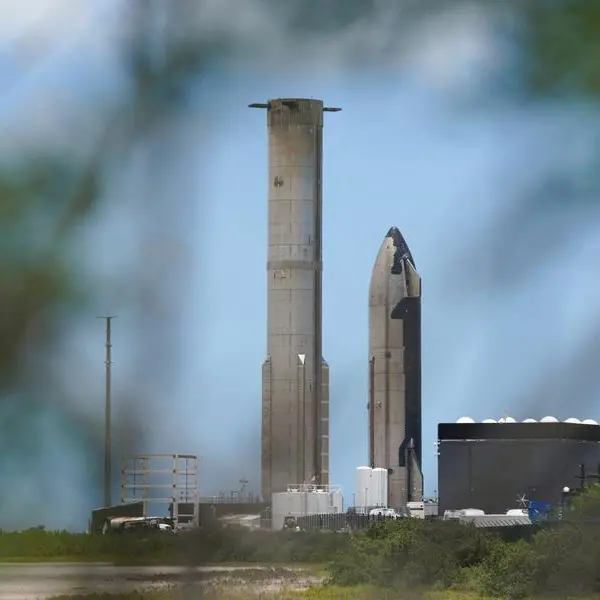
The U.S. economy and the U.S. stock market are starting to go their own ways. An eventful June featuring the launch of the record-busting SpaceX IPO and Federal Reserve chief Kevin Warsh's first meeting has been full of contradictions.
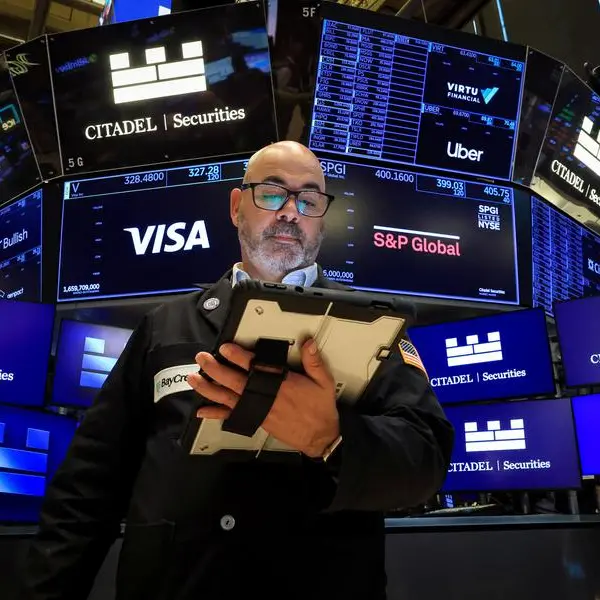
U.S. economic data has been solid, led by continued job gains and strong consumer spending, while sentiment is ticking up. Yet the Nasdaq and S&P 500 are down for the month and the once-unstoppable Magnificent Seven technology stocks are off more than 10% by one measure.
Treasury bonds rallied, sending yields lower even after inflation exceeded 4% last week for the first time in three years.
"The one thing that sticks out to me is that through a period of higher energy prices, consumers have remained resilient in their spending in non-energy goods and services," said Guy LeBas, chief fixed income strategist at Janney Montgomery Scott in Philadelphia. "So that kind of combination strongly suggests a level of economic stability, resilience and strength over and above what we intuitively expected heading into the year. And so that creates a little bit of upside risk" for U.S. growth estimates.
RISING REAL RATES CHANGE THE GAME
Investors are at a crossroads as rising real, inflation-adjusted interest rates ripple through markets driven by the epic AI investment boom. Warsh's hawkish turn has fueled a surge in bets that the central bank will raise interest rates. Many analysts doubt he will actually do so, as tightening financial conditions already have sent gold and bitcoin down sharply alongside Microsoft and Meta. Meanwhile, Wall Street is selling new shares and debt at a breakneck pace. This is partly to finance further AI spending whose proponents deride any bubble talk as blasphemy, yet it also reflects resilient investor demand. The tension between a solid if uneven economy and a go-go market driven mostly by one sector has often been decided in favor of markets whose multiples seem perpetually to be near all-time highs. But that trend might not hold if the age of higher real borrowing costs is here.
The collapse this month of war fears and the decline of oil prices return markets to a “friendly fundamental/cyclical backdrop but one that is reflected in high valuations,” said Goldman Sachs analyst Kamakshya Trivedi. “That tension is most acute in the AI space, which is now also the primary source of volatility in equity markets.” Much of that volatility is being driven by investors jumping off one momentum trade into another. Since the markets' war scare crested late in March, the semiconductor index has gone nearly parabolic, putting the index up 87% for the year. Micron has quadrupled while Intel and Marvell Technology tripled in 2026.
Conversely, the Mag 7 group of tech giants led by Nvidia , Apple and Alphabet is down for the year after accounting in 2025 for around 40% of S&P 500 gains, reflecting price appreciation and dividends.
DEBT SURGE CHANGES SENTIMENT
Many investors say a reassessment of the so-called hyperscalers building AI infrastructure began late last year when Oracle and other firms known for clean balance sheets began to take on more debt. Companies such as Amazon and Alphabet have issued $60 billion in bonds in multiple currencies in the last 12 months. Investment-grade bond sales by hyperscalers have surpassed their full-year 2025 total and are on pace to reach BNP Paribas' $250 billion forecast this year.
"AI is working for the providers" of products such as chipmakers, said Jake Dollarhide, chief executive officer of Longbow Asset Management in Tulsa, Oklahoma. "It is not working for the spenders. That's why Mag 7 is down on the year. They are the spenders." Some investors worry that the tech-spenders' selloff will pick up steam, given the size of the Mag 7 firms. This past week UBS cut its exposure to semiconductor and hardware stocks in its artificial intelligence portfolio, warning of possible future AI capital-expenditure cuts by hyperscalers given their share-price declines. Any reduction in AI capex would likely also hit the economy, given the scale of spending by the biggest tech firms.
"The biggest swing factor in economic growth is corporate spending, corporate investment," said LeBas, referencing the current plan among the biggest hyperscalers to spend $700 billion or more on capital projects in coming years. "It's very hard to have a material economic downturn when the biggest swing factor in GDP is growing."
That said, it may be premature to discuss capex cuts given the resilience of U.S. markets in recent years. "This is a market that is trained like Pavlov's dog when there is blood in the water to buy the dip," said Dollarhide.
(Reporting by Caroline Valetkevitch and Karen Brettell, additional reporting by Akriti Shah; editing by Colin Barr and David Gregorio)