PHOTO
A majority of Federal Reserve policymakers now feel they will need to keep U.S. short-term borrowing costs on hold all year, projections due out on Wednesday are expected to show, with a small number seen penciling in a rate hike to stop a spike in inflation from getting entrenched in the economy. The anticipated adjustments to the Fed's so-called dot plot would mark a hawkish shift from where Fed officials were just three months ago. They also present a particularly sticky communications challenge for new Fed Chairman Kevin Warsh, as stronger-than-expected job gains in recent months and inflation on the rise since the start of the Iran war have shifted the focus of arguments at the policy-setting table from whether to cut to the possibility of a hike.
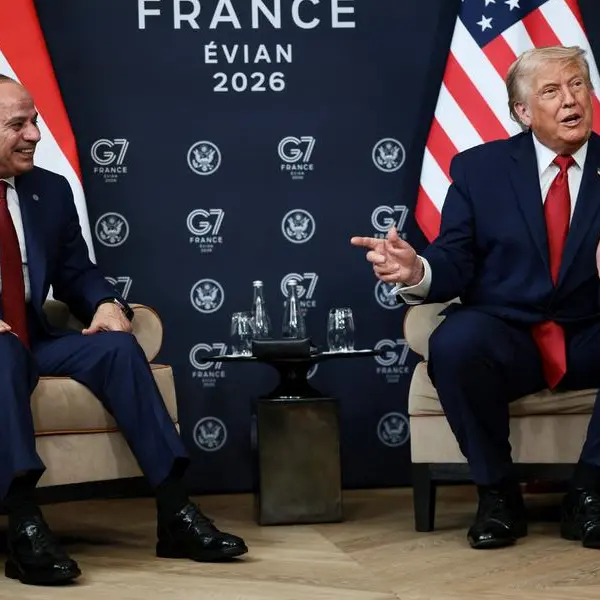
President Donald Trump picked Warsh to replace Jerome Powell with the explicit expectation his new Fed chief would lower interest rates. Warsh has offered a couple of rationales for cutting rates, including what he sees as AI's disinflationary impact, but he has also said he has made no promises and told lawmakers at his confirmation hearing that he does not believe in giving any guidance at all.
Indeed, the biggest question about the Fed's June projections is what Warsh himself will write down — if, indeed, he will write anything at all.
"It could be that Chair Warsh simply decides not to participate as a means of signaling how little regard he has for this exercise," Regions Bank Chief Economist Richard Moody wrote last week.
TD Securities economists expect Warsh to omit his own dot as "a more deliberate way of minimizing any hawkish message that might stem from the June dot plot."
Other analysts expect Warsh to participate, but to launch a review of Fed communications that could spell the eventual end of the dot plot, published quarterly since 2012 and generally regarded as a useful indication of where the Fed's 19 policymakers see interest rates going.
"We expect Warsh will submit his own projections," argued JPMorgan Chief U.S. Economist Michael Feroli. "To not do so would look like a spiteful dissent against his own committee."
It could be that Warsh, in the job for just three weeks, simply pleads he needs more time to settle in before participating in the forecasts. Also, submitting a dot could raise another risk for him: It might reveal he is not nearly as dovish as Trump would want. Stephen Miran, in his brief run as a Fed governor appointed by Trump last summer, consistently submitted rate projections that were the lowest — by his own admission — among all policymakers. With Miran now departed to make room for Warsh on the Fed board, his low forecast will be gone from the plot, and any absence of a comparably low dot in its place would out Warsh as more hawkish.
'WALK A VERY FINE LINE'
In March, most U.S. central bankers thought they would probably end up cutting rates by the end of the year, either because inflation was receding, the labor market was weakening, or both. Only one policymaker had written down a rate hike, and that was for 2027, not 2026.
On Wednesday, central bankers are expected to leave the policy rate in the 3.50%-3.75% range and to change their post-meeting statement so that it no longer suggests the Fed's next move, when it comes, will be a rate cut. An upward drift in rate-path projections in the dot plot would underscore the committee's new openness to a rate hike, even if most still do not expect it.
"We think the debate within the FOMC is now about whether a long policy hold would suffice to stabilize inflation, or instead raising rates would be necessary," BNP Paribas economists wrote last week.
The Fed will also publish projections for the labor market and inflation that may reflect greater policymaker optimism on jobs and pessimism about prices than they signaled in March, views that would offer some rationale for what's expected to be a changed dot plot.
JPMorgan's Feroli, for instance, predicts Fed policymakers will replace their March forecast for a year-end unemployment rate of 4.4% with a forecast of 4.3%, matching the actual unemployment rate for the past three months. He figures they will also write down year-end core PCE inflation at 2.9%, while other economists expect the figure to top 3%. Either way, it would be up from the 2.7% they expected as of March for this key measure of underlying inflation pressures, though lower than the year-on-year rate of 3.4% that economists now expect a government report will show for May.
In his run as Fed leader, Powell regularly noted that economic forecasts often prove way off the mark, and the Fed's "dots" are neither predictions nor promises. Analysts expect Warsh to emphasize that same view in his post-meeting news conference, even if he tries in other ways to put distance between himself and his predecessor, who continues to serve as a governor. Meanwhile economists polled by Reuters also believe the Fed will likely hold its policy rate steady this year, but just as within the Fed there are a range of views. Economists at PGIM, for instance, say the Fed will need to raise rates three times this year to bring inflation under control.
Those at Citibank, noting that oil prices have dropped on recent progress toward ending the Iran war, expect three rate cuts to shore up what they believe will be a weakening labor market.
"Rookie Fed Chair Warsh and Co will have to walk a very fine line," wrote Evercore ISI's Krishna Guha. "Too hawkish, and bets on rate hikes will cascade, sending the equity market lower. Too dovish, and longer-term yields and break-evens will rise, also impacting stocks."
(Reporting by Ann Saphir; Editing by Andrea Ricci )