PHOTO
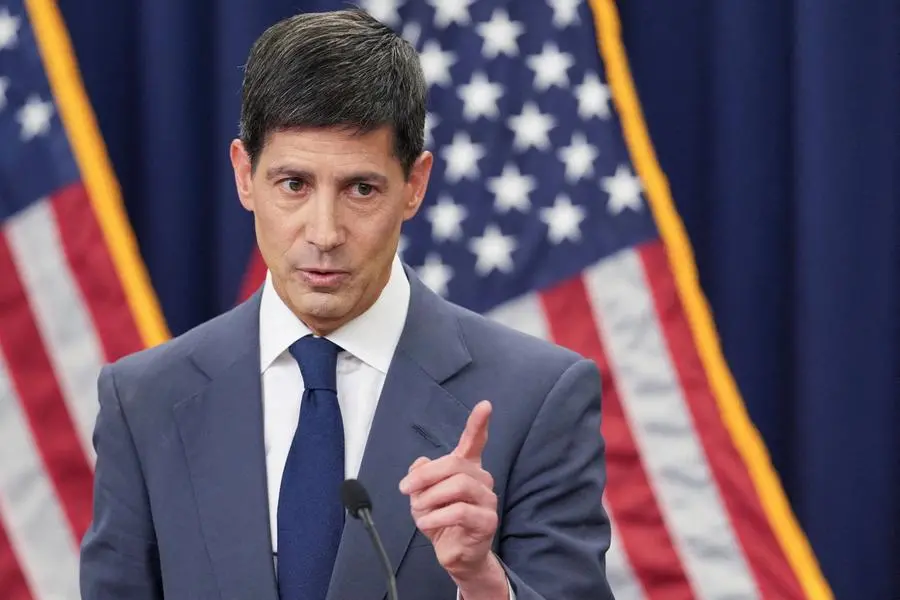
U.S. central bankers will decide whether to raise interest rates when they "shut the door" and begin their next meeting, U.S. Federal Reserve Chairman Kevin Warsh said on Wednesday at an international panel where he told questioners they would "fail" to break his rule against forward guidance.
“We get into that room and shut the door, we're going to have a good debate, but I don't have much more for you than that," the U.S. central bank's new chief said at a panel appearance alongside other top monetary policymakers at the European Central Bank's annual policy forum in Sintra, Portugal.
"I am not going to give forward guidance," Warsh continued, answering a follow-up question from CNBC anchor Sara Eisen saying that "Sara is trying to get me to break this rule. She is going to fail."
It is Warsh's first appearance outside the Fed's policy meeting last month as he discussed his approach to the job on a stage with ECB President Christine Lagarde, Bank of England Governor Andrew Bailey, and Bank of Canada Governor Tiff Macklem.
Those policymakers are all dealing with elevated inflation and the fallout from the U.S.-backed war in Iran, but it has taken them in different directions.
Warsh's comments after the June 16-17 policy meeting prompted investors to boost odds the Fed will raise interest rates as soon as September, while the ECB has already hiked. Central bankers in England and Canada have been more reluctant to tighten monetary policy given local economic weakness.
Despite the common goal of 2% inflation, Warsh's peers have taken a broader view on issues like climate change. They also have a stake in the battle over the Fed's independence.
The other central bankers were signatories to an unprecedented letter earlier this year in support of former Fed Chair Jerome Powell in his battle with the Trump administration over Fed independence, an issue that hit a key milestone this week when the U.S. Supreme Court ruled Fed Governor Lisa Cook could keep her job despite President Donald Trump's announcement last year that he had fired her.
Powell has been lauded by his peers as a bulwark in that fight, considered important to maintaining the Fed as a prop to global financial stability. Warsh, so far, has been reluctant to speak directly to issues like the attempted firing of Cook or the legal pressure brought against Powell.
Trump picked Warsh to succeed Powell, who remains a member of the Fed's Board of Governors. The new chair took office in late May.
(Reporting by Howard Schneider; Editing by Dan Burns and Andrea Ricci)