PHOTO
SINGAPORE: The biggest price cut in more than two decades for Saudi Arabian crude oil sold to Asia still leaves the grade more costly to lift than some rival Gulf supplies, curbing appetite for oil from the OPEC linchpin.
The world's top exporter slashed the August official selling price (OSP) on Monday for its flagship Arab Light crude to $1.50 a barrel below the average of Oman and Dubai quotes for Asia, down $11 from the previous month. It also cut the OSPs for its other four grades by $11 a barrel.
The sudden change reflects the U.S.-Iran interim deal in June that has prompted more shipping to flow through the crucial Strait of Hormuz and a resumption of oil loadings, depressing global oil prices.
Oil traders said that not only have other Gulf suppliers also cut their prices to attract demand, but the sanctions waiver on Iran crude sales add to the competition for sellers. In addition, they said lifting crude from inside the Gulf still carried a risk given the shaky truce that is in place between the U.S. and Iran, so reduced the incentive to buy.
"The sharp month-on-month cuts to Saudi term OSPs came as little surprise, with competing Middle Eastern spot grades trading at even deeper discounts," said Vortexa analyst Emma Li.
"Weak Asian demand, especially from China, together with the sanctions waiver on Iranian crude, has intensified competition among sellers and shifted the market in buyers' favour," Li said.
Saudi crude prices hit all-time highs in May after the U.S.-Iran war prevented ships from sailing through the Strait of Hormuz, where a fifth of the global oil supplies used to flow.
Other Gulf producers, including the Abu Dhabi National Oil Co, Iraq's SOMO, and Kuwait Petroleum Corp, are selling crude at wide discounts to try to boost demand.
The National Iranian Oil Co is trying to revive buying interest from former Asian customers beyond the independent refiners in China during the 60-day U.S. sanction waiver.
SAUDI CRUDE 'WAY MORE EXPENSIVE'
Multiple sources at Asian refineries and trading firms said August-loading Saudi crude will cost a few dollars per barrel more than other Gulf grades, while the cost of chartering a tanker to enter the Gulf remained high.
"I am getting Upper zakum and Das at -$7, so why will I buy more Saudi oil?" said a source at an Indian refinery.
Another trader said: "Saudi oil from inside the strait is way more expensive." For example, ADNOC's Upper Zakum crude is selling at $6-$8 a barrel below Dubai quotes for ship-to-ship transfer at Oman's Sohar port, with the cost of chartering a Very Large Crude Carrier at $4-$5 a barrel, he said.
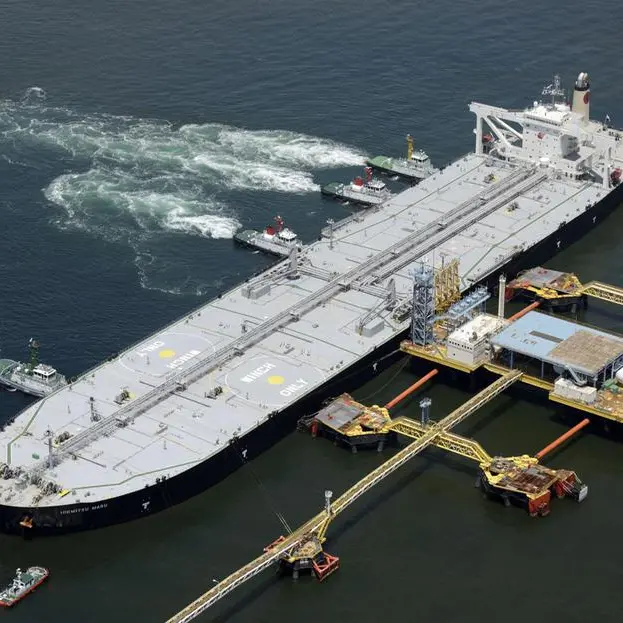
The cost for a VLCC, which can carry 2 million barrels, to load at Saudi's Ras Tanura port inside the Gulf will be more than double that, making the economics more expensive, he said.
Another trade source estimated that it would cost $15 a barrel more to lift oil from inside the Gulf than outside.
As a result, the state oil giant is likely to continue selling its crude in the spot market as it competes with other Gulf producers, some of the sources said.
"Saudis are trying to prop up prices by refusing to go into a price war," one trader said, adding that the August OSP is higher than the Dubai benchmark which is about $3.70 a barrel below Dubai swaps on Monday.
"They know it's too expensive but they still hold onto their price," he said, adding that this could lead to a loss of market share for Aramco in Asia. (Reporting by Florence Tan and Siyi Liu; Additional reporting by Nidhi Verma in New Delhi)