PHOTO
European Bank for Reconstruction and Development is considering a senior loan of up to $80 million (€68.1 million equivalent) to Dandara Solar Power SAE, a special purpose vehicle wholly owned by Norway-based Scatec, to support the development of Dandara solar plus storage project in Nagaa Hammadi, Upper Egypt.
Electricity generated by the project will be supplied exclusively to the state-owned Aluminum Company of Egypt (Egyptalum) under a long-term take-or-pay power purchase agreement.
The project reached Concept Reviewed status on 6 April 2026, according to EBRD’s website, marking the start of the lender’s preparation and appraisal stage.
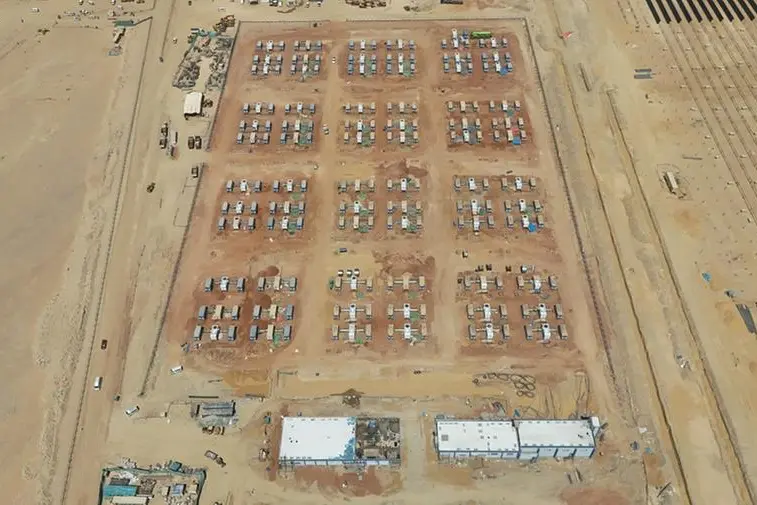
The scheme comprises 500 megawatts (MW) solar photovoltaic (PV) plant, and a 100 megawatt-hours (MWh) Battery Energy Storage System (BESS) with an estimated total cost of $315 million.
Letters of Intent for the project’s financing were signed in October 2025 with EBRD, the African Development Bank (AfDB), and the European Investment Bank (EIB).
The current EBRD review reflects a revised project configuration. The original plan, announced in March 2025 when Scatec signed a 25-year Power Purchase Agreement (PPA) with Egyptalum, comprised 1.1 gigawatts (GW) solar PV plant and 100 MW / 200 MWh BESS with an estimated capex of $650 million.
The CBAM factor
Egyptalum, a subsidiary of Holding Company for Metallurgical Industries under the Ministry of Public Business Sector, is the largest primary aluminum producer in North Africa with a total annual capacity of 320,000 tonnes. Around 60 percent of its exports are destined for the European Union.
Once commissioned, Dandara is expected to generate around 1.38 terawatt-hours (TWh) of electricity annually and achieve up to 686,000 tonnes of CO2 emissions reductions per year, EBRD said.
It added that the project supports the company’s compliance with EU climate standards, and aligns with global decarbonisation efforts in the aluminum value chain.
Previous reports have indicated that the project could reduce EgyptAlum’s greenhouse gas emissions by up to 30 percent, helping protect exports to Europe ahead of the EU Carbon Border Adjustment Mechanism (CBAM), which begins implementation in 2026.
(Writing by SA Kader; Editing by Anoop Menon)
Subscribe to our Projects' PULSE newsletter that brings you trustworthy news, updates and insights on project activities, developments, and partnerships across sectors in the Middle East and Africa.