PHOTO
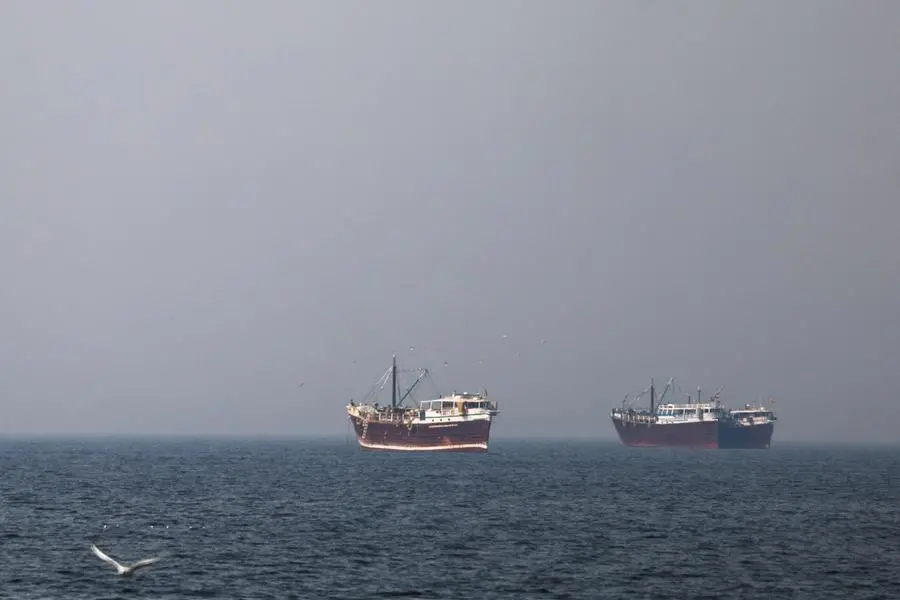
Kuwait, Qatar, Bahrain and Iraq were almost completely shut off the world’s energy export markets as ships stayed away from Hormuz Straits following week end threats by Iran’s Islamic revolutionary guard corps.
The four oil producers export most of their crude, petroleum products and gas through Hormuz while Oman is situated outside the narrow Strait.
Saudi Arabia, the world’s largest oil exporter, can still supply the markets through its 5 million-barrels per day (bpd) East-West crude oil pipeline that was built in 1981.
The pipeline runs from the Abqaiq oil processing centre near the Gulf to the Yanbu port on the Red Sea, effectively bypassing the 33-mile-wide Hormuz, the Gulf’s only gateway.
The UAE also constructed a pipeline in 2012 to link its fields to export terminals in Fujairah, the only member of the country’s 7 emirates to lie outside Hormuz in the Gulf of Oman. The pipeline can transport 1.5-1.8 million bpd, nearly half the UAE’s crude output.
Iraq also relies on Hormuz with nearly 94 percent of its crude exports pass through chokepoint.
“Iraq should have copied Saudi Arabia and Iran, which possess oil storage facilities near Singapore and Malaysia, estimated at 155 million bpd and 120 million bpd respectively…Iran’s stockpiles are equivalent to nearly two months of its oil exports,” said Nabil Al-Mrasoomi, an Iraqi energy and economics professor at Basra University.
Al-Marsoomi said Iraq can now export only around 220,000 bpd though the Kirkuk-Ceyhan pipeline to Turkey and this means that its oil revenues will fall from a monthly average of $7 billion to below $one billion “even if prices soar to $150 a barrel.”
Another Iraqi analyst said Iraq could be forced to slash its oil production if Hormuz closure continues for a long time.
“Iraq oil storage facilities are not big enough to accommodate production for a long time as they are designed to regulate crude export flows rather than being strategic storage facilities in the long term…hence Iraq could be forced to reduce its oil production,” said Mohammed Al-Husni, a member of Iraq’s economists’ network.
Analysts said Iraq is expected to intensify plans to revive a defunct pipeline via Syria and another project to build a pipeline through Jordan.
Iraq’s State Oil Marketing Organisation said last year it was close to signing an agreement with ExxonMobil covering crude storage, refining, and trading in Asia in a bid to boost exports outside Hormuz.
SOMO Director General Alaa Nizar Al-Shatri said the discussions focussed on securing storage capacity in Singapore and other Asian locations, as well as potential cooperation on refining and profit-sharing in crude and product trading.
In a report this week, the UK research group Wood Mackenzie said that in the current conflict the stakes are high with 15 million bpd of Gulf crude exports under threat.
Failure to quickly re-establish flows through Hormuz could again drive prices well over $100 a barrel from Friday’s close under $73.
The report noted that OPEC Plus agreed at the week end to resume unwinding the April 2023 1.65 million bpd cut by increasing production by 206,000 bpd in April 2026.
“This plan could be moot should the Strait of Hormuz remain closed, while much of the rest of OPEC spare capacity is located in Saudi Arabia, Kuwait and the UAE and also currently inaccessible,” it said.
LNG supply
Disruption of Hormuz will further strain global LNG supply as Qatar halted LNG production after its Ras Laffan facilities were hit during the conflict. The country, which has the world’s third largest gas reserves, exports nearly 1.5 million tonnes of LNG per week through Hormuz.
“Europe imports a relatively small share of its LNG directly from Qatar, but Asia’s dependence is much greater. This is likely to increase competition for flexible LNG cargoes and drive global prices higher,” London-based Independent Commodity Intelligence Services (ICIS) said in a note this week.
(Reporting by N Saeed; Editing by Anoop Menon)
Subscribe to our Projects' PULSE newsletter that brings you trustworthy news, updates and insights on project activities, developments, and partnerships across sectors in the Middle East and Africa.