PHOTO
Kuwait has reached nearly a quarter of the debt limit it set last year as part of a landmark debt law allowing the Gulf OPEC member to return to local and global markets to borrow to fund a large list of projects.
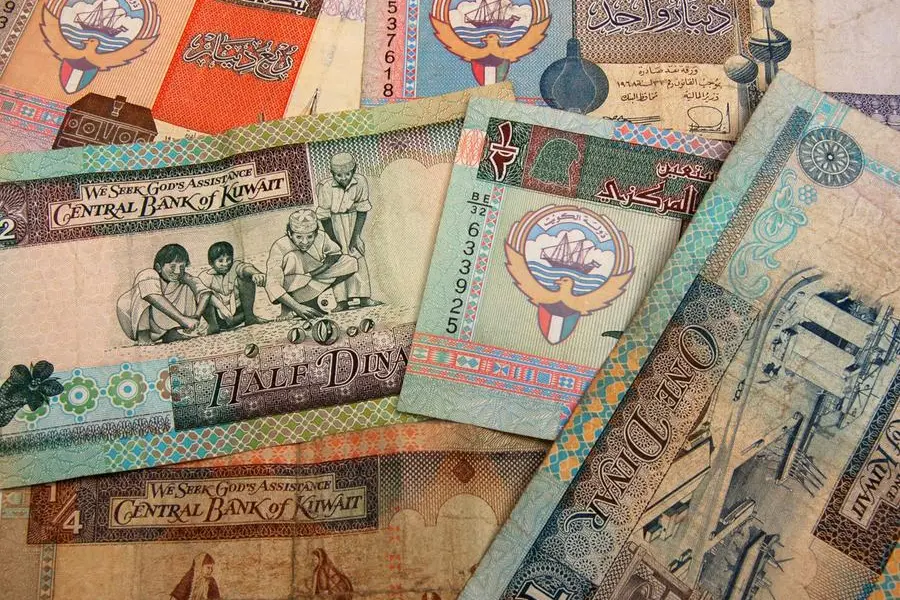
Central bank figures showed Kuwait has issued bonds worth nearly 7.1 billion Kuwaiti dinars ($23.5 billion), more than 23 percent of the KWD 30 billion ($99 billion) debt ceiling it approved in March last year for a period of 50 years.
Over the past few weeks, Kuwait has intensified borrowing to fund projects as it continues to shun withdrawing from its massive overseas assets despite a sharp decline in its oil revenues due to the closure of Hormuz Straits, through which almost all of Kuwait’s crude exports pass.
Several options
Analysts believe Kuwait has several options if it reaches the debt limit within the next few years, including expanding the debt ceiling.
“Borrowing reflects the need to finance large fiscal deficits and development spending,” said Garbis Iradian, chief economist at the Washington-based Institute of International Finance, which groups hundreds of Western financial institutions.
“Even if Kuwait were to utilise a large share of the KWD 30 billion ceiling within a few years, it would still have the option of drawing on sovereign assets, reducing expenditures, implementing fiscal reforms, or seeking an expansion of the borrowing framework. Given Kuwait’s exceptionally large external assets and very low public debt, exhaustion of financing options is not a realistic concern at this stage,” he told Zawya Projects.
Kuwait, a founding OPEC member, approved project spending of around KWD 3 billion ($10 billion) in the 2026-2027 budget, nearly 37 percent higher than capital expenditure in the previous budget, according to the finance ministry.
Hundreds of projects
Spending in the current fiscal year, which began on 1 April, covers 117 new projects and 551 projects under construction, Kuwait’s finance minister Yacoub Al-Rifai said.
The increase in capital spending despite the Iran conflict was needed to cover such major projects as the new Kuwait airport terminal, the grand Mina Mubarak port, and Kabd wastewater plant, the minister said.
The 2026-2027 forecast revenues at KWD 16.3 billion ($53.8 billion) and expenditure at KWD 26.1 billion ($86.2 billion), with a projected shortfall of KWD 9.8 billion.
Kuwait assumed an oil price of $68 for the 2025-2026 deficit and it needs a $90 breakeven price to achieve a balance between revenues and expenditure.
Overseas assets
“Kuwait’s current policy is to avoid draining its overseas assets and future generation funds….that is why it decided to return to the debt market,” said Ali Al-Anzi, manager of Kuwait’s Almanakh economic consultancy centre.
“In the current situation, there is a more pressing need to borrow to fund a long list of projects, mainly giant projects such as the petrochemicals complex in Al-Zour.”
The petrochemicals complex is part of Al-Zour project which also includes the 615,000-barrels per day (bpd) refinery and a gas processing unit at a total cost of nearly $30 billion, including around $16 billion for the refinery and $10 billion for the petrochemicals project.
Anzi said the recent integration of the Kuwait Integrated Petroleum Industries Company into the Kuwait National Petroleum Company (KNPC) as part of oil sector overhaul would speed up the execution of the petrochemicals project.
Kuwait’s Oil minister Tariq Al-Roumi said in September last year that the complex, which will produce nearly 2.7 million tonnes per year of aromatics and polypropylene and 1.7 million tonnes of petrol, would support Kuwait’s target to produce 14.5 million tonnes of petrochemicals by 2040 as part of a long-term drive to lessen reliance on volatile crude oil sales.
(Reporting by N Saeed; Editing by Anoop Menon)
Subscribe to our Projects' PULSE newsletter that brings you trustworthy news, updates and insights on project activities, developments, and partnerships across sectors in the Middle East and Africa.