PHOTO
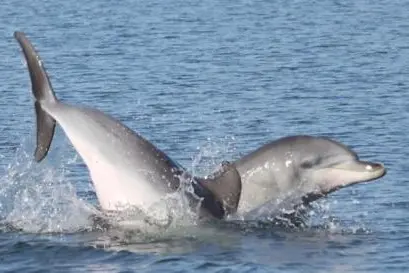
A new study by an international team of researchers, investigated genes to find out about past migration of dolphins. By looking at genetic variants in bottlenose dolphins (Tursiops aduncus), the scientists found that one population off Bunbury, Western Australia, was once an important source of migrants. “These dolphin migrants from Bunbury were probably important in supporting the stability of nearby populations” says lead author Dr. Oliver Manlik, Assistant Professor at the United Arab Emirates University. This is in sharp contrast with a previous study had shown that the Bunbury dolphin population may decline because they are currently not producing enough offspring. “If that is now true, then the Bunbury dolphins may no longer be able to continue supplying emigrants to support other populations, putting these other dolphin populations at risk as well” explains Dr. Manlik.
The previous study also showed that reproduction is key to the persistence of the Bunbury population, and, if undisturbed, it is possible that the Bunbury dolphins produce more offspring again in the future. In that case, the Bunbury population might be ok, and be able to support its neighbouring populations again. “For the conservation of these dolphin populations, it is important to monitor them closely, and in particular, to keep a close eye on the reproduction of the Bunbury dolphins” says Dr. Delphine Chabanne of Murdoch University, who has been studying these dolphins in Australia for several years.
“Dolphins have no borders, and persistence of animal populations often depends on a ‘rescue effect’, a scenario in which a declining population is ‘rescued’ from extinction by immigrants from other populations” says Dr. Manlik. It is therefore important for scientists to identify ‘source’ populations, populations from which individuals emigrate, and ‘sink’ populations who receive the migrants. “Genes are information” says Prof. Bill Sherwin (University of New South Wales), and “they can tell us whether populations are isolated or connected, as well as about migration patterns in the past—important information for wildlife conservation”. The new study, published in the journal Marine Mammal Science, is a nice illustration of how modern genetics can use information from genes to gain a glimpse into the past, unravelling past migration patterns of animals.
-Ends-
© Press Release 2018Disclaimer: The contents of this press release was provided from an external third party provider. This website is not responsible for, and does not control, such external content. This content is provided on an “as is” and “as available” basis and has not been edited in any way. Neither this website nor our affiliates guarantee the accuracy of or endorse the views or opinions expressed in this press release.
The press release is provided for informational purposes only. The content does not provide tax, legal or investment advice or opinion regarding the suitability, value or profitability of any particular security, portfolio or investment strategy. Neither this website nor our affiliates shall be liable for any errors or inaccuracies in the content, or for any actions taken by you in reliance thereon. You expressly agree that your use of the information within this article is at your sole risk.
To the fullest extent permitted by applicable law, this website, its parent company, its subsidiaries, its affiliates and the respective shareholders, directors, officers, employees, agents, advertisers, content providers and licensors will not be liable (jointly or severally) to you for any direct, indirect, consequential, special, incidental, punitive or exemplary damages, including without limitation, lost profits, lost savings and lost revenues, whether in negligence, tort, contract or any other theory of liability, even if the parties have been advised of the possibility or could have foreseen any such damages.