PHOTO
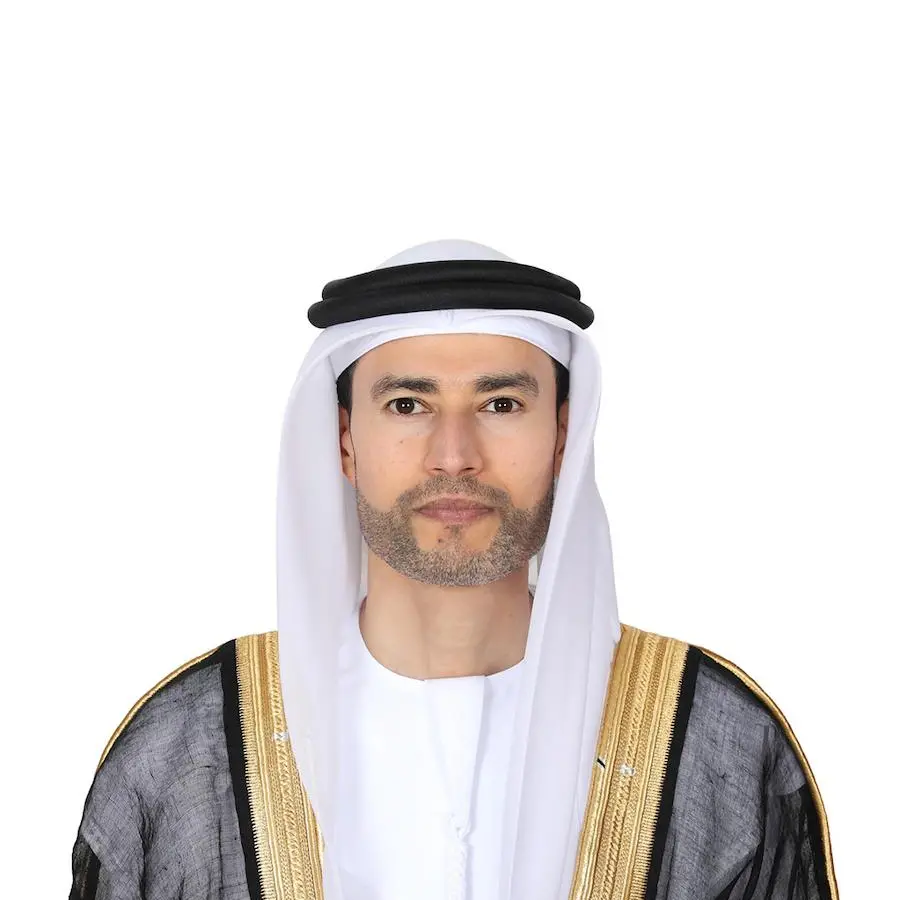
- “The challenge we face today is not lack of innovation. It is lack of alignment,” said H.E. Badr Jafar, calling for closer strategic collaboration between governments, philanthropy, and business.
- The dialogue reinforced the UAE’s role as a global convenor for AI governance, advancing new partnership models to translate AI principles into scalable, real-world impact.
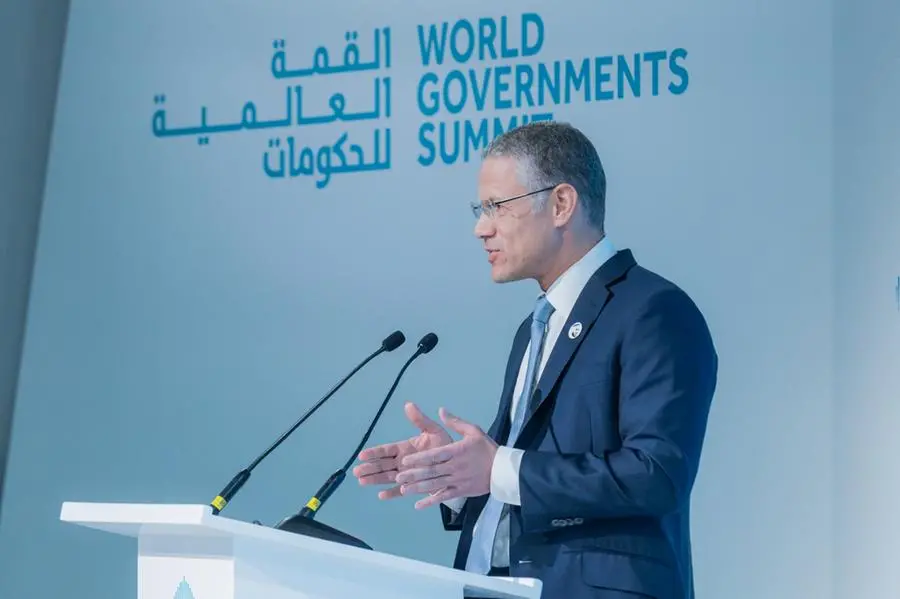
Dubai, UAE — Global leaders convened in Dubai today for the “Accelerating 5X AI Transformation Dialogue,” a high-level session on the opening day of the World Government Summit 2026 focused on translating AI principles into measurable, scalable impact.
The closed-door dialogue brought together senior decision-makers from governments, international organisations, and the private and philanthropic sectors to address a critical gap: while global AI investment now exceeds US$1.5 trillion, less than one percent is directed toward social impact, and more than 85 percent remains concentrated in high-income countries.
Opening the session, H.E. Badr Jafar, UAE Special Envoy for Business and Philanthropy, called for a fundamental shift in approach: “The challenge we face today is not a failure of innovation. It is a failure of alignment,” said H.E. Badr Jafar. “If AI is to become a tool for global convergence rather than a wedge for deeper inequality, we need a new operating model.”
H.E. Badr Jafar outlined the “AI Impact Flywheel” framework, which positions public policy as setting direction and guardrails, strategic philanthropy as absorbing early-stage risk and enabling experimentation, and business as providing the engine to scale solutions efficiently.
The dialogue reinforced the UAE’s distinctive approach to AI governance. Since identifying AI as a national priority in 2017, the UAE has embedded artificial intelligence within a broader institutional framework spanning policy, skills development, and long-term capacity building—an approach now being studied by governments worldwide.
“What stands out about the UAE is not just the scale of investment, but the way AI has been positioned institutionally,” said H.E. Badr Jafar. “Higher trust has translated into higher deployment. That correlation matters – because trust is not a soft issue in AI. It is the hardest constraint on adoption.”
Participants examined how cross-sector collaboration can accelerate AI adoption across five priority domains: health, learning, society, livability, and sustainability. Discussions underscored that while AI is already delivering gains in each area, regulatory frameworks, workforce readiness, and shared standards remain critical to scaling impact equitably.
Concluding his remarks, H.E. Badr Jafar emphasised the UAE’s role as a venue for translating ambition into action: “AI is advancing faster than institutions are adapting. Without intentional leadership, it will amplify inequality. With coordinated action, it can accelerate inclusion at a scale we have never seen,” he said. “The UAE is where the world delivers.”
The World Government Summit 2026 continues over three days in Dubai, convening heads of state, ministers, and global experts to shape the future of governance across artificial intelligence, climate action, economic resilience, and human development.