PHOTO
LONDON - Global shares fell on Monday, as a sudden, massive selloff in precious metals forced investors to ditch other assets to cover any losses, right ahead of a week packed with corporate earnings, central bank meetings and major economic data.
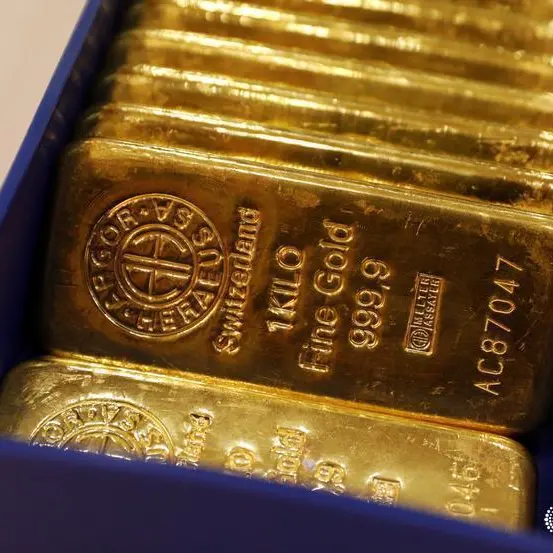
Silver was headed for its biggest two-day loss since at least the 1980s, falling another 7% on top of Friday's 30% plunge.
Dealers said pressure on a number of silver futures funds in China added to the rout late last week, which was exacerbated on Monday by the CME raising margins on a number of futures contracts, including silver and gold. Oil prices also fell more than 4% as President Donald Trump said over the weekend Iran was "seriously talking" with Washington, perhaps lessening the risk of a U.S. military strike on the country. European shares were down 0.5%, ahead of a week in which around 30% of STOXX 600 constituents report earnings, while Wall Street futures fell around 1%. The dollar's bounce on Friday, on the back of Trump naming Kevin Warsh - who many view as being less friendly towards ultra-loose monetary policy - dented stocks on Wall Street and compounded the fall in the silver price that had already been underway.
SILVER FRENZY The silver price had more than doubled in six weeks to a record $121.64 an ounce on January 29, in an unprecedented rally fuelled by investor appetite for non-dollar assets, as well as retail trader enthusiasm for juicy returns, spurred by a global shortage of physical metal relative to demand. "There's been a massive retail frenzy getting into these markets, we've had record turnover in options markets related to silver products," Ole Hansen, head of commodity strategy at Saxo Bank, said. Hansen added that anyone selling options that give the holder the right to buy silver would have had to own a long position in the silver themselves, in some form. "Once the market suddenly flips around you, you're left with a massive need to get out of it in a hurry because the reason for holding (that position) has disappeared," he said. Spot gold, which had also hit a record $5,594.82 an ounce last week, was down 5%. A lot of the pressure has come from the Chinese commodities market, where trading in silver futures had to be suspended on account of the extreme volatility. The knock-on effect on Asian equities led to MSCI's broadest index of Asia-Pacific shares outside Japan dropping nearly 3%, while Japan's Nikkei fell 1.3% ahead of Sunday's lower house election. Nerves in the broader stock market, as evidenced by another spike in the VIX volatility index, were already running high ahead of earnings this week from the likes of Alphabet , Amazon and AMD, as investors wait to see if the billions pouring into artificial intelligence will start to yield some return.
DOLLAR STEADIES AS YEN SLIPS
In currencies, the dollar steadied, trading up 0.1% against the yen at 155.00, while the euro nudged into positive territory to trade at $1.185, regaining some of Friday's 1% drop. The dollar rallied by the most in a day since last May on Friday, following Trump's announcement of former Federal Reserve governor Kevin Warsh as the next chair of the central bank. Warsh is seen by many as being unlikely to push for deeper rate cuts than some of his rival candidates, although he has recently indicated he believes looser monetary policy may be in order, something that aligns with Trump's view that borrowing costs need to drop fast.
"Trump is most unlikely to have nominated Warsh if he was not genuinely supportive of lower interest rates, and for which there is plenty of evidence Warsh believes that the economy can achieve higher rates of non-inflationary growth," said Ray Attrill, head of FX strategy at NAB. Traders are still sticking with bets for two rate cuts from the Fed this year, although Friday's January non-farm payrolls report could change that, should it come in significantly above, or below, forecasts. The European Central Bank and Bank of England meet on Thursday although neither is expected to make any changes to monetary policy. The Reserve Bank of Australia, which could even raise rates, also sets policy this week. Meanwhile, oil prices fell as the risk of a military strike on key exporter Iran ebbed, leaving Brent crude down 4.7% at $66 a barrel.