PHOTO
LONDON/ SYDNEY - A bounceback by tech stocks around the world helped drive equity markets higher on Wednesday and set the scene for Nvidia's earnings report, while investors set aside their concerns around U.S. tariffs - at least for now.
MSCI's world share index was up 0.3% with Europe's broad STOXX 600 up 0.46% and back at a record high and U.S. futures also pointing to a rise at the open after indexes rallied on Tuesday.
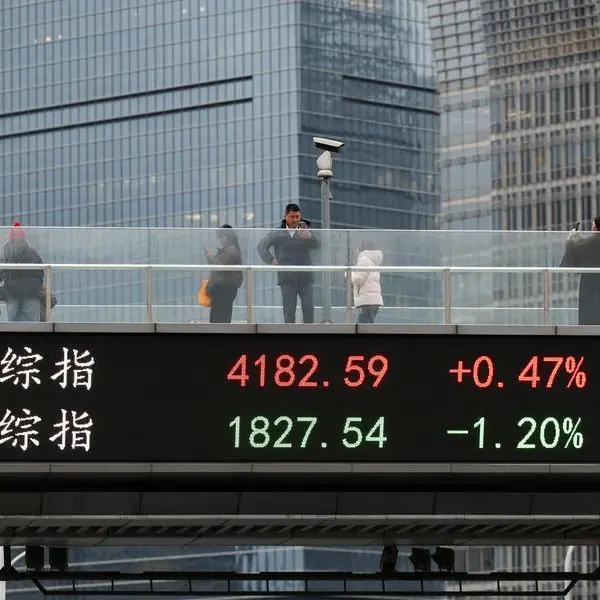
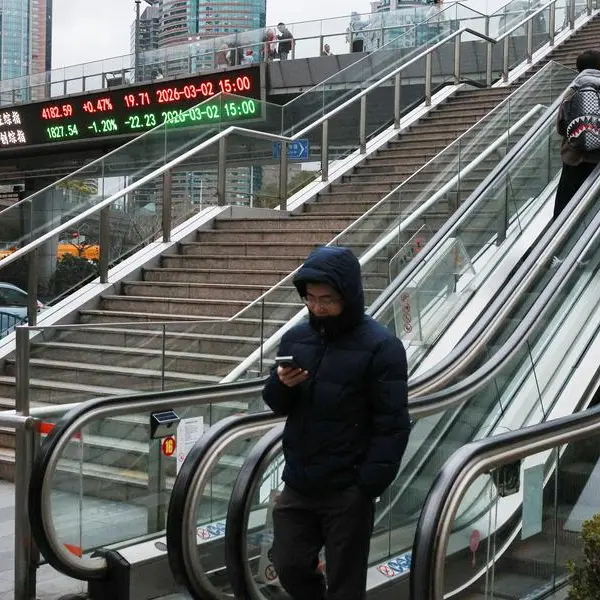
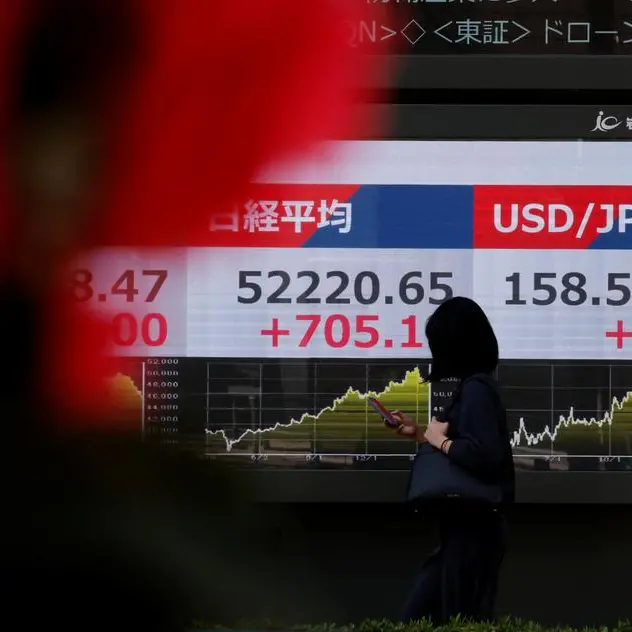
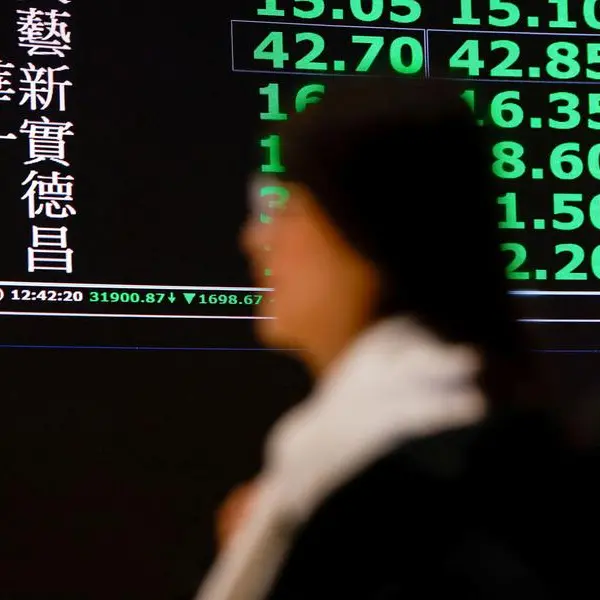
More dramatic gains were seen in Asia where the APAC ex-Japan benchmark rose 1.44% driven by advances in chip-heavy bourses like Korea and Taiwan, and Japan's Nikkei gained 2.2%.
A global memory chip shortage has seen Samsung Electronics and SK Hynix stock prices double since October, as cash has surged up the AI supply chain to the enormously popular chipmakers.
And while the AI fever has hurt software stocks globally in recent weeks on fears their business model could be disrupted, they continued to bounce back on Wednesday. Software stocks posted gains in the U.S. and Europe on Tuesday when artificial intelligence lab Anthropic announced several new plug-ins developed jointly with partners.
The fact the event "stressed on partnership rather than displacement helped the software sector," said Mohit Kumar, chief Europe economist at Jefferies.
He said AI disruption would nevertheless remain a market theme.
This recent rebound in tech stocks could be reinforced or challenged by results from Nvidia , the world's largest company by market capitalisation, due after the U.S. close.
Forecasts are for its profits to have risen 62% in the quarter to the end of January, and revenue to have jumped 68%, although with Nvidia having outpaced sales forecasts for 13 straight quarters the market is likely expecting more. It's not only tech stocks driving growth, however. Shares in HSBC - Europe's largest bank - are up 5.5% in London after it reported profit that beat expectations, and it lifted a key earnings target.
GLOBAL ANGST The optimism in equities come even as investors grapple with a range of political and geopolitical worries, though it did allow U.S. President Donald Trump to boast of stock market gains in his State of the Union speech.
Trump also said "almost all" countries and corporations want to stick to tariff and investment agreements previously made with Washington, but he did not offer clarity regarding his plans for Iran amid signs he is inching closer to a military conflict with Tehran.
We "believe the market is being fairly sanguine around geopolitical risks. While we do not anticipate a drawn out conflict, any attack from the U.S. is likely to be met with response from Iran and produce some wobbles in risky assets," said Kumar.
The worries about AI, Iran and tariffs have helped support government bonds in the U.S. and particularly Europe in recent days, although yields were sightly higher on Wednesday.
The benchmark 10-year Treasury yield was up nearly 2 basis points at 4.05% but was still close to Monday's near three-month low of 4.017%.
Bond yields move inversely to prices.
Most European 10-year yields were also up around 1 basis point, but again are around multi-month lows, and more than one-year lows in the case of British and Italian debt.
Japanese yields, in contrast, rose sharply on Wednesday after the nomination of two academics seen as dovish to the central bank's board.
While rate-sensitive shorter-dated yields fell, on expectations for less-immediate BOJ rate hikes, broader worries that the BOJ is behind the curve sent longer-dated yields higher.
The yield on the 40-year bond, Japan's longest tenor, rose 10 basis points (bps) to 3.615%, the steepest advance in a month.
That also weighed on the yen, with the dollar up 0.17% at 156.18 yen and the euro 0.3% higher against the Japanese currency at 184.18 yen.
The dollar otherwise was mildly softer with the euro up 0.16% at $1.1792 and the pound up 0.25% at $1.352.
Even currency markets are focused on Nvidia's results. Francesco Pesole, senior currency analyst at ING said a miss could hit wider risk sentiment and with FX implications, and hit the surging Australian and New Zealand dollars and the Norwegian crown.
In commodity markets, oil continued its march higher driven by Iran concerns and hovered around a seven-month top.
U.S. crude rose 0.55% to $65.99 a barrel and Brent rose 0.4% to $71.07.
Copper was also higher as traders bet on restocking demand after Chinese market participants returned from a nine-day Lunar New Year break, while spot gold rose 0.7% to $5,184 an ounce.