PHOTO
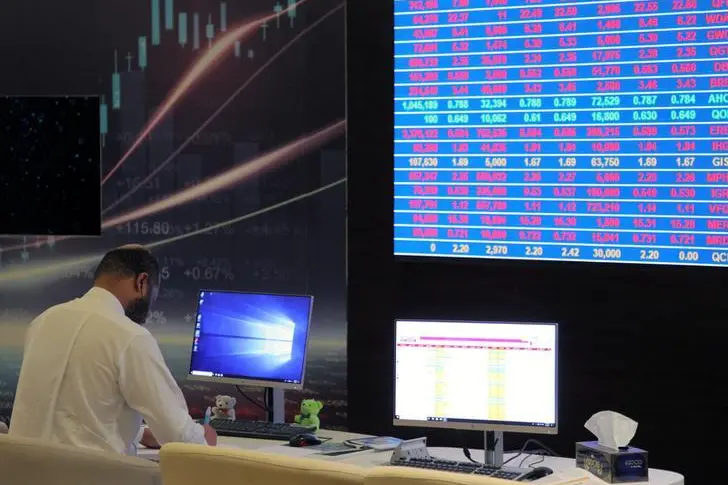
SINGAPORE/LONDON - Global stocks edged up, oil prices slid and the dollar lost some safe-haven appeal on Tuesday as investors bet on a resolution to the Middle East war even as the U.S. blockaded Iran's ports after the collapse of peace talks at the weekend.
Negotiating teams from the U.S. and Iran could return to Islamabad this week, four sources said, days after the highest-level talks between the two countries since the 1979 Islamic Revolution ended in the Pakistani capital without a breakthrough.
U.S. President Donald Trump said Iran wants to make a deal, but added he would not agree to any outcome that allows Tehran to have a nuclear weapon.
Hopes of a diplomatic off-ramp have helped push the S&P 500 back to pre-war levels, driven largely by gains in big tech stocks as first-quarter earnings season begins. Europe's STOXX 600 was up 0.6% on Tuesday, but remains 2% below its pre-conflict level.
"Markets are trading hope, not resolution. The failed weekend talks did not produce a deal, but they also did not close the door on diplomacy, and that is enough for equities to keep pushing higher for now," said Charu Chanana, Saxo's chief investment strategist.
"The problem is that markets may be pricing the chance of de-escalation faster than the proof of it, so I would still expect a choppy, headline-driven tape rather than a clean risk-on trend," she added.
Nasdaq futures rose 0.4% and S&P 500 futures gained 0.1% as JPMorgan and Wells Fargo delivered earnings. The dollar was heading for a seventh daily drop against a basket of major currencies, nearing pre-war levels.
Bank of America's monthly global fund manager survey for April, conducted from April 2 to April 9 and covering 193 asset managers overseeing $563 billion, showed sentiment was the most bearish since June last year.
"Expectations for growth (are) down the most since March 2022, for inflation, the highest since May 2021. All contrarian -positive for risk assets so long as the ceasefire sends oil price below $84 a barrel, but not a 'close-eyes-and-buy'," strategists led by Michael Hartnett said.
The survey showed investors expect oil to be priced at $84 by the end of the year, down from about $98 currently.
The U.S. military has begun a blockade of Iran's ports, angering Tehran and adding uncertainty around the key Strait of Hormuz, though shipping data showed a U.S.-sanctioned Chinese tanker passed through the waterway on Tuesday.
Trump has said Washington would block Iranian vessels and any ships paying tolls demanded by Tehran, and that any Iranian "fast-attack" ships that went near the blockade would be eliminated.
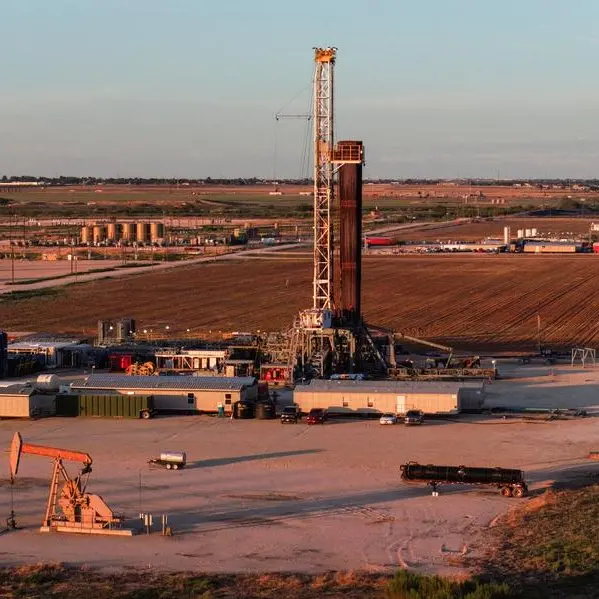
Oil prices slid as expectations for further dialogue to end the war outweighed concerns over supply disruptions. Brent crude futures were down 0.3% at $99 a barrel, while U.S. crude futures fell 1.6% to $97.5 per barrel.
In China, data on Tuesday showed exports slowed in March as demand linked to an artificial-intelligence boom ran up against the effects of the war.
DOLLAR ON THE BACK FOOT
The euro rose 0.4% to $1.18, while sterling climbed 0.5% to a more than six-week high of $1.357, putting the pound above pre-war levels.
U.S. Treasury yields drifted lower, with the two-year yield last down 1 basis point at 3.77% and the benchmark 10-year yield at 4.29%, flat on the day.
Rising energy prices have fuelled inflation concerns and prompted investors to prepare for the possibility that several major central banks tilt towards rate increases, a sharp reversal from pre-war expectations for cuts or an extended pause.
As a result, two-year Treasury yields are now nearly 40 basis points above late-February levels.
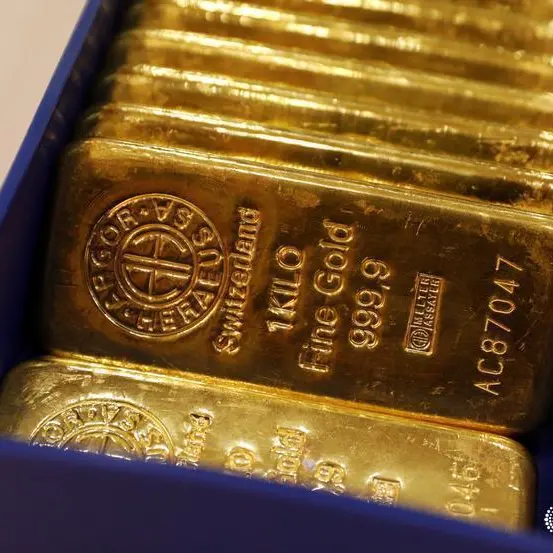
Elsewhere, spot gold rose 0.8% to $4,776 an ounce.