PHOTO
Global stocks rose, the U.S. dollar hovered around its highest levels in over six weeks and oil prices edged up, as a great deal of uncertainty surrounded U.S.-Iran peace talks. U.S. Secretary of State Marco Rubio said there had been "some good signs" in talks to end the nearly three-month-old U.S.-Israeli war on Iran, but differences remain over Tehran's uranium stockpile and control of the strait.
The worry for investors remains the near-closure of the Strait of Hormuz, a critical artery for the world's energy supplies that has sent oil prices soaring and rewired the global interest rate outlook because of inflationary concerns.
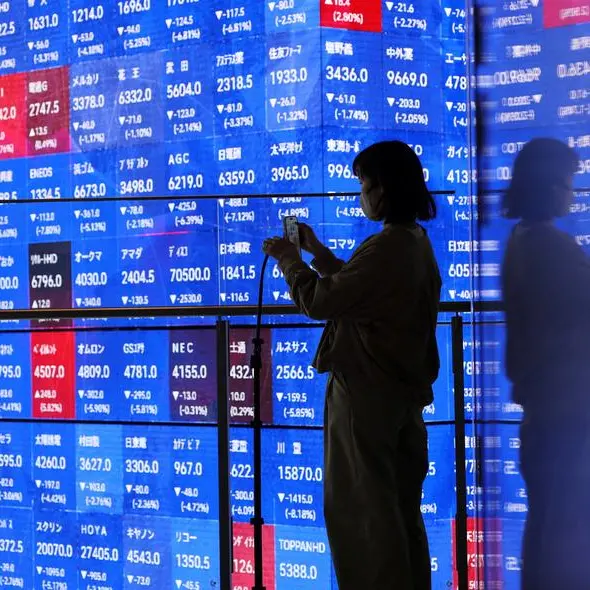
MSCI's main world stocks index rose 0.22%. Europe's STOXX 600 was up 0.43%. Nasdaq futures climbed 0.31% and S&P 500 futures increased 0.26%. The S&P 500 index edged 0.17% higher on Thursday at 7,445.72, after hitting 7,517.12 last week, a fresh record high. MSCI's broadest index of Asia-Pacific shares outside Japan rose 0.74%. Japan's Nikkei gained 2.8%, just shy of a new record high, led by artificial intelligence-related shares. “Oil prices have also moved higher again as investors weigh the risk that talks drag on or fall apart,” said Matt Britzman, senior equity analyst at Hargreaves Lansdown.
"The honest answer is that nobody really knows where these negotiations are heading, but for now, markets are doing what they often do when a potential geopolitical off-ramp appears - tentatively moving as if the good news could be around the corner."
Brent crude futures rose 2% to $104.96 a barrel but were set for a 6% drop for the week. U.S. West Texas Intermediate futures were up 1.35% at $97.64.
Prolonged energy disruptions as the war drags on threaten to feed through to prices across the globe, spurring traders to price in rate hikes in developed and emerging markets. Markets are now pricing in a more than a 50% chance of a rate hike from the U.S. Federal Reserve by the end of the year versus expectations of two rate cuts before the war started.
That has lifted Treasury yields and boosted the dollar, which has also benefited from safe-haven demand. The euro was at $1.1614, close to the six-week low it hit on Thursday, and is set for a 1% drop this month.
Against a basket of currencies, the dollar was at 99.247. The Japanese yen last fetched 159.11 per dollar, perilously close to the crucial 160 level that traders fear could bring Japanese authorities into the market again. "Energy prices need to rapidly and quickly reverse, otherwise the combination of fiscal spending and a capex boom is a recipe for a lot of inflation, especially in the U.S.," said George Saravelos, global head of forex research at Deutsche Bank, after mentioning a global increase in fiscal spending and AI investment. Incoming Federal Reserve Chair Kevin Warsh "will have to pick between adding volatility to front-end rates, and help the dollar, or the back-end, and hurt the dollar, but he can’t avoid both," Saravelos said. Fed rate hikes would, in theory, push up short-dated yields, while no action by the central bank could boost long-dated borrowing costs as markets price in more inflation over the long term. Two-year U.S. Treasury yields have risen 1 basis point this week to 4.09%, while yields for two-year bonds in other major markets have fallen sharply this week. Meanwhile, the dollar remained firm against the yen following an intervention worth an estimated $65 billion from Tokyo just weeks ago to shore up the currency. It was last up 0.1% at 159.125 yen. Data on Friday showed Japan's core inflation slowed to a four-year low in April, complicating the outlook for the Bank of Japan's rate-hike path.
Analysts said the stronger-than-expected first quarter GDP and firm April exports data earlier this week showed the resilience of the Japanese economy despite the energy shocks, which supported a Bank of Japan hike.