PHOTO
LONDON/SINGAPORE - Stocks advanced on Friday, with European markets gaining ground in early trading and Asian peers notching their best week in more than three years, as Israel sought talks with Lebanon, raising hopes for a break in Middle East hostilities and an opening of the Strait of Hormuz.
Iran has cited Israel's ongoing attacks on Lebanon as a key sticking point in its ceasefire agreement with the U.S., which requires Iran to reopen the strait, through which a fifth of global energy supplies typically pass. Delegations from Tehran and Washington are set to hold talks in Pakistan on Saturday.
The pan-European index .STOXX rose 0.3%, on track for its third consecutive weekly gain. Healthcare .SXDP and technology .SX8P stocks led the way, rising 1% and 0.8% respectively.
"For markets at least, the financial stress has continued to ease before the weekend talks," Deutsche Bank analysts wrote. "So those hopes for a de-escalation in Lebanon helped ease concerns that the broader ceasefire could fall apart ahead of this weekend's talks."
Underscoring growing relief, a key index of equity options volatility has fallen back to pre-war levels, albeit the only major indicator to do so.
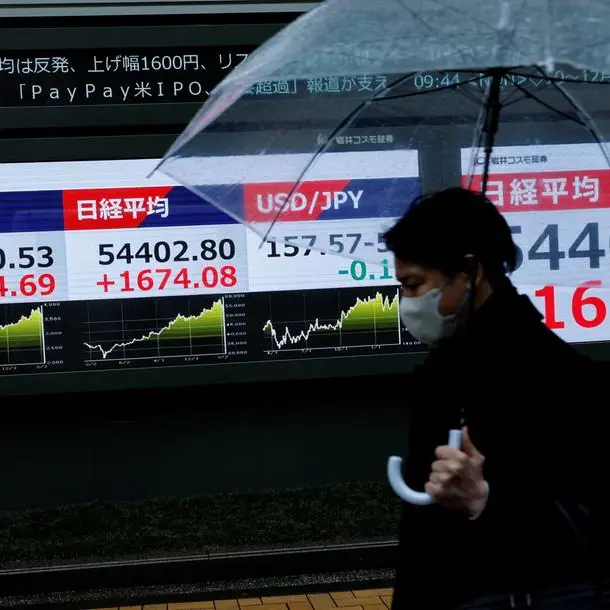
MSCI's broadest index of Asia-Pacific shares outside Japan added 0.9% to put it up 7.3% for the week, its biggest advance since November 2022.
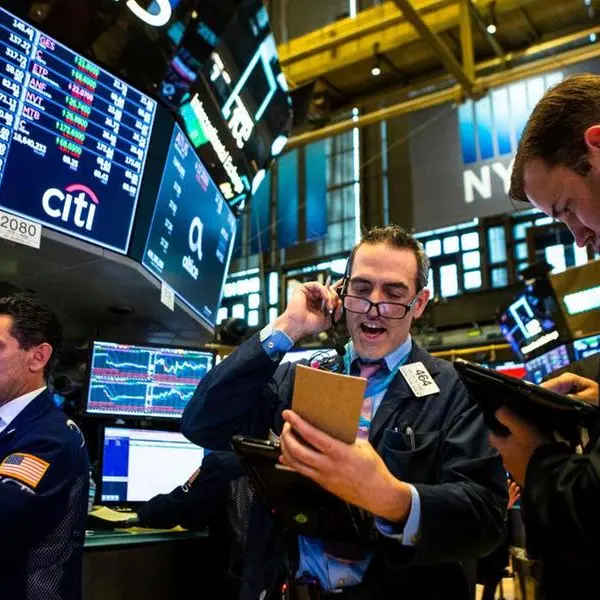
Wall Street futures were mostly flat after reversing earlier losses. On Thursday, the S&P 500 rose 0.6%, its seventh straight day of gains.
"We believe this could be the beginning of the end" of the war, and that presents "an opportunity for investors to focus on pre-war trends and fundamentals," said Rupal Agarwal, Asia quant strategist at Bernstein in Singapore.
Still, oil markets remained jittery, creeping up from this week's one-month lows. Brent crude rose 1.8% to $97.67 a barrel, though still on course for a loss of around 10% this week.
The Strait of Hormuz remains largely closed to shipping, with marine traffic at well below 10% of normal volumes on Thursday as Tehran asserted its control of the strategic waterway.
The closure of the strait during the six-week Iran war sent shockwaves through global markets as oil prices surged and energy supplies tightened worldwide. In a post on Truth Social, U.S. President Donald Trump said Iran was doing a "very poor job" of allowing oil to pass through the strait. "That is not the agreement we have!"
The U.S. dollar index, which measures the greenback's strength against a basket of six currencies, was on track to lose 1.3% this week, its worst weekly performance since January. It was last up 0.1% at 98.93.
The euro EUR= fell 0.2% to $1.167, but remained above a key indicator called the 200-day moving average. The currency pushed beyond the line for the first time in more than a month earlier this week, signalling it is primed for further gains.
Investors were awaiting U.S. inflation data, due later in the day, for insights into how the Middle East conflict has affected the world's biggest economy.
Data released on Thursday showed weekly U.S. jobless claims increased by 16,000 to 219,000 and continuing claims fell by 38,000 to 1.8 million, the lowest level since May 2024. In an early sign that the Middle East conflict is feeding cost pressures into the world’s second-largest economy, China's factory-gate prices rose for the first time in 3-1/2 years in March, official data showed.
In bond markets, German Bund yields, a benchmark for the euro zone, were on track for a weekly rise, despite their sharpest drop in years on Wednesday. The yield on the U.S. 10-year Treasury bond was up 0.4 basis point at 4.295%.