PHOTO
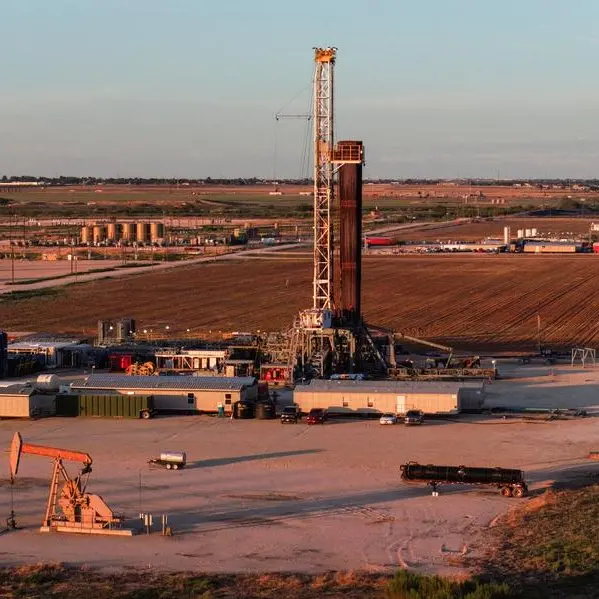
SYDNEY/LONDON - Oil prices surged on Monday as the U.S. moved to impose a blockade on Iranian shipping after the collapse of weekend peace talks, while the dollar rose and stocks and bonds fell.
The U.S. move, aimed at putting pressure on Tehran, leaves a fragile ceasefire hanging in the balance and no end in sight to the choke on Middle East energy exports - though the mood on trading floors leaned toward hoping for a resolution.
Brent crude futures were up 7% at $102 a barrel, marking a gain of more than 40% since the war shut navigation of the Strait of Hormuz. Europe's STOXX 600 index fell 0.7%, while S&P 500 and Nasdaq futures slipped 0.6%.
U.S. Treasuries traded lower, leaving yields on benchmark 10-year notes up 2 basis points at 4.33%, while bonds in Europe also came under modest pressure, pushing benchmark German 10-year yields up 2.5 bps to 3.07%.
"The market reaction today is interesting because everything's a little bit weaker, yields a little bit higher, but not falling out of bed in the way we saw a couple of weeks ago," Lauren van Biljon, senior portfolio manager at Allspring Global Investments, which has $628 billion in assets under advisement, said.
"I wonder if that just tells us more that markets were perhaps quite realistic about the negotiations over the weekend. It was always a long shot that we were going to get something comprehensive and agreed in that first round of talks, and obviously we didn't get that."
Trump said on Sunday that the price of oil and gasoline may remain high into the midterm elections in the U.S. in November, a rare acknowledgement of the potential political fallout from the war.
"The market is now largely back to conditions before the ceasefire, except now the U.S. will block the remaining up to (2 million barrels) Iranian-linked flows through the Strait of Hormuz as well," said MST Marquee analyst Saul Kavonic.
"The key remaining question is if the U.S. renews strikes on Iran, raising the risk of strikes on energy infrastructure across the region which could have a further lasting impact beyond the duration of the war."
DOLLAR HIGHER, INFLATION PICKS UP
In foreign exchange trade, the euro fell about 0.3% to $1.1692 and risk-sensitive currencies such as the Australian dollar slipped a little further.
The steep rise in energy prices has prompted investors to prepare for the possibility that a number of central banks, such as the European Central Bank and Bank of England, will lean towards raising rates, a sharp reversal from expectations prior to the war for rate cuts or a prolonged pause.
Last week's U.S. inflation data showed consumer prices rose by the most in nearly four years in March, driven by a record surge in the cost of gasoline. Money markets show traders see less than a 20% chance of the Federal Reserve cutting rates this year.
In emerging markets, the Hungarian forint was up sharply, scaling multi-year highs on the dollar and euro , after Hungary's nationalist leader Viktor Orban lost power after 16 years to an upstart centre-right coalition in Sunday's election.
The result is likely to pave the way for European Union funding to flow to Hungary and Ukraine.
"The positive political developments have triggered a powerful rally for the forint," MUFG currency strategist Lee Hardman said.
"The price action reinforces the forint’s position as one of the best-performing emerging market currencies this year."