PHOTO
- H.E. Mohamed Ali Al Shorafa, Chairman of the Department of Municipalities and Transport (DMT): “Our infrastructure is designed not just to respond, but to stay ahead, and this is how we deliver livability.”
- H.E. Maysarah Mahmoud Eid, Director General of ADPIC: “We are moving beyond building cities, to creating communities that are more connected, more resilient, and designed around people to improve their lives.”
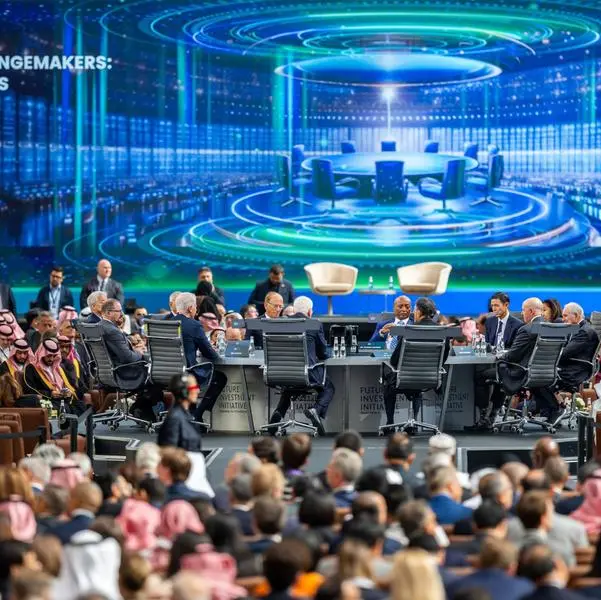
Abu Dhabi, UAE, The second edition of the Abu Dhabi Infrastructure Summit (ADIS) opened yesterday at the International Convention Centre (ICC), ADNEC, setting an ambitious agenda for city-scale transformation under the theme 'Urban Evolution: Rethinking Cities, Redefining How We Live.' The opening day welcomed more than 6,000 attendees and saw the Abu Dhabi Projects and Infrastructure Centre (ADPIC) sign 10 Memoranda of Understanding across governance, delivery, and partnership tracks.
Foremost among the day's signings was a landmark governance framework uniting more than 14 government entities, spanning municipalities, utilities, energy providers, transport authorities, and telecommunications operators. The agreement establishes a coordinated mechanism to accelerate No-Objection Certificate (NOC) approvals for capital projects across the emirate, supported by a new ADPIC-chaired Joint Committee tasked with resolving bottlenecks within measurable timelines.
ADPIC also formalised a new partnership under the Bunaa Programme with Trojan Construction Holding, Gulf Contractors Co. LLC, and GHD Global, strengthening the delivery capacity behind the emirate's capital project pipeline. A separate agreement with Knowledge Group will advance cooperation across training, development, advisory services, and the organisation of conferences and events, with a focus on building national talent and workforce readiness across project and infrastructure-related sectors.
Delivering the opening keynote, H.E. Mohamed Ali Al Shorafa, Chairman of the Department of Municipalities and Transport (DMT), set out the emirate's deliberate approach to infrastructure as a driver of long-term performance. He said: "In Abu Dhabi, our approach to infrastructure is human-centric: focused on how people live, move, and access services across the emirate. And we don't plan for the present alone. We anticipate how our communities will grow, how their expectations will rise, and how their needs will change. Our infrastructure is designed not just to respond, but to stay ahead, and this is how we deliver livability.”
H.E. Al Shorafa also confirmed that the inaugural Livability and Investment Exhibition (LIVEX) will take place from 29 September to 1 October 2026, bringing together the stakeholders shaping the future of livability and urban development in Abu Dhabi and beyond.
H.E. Maysarah Mahmoud Eid, Director General of ADPIC, also took the stage with 'From City-Building to City-Making: Redefining Urban Evolution,' pointing to ADIS's own trajectory as evidence.
He said: "We are moving beyond building cities, to creating communities that are more connected, more resilient, and designed around people to improve their lives. No single sector can drive this shift alone. It demands a new kind of collaboration across government, industry, finance, and technology. And that is why ADIS exists." H.E. Eid noted that ADPIC advanced approximately AED 32 billion in public-private partnership opportunities last year, with more than 40,000 homes set for delivery by 2029 as part of a broader effort to strengthen communities and raise living standards across the emirate.
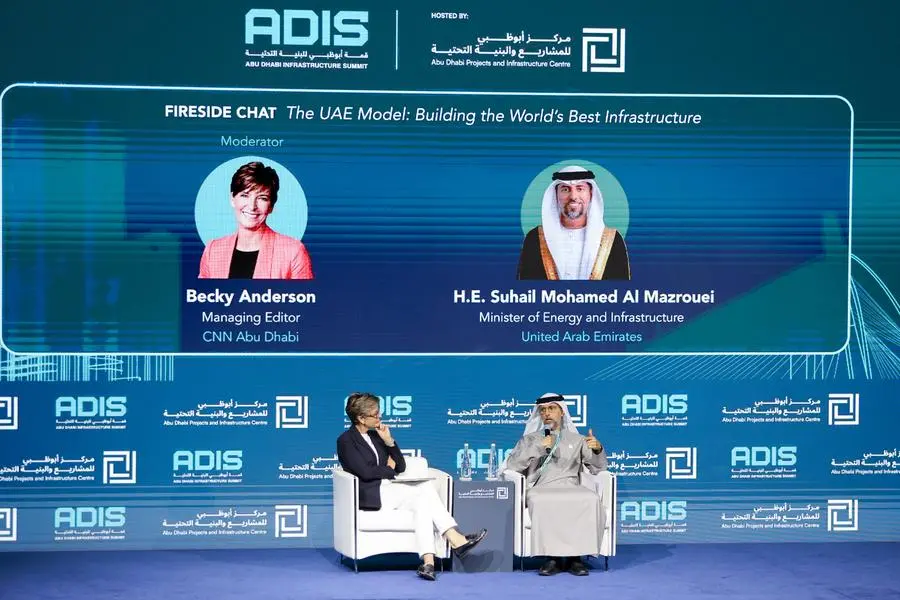
Another highlight was a fireside chat with H.E. Suhail Mohamed Faraj Al Mazrouei, UAE Minister of Energy and Infrastructure and Becky Anderson, Managing Editor of CNN Abu Dhabi, titled 'National Strategies: Infrastructure Development for the Next Urban Century.'
H.E. Al Mazrouei framed Abu Dhabi as both the industrial engine of the UAE and a global player on infrastructure, with forward investment in roads, rail, and metro accounting for more than half of national spending in the sector. He noted that the country currently ranks fifth globally for quality of infrastructure and roads, with a clear ambition to move from fifth to first. He also pointed to the integration of energy and infrastructure planning as a defining feature of the UAE model, with efficiency standards, AI-led consumption management, and EV-ready road design embedded from the outset, supported by digital twins deployed across Abu Dhabi and Dubai.
The opening keynotes set the stage for three days of panel discussions, exhibitions, and dialogue, with more than 100 global speakers and a lineup of Abu Dhabi’s government entities, leading developers, and construction firms.
Building at pace and bridging the gap
Two consecutive panels examined how Abu Dhabi is meeting the infrastructure demands of rapid growth. ‘Building at Pace: Planning with Purpose, Delivering for Impact’ brought together Carlos Wakim, CEO of Bloom Holding, and Adel Albreiki, CEO of Aldar Projects; Mounir Haidar, Co-Founder of LEAD Development; and Francis Alfred, Managing Director of Sobha Realty, in a session moderated by Mustafa Al Rawi, Director of Strategic Communications at the Abu Dhabi Department of Economic Development.
The discussion examined how modular and offsite manufacturing techniques are compressing delivery timelines, with Sobha Realty confirming a AED 3 billion investment in construction innovation and offsite factories over the next three years. Bloom Holding made the case for separating technical infrastructure from social infrastructure, pointing to Bloom Living's 4,200 homes as a model of integrated community design that prioritises walkability, safety, and gathering spaces. LEAD Development framed infrastructure as the backbone of place-making, citing Jubail Island's 40 million square metres of land, 25 million of which is protected mangrove. Aldar pointed to its use of AI agents for design and supply chain scrutiny, drawing on 50 million data points from previous projects, as part of how technology is reshaping delivery.
'Innovation in Construction: Bridging the Gap Between Demand and Delivery' featured H.E. Mohamed Al Hosani, Executive Director - Capital Projects Operations at ADPIC; Eng. Ahmed Al Shamsi, Group CEO of Trojan Construction Group; Abdulaziz A. Bawazeer, CEO of Sdeira Group; Firas Al Sayegh, Chief Development Officer at LEAD Development; Mulham Ghazi Kheriba, Chief Development Officer at Reportage Group; and Bashar Ayyash, Senior Vice President and Partner at Khatib & Alami. Moderated by Laura Buckwell, the panel addressed how Abu Dhabi is meeting rising housing demand at speed and scale.
ADPIC confirmed it is overseeing more than 500 capital projects across a broader programme value of $200 billion, with 40,000+ homes set for delivery over the next five years. Trojan Construction pointed to digitalisation and automation as the route to closing the cost-speed gap, calling for government incubation of new construction technologies. LEAD Development proposed a central modular design platform of pre-approved templates to let manufacturers begin production in parallel with infrastructure works, while Reportage Group detailed a debt-free, fully in-house model as the basis for affordable delivery.
Powering the cities of tomorrow
'Datacentres and Digital Infrastructure: Powering the Cities of Tomorrow' brought together Roberto Avallone, Managing Director, Operating Partners at MGX; Amr Kamel, General Manager - UAE at Microsoft; and Dr. Bashar Abu Ghannam, Director - Research, Development and Transformation at ADPIC, in a session moderated by Adnan Ghotmi, Director at Efficio Consulting. The panel explored Abu Dhabi's positioning as a global capital for AI, examining the convergence of capital, talent, regulation, and energy required to deliver digital infrastructure at scale.
'Global Partnerships, Local Impact: Strengthening Cross-Sector Cooperation' featured H.E. Adel Al Nuaimi, Executive Director - Capital Projects Contractual Affairs Sector at ADPIC; H.E. Abdulla Ahmed Al Yazeedi, Executive Director of Economic Strategy Oversight Sector at the Abu Dhabi Department of Economic Development; Amel Chadli, President of Gulf Countries at Schneider Electric; and Oliver Barbagallo, Head of Origination, Middle East at Plenary, in a session moderated by Laura Buckwell. The panel examined how ADPIC and its partners are structuring long-term cross-sector partnerships for complex infrastructure delivery, with programme-level visibility, standardised contracting, and integrated ecosystems spanning government, finance, private sector, and academia positioned as the conditions for delivering at scale.
Unlocking the next trillion in capital
'Infrastructure as an Asset Class: Unlocking the Next Trillion in Capital' brought together H.E. Mohamed Alsuwaidi, Executive Director for Capital Projects Finance Affairs at ADPIC; The Hon. Steven Ciobo, Managing Director of Stonepeak; Marc Milosevic, CEO of Modon Infrastructure; Eid Alobeidli, Director of Mustaha and PPP at the Abu Dhabi Investment Office (ADIO); and Omar Shahzad, Group CEO of Meinhardt Group, in a session moderated by Nouf Al Katheeri, Journalist & Presenter and Vice Chairwoman of the Forbes Youth Council.
The discussion centred on what it takes to turn abundant global capital into a bankable pipeline. H.E. Alsuwaidi positioned ADPIC's role as oversight across all government capital projects, identifying opportunities to bundle and present to the private sector through clearly governed frameworks. He framed the relationship with the private sector as a long-term collaboration rather than a series of transactions, underpinned by transparency, visibility, and consistent governance. The panellists closed on a shared theme: that the next phase of infrastructure investment depends on treating the relationship between government and private capital as a partnership of aligned interests over decades, with transparency, performance-linked incentives, and shared risk as the operating principles.
Building the future, together
The day concluded with a series of industry presentations delivered by industry leaders, shifting focus from high-level strategy to the operational mechanics of Abu Dhabi's capital project pipeline, with deep dives into technical frameworks, digital integration, and sustainable delivery models.
The summit also drew the emirate's leading investors, developers, and delivery partners, with Modon as Headline Partner, Aldar and Bloom Holding as Lead Partners, and Reportage Group, Abu Dhabi Housing Authority (ADHA), Abu Dhabi Investment Office (ADIO), and LEAD Development as Strategic Partners. Building on the recently announced AED 55 billion ADIO–ADPIC PPP pipeline of 24 transport, infrastructure, and social initiatives coming to market across 2026 and 2027, Day 1 set a decisive tone for the emirate's next phase of infrastructure delivery.
The summit continues until May 14 with sessions addressing future mobility, smart infrastructure, circular construction, branded residences, and the role of health and wellbeing in shaping the cities of the future, alongside a dedicated programme delivered in partnership with the International Federation of Consulting Engineers (FIDIC), which represents more than one million professionals and 40,000 firms across 100 countries.
About Abu Dhabi Projects and Infrastructure Centre
Established in 2023, ADPIC’s vision is to oversee and manage capital projects aimed at enhancing the quality of life for every resident in the Emirate of Abu Dhabi. This involves diverse projects such as housing, infrastructure, tourism, community facilities, and education.
ADPIC's mandate includes managing contracts, reviewing, approving, planning, and designing capital projects. These are overseen by the Centre in close collaboration with relevant entities and stakeholders to ensure quality is maintained while also facilitating efficient project execution in alignment with Abu Dhabi’s strategic goals.
Throughout its operations, the Centre is committed to strengthening public-private partnerships and adopting global best practices in sustainability.